
View Video Transcript

BACK TO ARTICLE

Viking: Alma Deutscher Performs in Vienna

  • Vienna is the music capital of Europe.

  • And this elegant Austrian city has been home to many celebrated composers, including Schubert Haydn Strauss, and Mozart.

  • Their Timeless, compositions are beloved around the world.

  • And now there's a new generation of extraordinary musical talent in the city.

  • Alma Deutscher was born in.

  • Five and began learning the piano at aged just to when she was 6 years old.

  • She composed, her first Piano Sonata and went on to start writing her first full-length Opera, aged eight.

  • She's been described by some as the second Mozart.

  • Although she prefers to be the first Alma and in 2019.

  • She played a concert of her own compositions to a sold-out audience at New, York's Carnegie Hall and Now, you can enjoy an exclusive live performance, hosted by Alma in Vienna's Concert House.

  • Hello everyone.

  • I've had a passion for composing music and Performing ever since I was really little and now I have a new passion, conducting an orchestra.

  • And so I'm incredibly excited that next year.

  • I'll be performing here in Vienna exclusively for Viking guess.

  • And I'll be conducting.

  • The wonderful scoffs cappella Orchestra, and also leading them from the Violet.

  • And we'll play For You Beautiful music from Vienna Pieces by Mozart waltzes.

  • Parker's by this guy here, your hunch tiles and also some of my own compositions, which I hope you'll want to hum all the way back to the ship.

  • And as you sail off down the Danube and who knows you might even get a sneak preview of some of my new compositions before anyone else does.

Once the home of Schubert, Strauss and Mozart, Vienna is renowned as the music capital of Europe. Now, guests who join us in this elegant city have the chance to enjoy an exclusive performance featuring Alma Deutscher, a young musical prodigy. Having composed her first piano sonata at age six and first full length opera at age eight, Alma delighted audiences in 2019 while performing her own compositions to a sold-out audience at Carnegie Hall. During her special concerts in Vienna for our guests, she will conduct classic pieces from great composers—including a few, destined-to-become-classics, of her own.

A journey into Vienna’s symphonic past and present

For culturally curious travelers, Vienna is more than a destination—it is the historic heart of Western classical music.As the capital of the Habsburg Empire, Vienna became the epicenter for some of the most famed musicians of the 18th, 19th and 20th centuries. Today, its legendary concert halls remain living monuments to this remarkable legacy, preserving traditions that have defined the classical canon. Today, our guests can also experience Vienna’s rich musical heritage through the performances of a new generation of exceptional artists.

Orchestra performance in grand concert hall

The birth of Viennese Classicism

Vienna’s emergence as the center of Western music—a distinction previously held by Italy—was the result of a unique convergence of imperial patronage, aristocratic ambition and the city’s strategic position at the crossroads of Europe. During the 18th and 19th centuries, the Hapsburg Court transformed the city into a magnet for Europe’s creative minds. For Vienna’s elite, chamber music was far more than entertainment; intimate performances in aristocratic salons served as powerful markers of education, refinement and social standing.

These circumstances nurtured the First Viennese School, composed of Joseph Haydn (1732–1809), Wolfgang Amadeus Mozart (1756–1791) and Ludwig van Beethoven (1770–1827). These composers, who helped popularize classical music in Vienna, favored the clarity and expressive simplicity of the Classical era over the intricate, multi-voiced textures characteristic of Baroque music.

Hayden spent years supporting himself as a freelance musician and teacher before entering the service of aristocratic patrons, ultimately becoming music director to the powerful Esterházy family. There, he developed many of the musical forms that came to define the Classical era. Although he did not invent the string quartet, his innovations established the genre's modern form, earning him the title "Father of the String Quartet," as well as "Father of the Symphony." Haydn’s reputation was so esteemed that Mozart dedicated six string quartets to him.

Mozart first performed in Vienna as a child prodigy during his family’s grand tours of Europe before settling in the city permanently in 1781. Over the final decade of his life, Vienna became the setting for some of his greatest achievements, including operatic masterpieces like The Marriage of Figaro, Così Fan Tutte and Don Giovanni.

The final member of the First Viennese School, Beethoven, moved to Vienna twice—first briefly in 1787, then permanently in 1792. During the 35 years he spent in the imperial capital, and across his more than 60 Viennese residences, Beethoven composed nearly all of his major works, including his symphonies, string quartets, piano sonatas, piano concertos and his only opera, Fidelio. Through the power and emotional scope of his music, Beethoven helped bridge the Classical and Romantic eras, leaving a profound mark on future generations of composers, most notably Franz Schubert (1797–1828) and Anton Bruckner (1824–1896).

Vienna concert halls: Great houses of classical music

Nurtured by generations of imperial and aristocratic patronage, Vienna became one of Europe's foremost centers of musical life. As the city's cultural prestige grew, so did its grand performance venues. Dominating the Ringstrasse is the Vienna State Opera, a magnificent Neo-Renaissance theater that opened in 1869 with Mozart's Don Giovanni. Over the decades, it developed into one of the world's leading opera houses, reaching celebrated artistic heights under directors such as Gustav Mahler and Richard Strauss.

Nearby lies the Musikverein, one of the world’s most iconic concert halls. Opened in 1870, its gilded Great Hall has long been home to the Vienna Philharmonic and has witnessed some of the defining moments of European musical history. Anton Bruckner appeared there both as an acclaimed organist and as a composer, while Johannes Brahms's works helped establish the hall as a center of the German symphonic tradition, with several major premieres conducted by Otto Dessoff. The Musikverein also played a pivotal role in the emergence of modernism: in 1913, its infamous Skandalkonzert erupted into shouting and fistfights among audience members during performances of music by Arnold Schoenberg, Anton Webern, and Alban Berg—an uproar often compared to the scandal that greeted Stravinsky's The Rite of Spring in Paris later that same year.

The rise of musical modernism found a welcoming stage at the Wiener Konzerthaus, which opened in 1913. Conceived as a concert hall for a broader public than the traditional Musikverein, the venue embraced both the classical canon and contemporary innovation from its earliest days. Its stages became important platforms for the groundbreaking music of the Second Viennese School—Arnold Schoenberg (1874–1951) and his pupils Anton Webern (1883–1945) and Alban Berg (1885–1935)—while also hosting influential performances and collaborations featuring pioneers of twentieth-century music such as Béla Bartók.

Finally, the Casino Zögernitz stands as a sacred site of Viennese entertainment culture. Opened in 1837, the picturesque garden and impressive ballroom have long been a meeting place for Vienna’s high society. Celebrities such as Carl Michael Ziehrer, Joseph Lanner and Johann Strauss I and II gave unforgettable balls here and captured the hearts of the Viennese. Following a meticulous restoration completed in 2022, the historic building was reborn as the House of Strauss, a museum and cultural center that continues the city's musical legacy through concerts, exhibitions and public events.

The sounds of the past, performed for Viking

The music of Vienna's great composers has captivated audiences for centuries. Today, a new generation of exceptional musicians is carrying that legacy forward.

Among the most remarkable is Alma Deutscher. Born in 2005, she began playing the piano at age two and soon demonstrated extraordinary compositional talent. By six, she had written her first piano sonata, and at eight she embarked on her first full-length opera. She has been described by some as the “second Mozart,” although she prefers to be the “first Alma.” In 2019, she played a concert of her own compositions to a sold-out audience at New York’s Carnegie Hall.

Viking guests can enjoy an exclusive performance by Deutscher and the Scholars Capella Orchestra at the famed House of Strauss. As both conductor and violin soloist, she brings Vienna's musical heritage to life through a program that spans centuries—from Mozart and the Strauss dynasty to her own original works, inspired by the city she now calls home.

This remarkable performance is a featured excursion on some of our most popular European river voyages, including the Grand European Tour, Romantic Danube and European Sojourn.

Related Itineraries

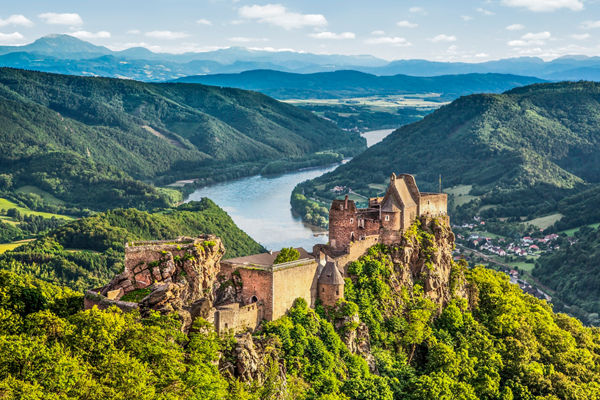
Scenic castle ruins overlooking lush valley

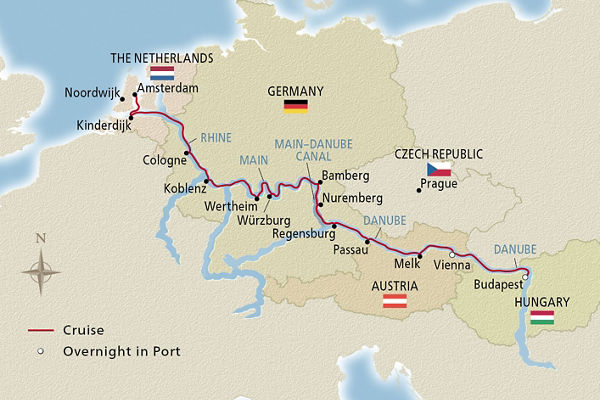
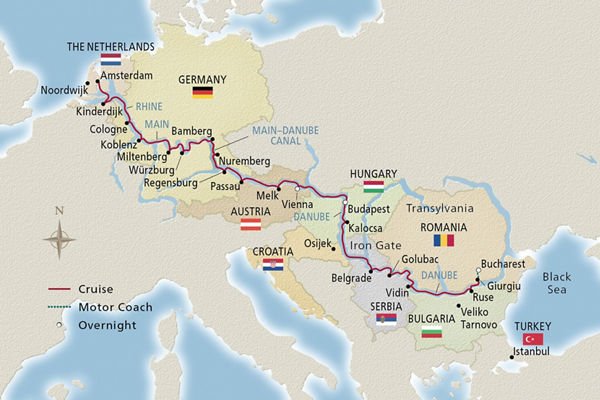
Grand European Tour

Budapest to Amsterdam
FREE Airfare* | Reduced Fares | $25 Deposit 

15 days
12 tours
4 countries
$4,999 from
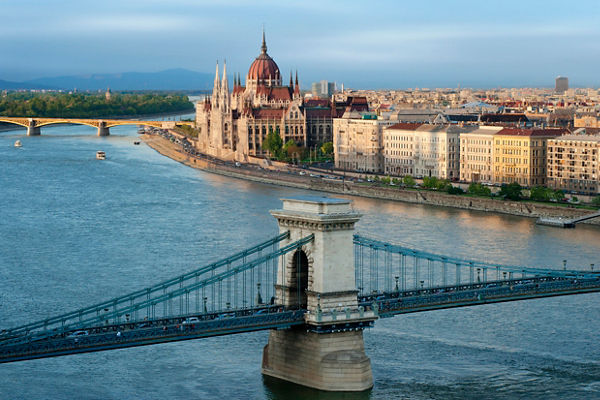
Budapest Parliament and Chain Bridge View

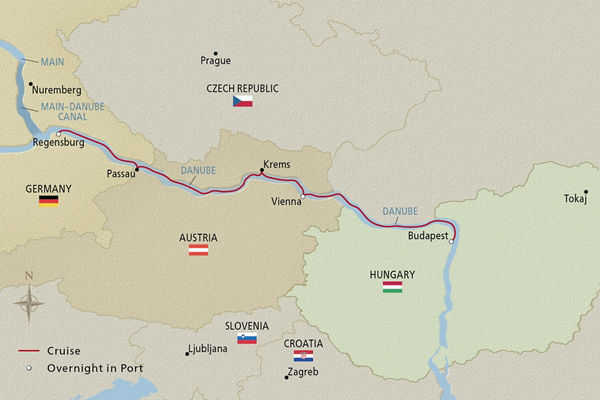
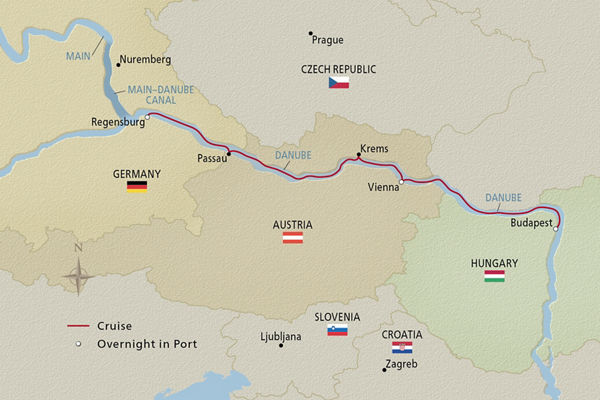
Romantic Danube

Budapest to Regensburg
Reduced Airfare | Special Fares | $25 Deposit

8 days
5 tours
3 countries
$2,399 from
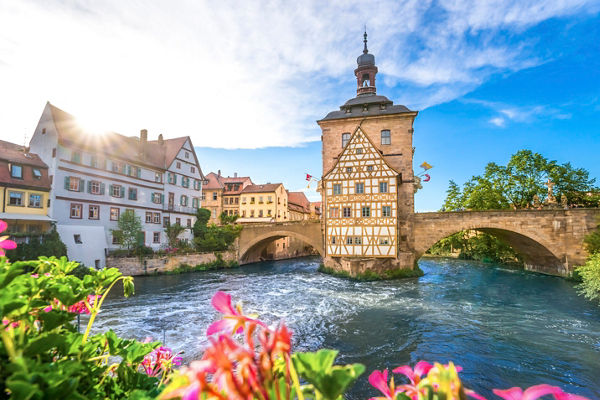
Historic German town with riverside architecture

European Sojourn

Amsterdam to Bucharest
FREE Airfare* | Reduced Fares | $25 Deposit 

23 days
19 tours
8 countries
$9,099 from
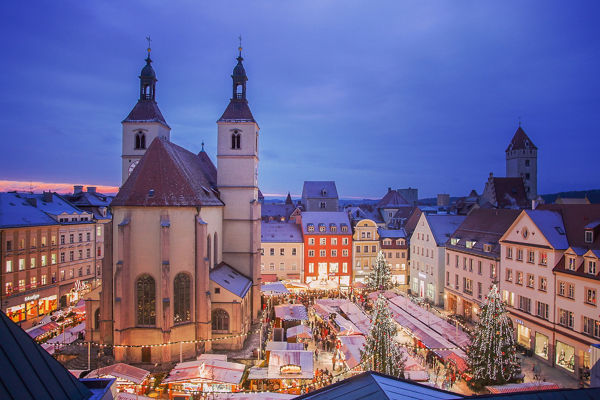
Festive European Christmas Market at Dusk

Christmas on the Danube

Budapest to Regensburg
Reduced Airfare | Special Fares | $25 Deposit

8 days
6 tours
3 countries
$2,999 from