

Set sail on the legendary Nile River
Experience the ancient wonders of Egypt, from the iconic pyramids to King Tutankhamen’s treasures. Below, you can learn more about the remarkable geography, history and culture of this storied region. Discover five of the country’s most popular dishes, see our recommendations for the best souvenirs to buy at an Egyptian souk and uncover extraordinary ancient feats of engineering and science.
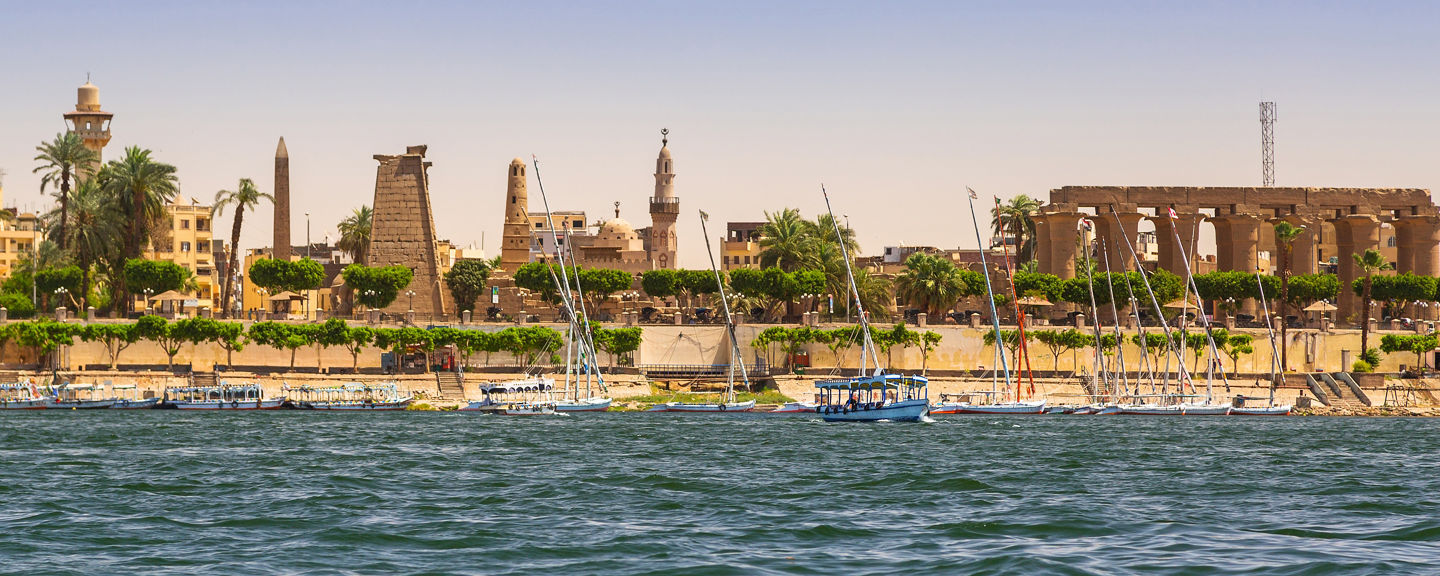
Nile
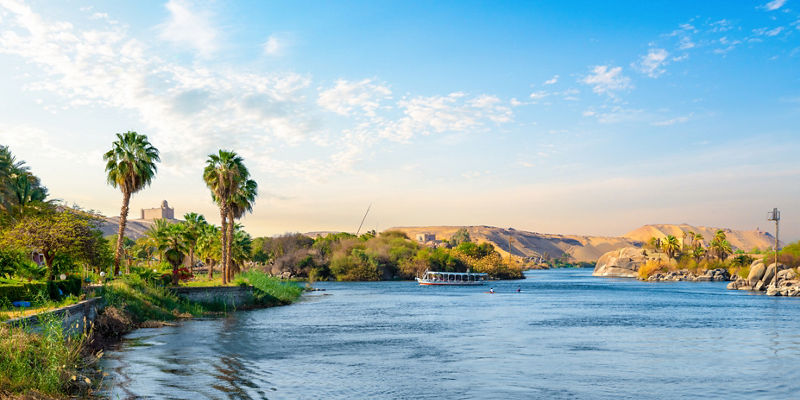
The Nile River was formed around 45 million years ago, when the earth’s tectonic plates moved and the ancient sea that covered most of Europe and North Africa shifted, forming the modern-day Mediterranean Basin. It took thousands of years for the “father of African rivers” to evolve into the longest waterway in the world, flowing north from Tanzania for over 4,132 mi. (6,650 km). It is fed by three principal streams—the Blue Nile and the Atbara River, which both flow from the Ethiopian mountains and highlands, and the White Nile, whose headstreams wind their way into Lakes Victoria and Albert.
Egypt’s climate is characterized by a dry atmosphere and a considerable temperature range. In the summer, temperatures often surpass 100 °F (38 °C), but during the winter season—spanning November to March—Cairo’s daytime temperature ranges from 68 to 75 °F (20 to 24 °C), hovering around 50 °F (10 °C) during the night. Rain falls primarily in the winter.
Without the Nile River, Egypt would likely never have become one of the most extraordinary civilizations in history. Wanderers were drawn to its banks as early as 5200 BC. As they learned the art of agriculture, permanent settlements gradually arose, and by 3100 BC Egypt had become the world’s first recognizable nation-state.
Today the river flows through different zones of plant life, depending on where it is irrigated, as well as regions inhabited by a diverse group of people—a fact reflected in the many different relationships that have formed between the river and the land’s inhabitants. Thousands of small boats ply the Nile and delta waterways. Farmers continue to plant crops along the river’s shores, and the fish that feed the people are caught in its waters. The Nile continues to be as integral to Egyptian life, lore and commerce today as it was thousands of years ago.

-
Crocodiles in ancient Egypt
Few animals commanded as much wonder and respect in ancient Egypt as the Nile crocodile (Crocodylus niloticus). Dwelling in the waters of the legendary Nile River, these extraordinary creatures embodied both the dangers and blessings of this sacred waterway. They also elegantly captured one of the civilization’s defining philosophies—that life and death, danger and renewal, are inseparable forces to be respected and balanced. From myth and art to temple worship, crocodiles were central to Egyptian spirituality, most notably through the god Sobek and the grand temple of Kom Ombo.
An awe-inspiring creature
The Nile crocodile is one of the largest living reptiles, reaching lengths of up to 20 ft (6 m). With their thick skin, bony back plates and powerful jaws, these fearsome creatures are apex predators, known for being aggressive. Although much of their diet consists of fish, they also feed on birds, other crocodiles and mammals such as antelopes and young elephants.
After being relocated to Lake Nasser for conservation purposes, Nile crocodiles no longer inhabit the river north of the Aswan Dam. Historically, though, they played a large role in Egyptian life. Farmers, fishermen and villagers lived in constant awareness of these lurking beasts, and ancient depictions reveal that Egyptians deeply respected the crocodile’s strength and ferocity. This tension between fear and reverence formed the core of ancient Egyptians’ relationship to these reptiles. Their ferocity and strength represented the untamed energy of nature, which needed to be respected and appeased rather than conquered.
Sobek, the crocodile god
The Egyptians personified the crocodile’s might in Sobek, one of the oldest and most complex gods in their pantheon. Depicted as a man with a crocodile’s head, Sobek was both a fierce protector and a life-giver. His divine power extended to the realm of kingship and protection, and he was believed to defend the pharaoh and the Egyptian people. As the guardian of the Nile, Sobek also had the power to control its annual flooding, which could bring essential water or destruction. This close link with the river also made him a key deity for fertility and sustaining crops.
The Temple of Kom Ombo
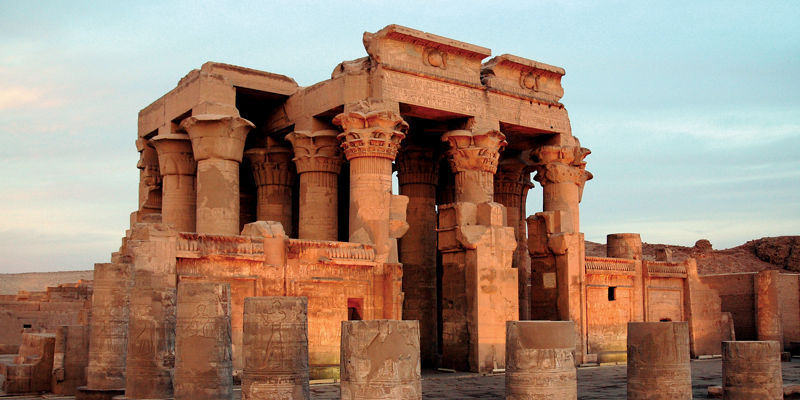
The most remarkable site dedicated to Sobek is the Temple of Kom Ombo, built on the Nile’s eastern bank during the Ptolemaic dynasty, between 180 and 47 BC. The temple is unusual because it is divided into two parts, each of which is dedicated to a different god—one to Sobek, and the other to Horus the Elder, the falcon god of healing. It is believed that the temple’s builder went to great lengths to ensure that both halves were precisely alike, so as not to offend either god.
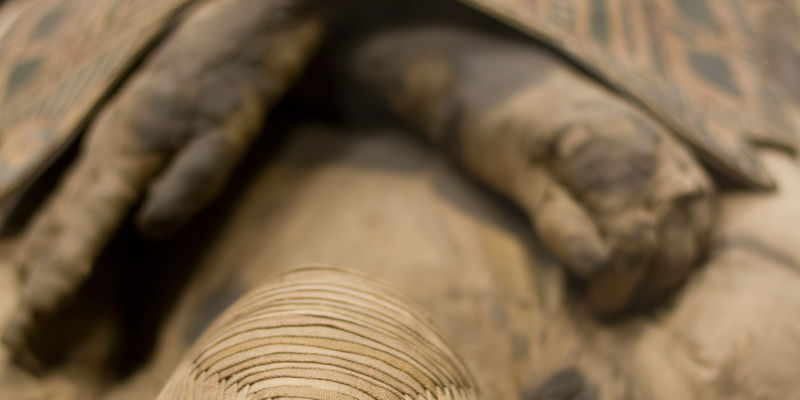
The southern section of the temple honored Sobek with rituals, offerings and carvings depicting his divine power. Nearby, archaeologists have found mummified crocodiles, now displayed in Kom Ombo’s Crocodile Museum.
-
Cuisine—3 Classic Egyptian Dishes
Flavorful and generously seasoned with aromatic herbs and spices, Egyptian cuisine draws on thousands of years of tradition, as well as the plentiful ingredients cultivated along the Nile’s fertile banks. While many visitors are familiar with favorites like hummus and shawarma, here are three of Egypt’s most distinctive foods:
- Aish baladi (Egyptian flatbread)
Should you find yourself strolling the bustling streets of Cairo during the early-morning hours, you may notice young men on bicycles carrying heaping trays of freshly baked aish baladi, or Egyptian flatbread. This local favorite is also a common sight in the city’s lively markets, emerging from scorching hot ovens bearing its trademark golden brown color and heavenly aroma. Aish baladi is often served with a sprinkling of cracked wheat on the top and eaten at any meal or occasion. Delicious on its own, it is also perfect for sopping up every drop of whatever tempting Egyptian dish happens to accompany it.
- Ta’ameya (Egyptian falafel)
If you have ever sampled the popular Middle Eastern snack known as falafel, it was most likely prepared in the traditional manner using chickpeas. In Egypt, however, the locals insist that it is best made using fava beans instead. This singular spin on falafel, called ta’ameya, results in an exceptionally light, moist texture, while the liberal use of garlic, onion and herbs such as parsley and cilantro (or coriander) adds brilliant color and vibrant flavor. Ta’ameya is primarily considered a breakfast food, but ardent devotees are happy to partake of the beloved dish at any time of day.
- Ful medames (Egyptian fava beans)
From the tombs of old to today’s street vendors, ful medames has remained a cornerstone of Egyptian cookery for thousands of years. Today, ful (as it is known to locals), is composed of slow-cooked fava beans and served with an array of toppings and seasonings, including vegetables (pickled onions or tomatoes), herbs (parsley or cilantro) and a variety of seasonings such as salt, cumin, lemon, garlic and olive oil. One of Egypt’s most popular dishes, ful medames is a seemingly simple favorite that offers much more than initially meets the eye.
- Aish baladi (Egyptian flatbread)
-
Culture—The best souvenirs to buy at an Egyptian souk
Shopping the bustling bazaars of Egypt—also known as souks—provides an opportunity to discover a plethora of unique wares. Shops and stalls line winding alleyways and corridors, selling everything from trinkets to handmade textiles to fragrant spices and perfumes, and much more. Some of Egypt’s best outdoor marketplaces include Khan el-Khalili in Cairo and the vibrant souk in Aswan. Below are a few of the most distinctive mementos Egypt has to offer its visitors.
- Coffee
In Egypt, there is a coffee shop, or kahwa, on nearly every corner. Coffeehouses serve as social gathering places, political and cultural centers, and places to make business deals. In bazaars and markets across the country, you may overhear traders meeting in the local kahwa to negotiate their terms. You can find a wide range of coffees for purchase, from light to dark beans, and regular ground coffee to a version mixed with flavorful spices, in coffee shops and market stalls.
- Papyrus
Papyrus is a long-lasting, durable writing surface created by ancient Egyptians out of the papyrus plant, from the sedge family of marsh grasses. It was made into sheets, which were sometimes pressed together and formed into rolls. The earliest known roll of papyrus, which was blank, dates to around 2900 BC, and the first examples of papyrus documents date to around 2500 BC.
A popular memento, papyrus artwork can be found everywhere, though the quality will vary. Make sure when you are shopping that you have your eye on the real thing, and that it has been hand-painted. Banana leaves have become a popular (albeit brittle) imitation.
- Rugs and Textiles
The earliest known tapestry weaving was done by ancient Egyptians between 1483 and 1411 BC. The dry desert climate preserved fragments of three linen tapestries that were found in the tomb of Thutmose IV. King Tutankhamen’s tomb (c. 1323 BC) also contained a tapestry-woven robe and glove.
Egypt is well known for its textiles, ranging from linens and scarves to rugs and tapestries. Some fabrics are richly colored but unadorned, while others are covered in elaborate appliqué work. Handmade rugs come in a variety of materials and styles, including silk knotted rugs, wool knotted rugs and loom-woven kilims. Near the Great Pyramid of Giza, you can visit Harrania, a district known for its high-quality carpets, whimsical tapestries and well-known weaving workshops.
- Coffee
-
Explore the architecture that inspired Egyptian revivalism
The glorious architecture of Egypt has enjoyed several revivals over the centuries. Much of Egyptian Revivalism can be attributed to the “Egypt fever” created by the discovery of King Tut’s tomb in 1922. With the art deco style also adorning cityscapes around the world, the architecture of the early 20th century proved to be especially robust and colorful.
Egyptian motifs. American treasures.
The most flamboyant iterations of Egyptian Revivalism were seen in the many Egyptian-style theaters that opened during the first half of the 20th century, pioneered by Grauman’s Egyptian Theater in Los Angeles in 1922.
Other theaters in the United States soon followed:
1923-1924: Peery’s Egyptian Theater, Ogden, Utah. Gloriously detailed, Peery’s features colorful depictions of cartouches and Egyptian gods, and a stage curtain adorned with the Colossi of Memnon.
1928-1929: Egyptian Theatre, DeKalb, Illinois. The grand exterior of this theater resembles the soaring pylons of Edfu or Karnak, adorned with figures of Ramses II and the sun god Ra.
1929: Fox Theatre, Atlanta, Georgia. A standout among old movie palaces, the Fox is renowned for its Moorish Revival facade. Inside Egyptian Revival touches include a ballroom inspired by a temple for Ramses II and a replica of King Tut’s throne.
1933: Egyptian Theatre, Delta, Colorado. One of the most ostentatious examples of Egyptian Revivalism, this desert-colored local favorite boasts a colorful cartouche motif. Its vaulted ceilings create a hushed, intimate atmosphere.
Legacies of pharaohs beyond the theater
Theaters were not the only venues influenced by Egyptian Revivalism. Both inside and outside the United States, many architectural treasures were born from the movement. Here is a timeline of some notable buildings:
1844: Washington Monument, Washington, DC, United States. Architect Robert Mills’ initial design honored the first president with an elaborate colonnade featuring statues of 30 Revolutionary War heroes and a soaring sculpture of Washington on top. These costly plans were eliminated in favor of a simple stone obelisk topped with a pyramid, obviously inspired by ancient Egyptian architecture.
1922: Reebie Storage Warehouse, Chicago, Illinois, United States. Regarded as a fine example of Egyptian Revival architecture, this Chicago landmark is on the US National Register of Historic Places. Twin statues of Ramses II and a pair of lotus-topped columns flank the entrance, and reliefs depict ancient Egyptians moving grain on barges.
1925-1926: Sphinx Head Society Clubhouse, Cornell University, Ithaca, New York, United States. Resembling an Egyptian tomb, this inconspicuous structure is perched partway down a cliff. This clubhouse for the Sphinx Head Society, an honor society at Cornell, later became the residence of astronomer Carl Sagan.
1927: Salt Lake City Masonic Temple, Salt Lake City, Utah, United States. The most distinguishing features of the Masonic Temple are the two sphinxes that greet you in front: part man, part lion, each draped with a flowing hood and holding a large ball in its paws. Inside, Masonic symbols blend seamlessly with Egyptian Revival elements.
1924-1929: Lenin's Mausoleum, Moscow, Russia. Designed by Alexey Shchusev, the tiered design of the Russian leader’s tomb borrows elements from the Sakkara Step Pyramid.
1926-1928: Carreras Cigarette Factory, Camden, London. A pair of eight-foot black cats guard the entrance to this Egyptian Revival art deco building. When the factory opened, to great fanfare, the street in front was covered in sand to symbolize Egypt’s deserts.
1930-1937: National Museum of Beirut, Beirut, Lebanon. This grand edifice of culture and history is fronted by four massive pillars supporting a portico enclosed by straight-angle walls. With wings stretching out on either side like towering pylons, the entire facade resembles one of the grandest temples of ancient Egypt.
1939: Social Security Administration Building, Washington, DC, United States. The Stripped Classical style of this Washington stalwart is typical of many administrative government buildings. But it conveys its weighty importance at its entrances—massive stone doorways that recall the portals into Egypt’s great temples.
-
Hieroglyphics
While early writing systems developed independently in different regions of the world, Egyptian hieroglyphics emerged as one of the earliest, dating to around 3250 BCE. Likely inspired by prehistoric rock art and symbolic motifs found on pottery and tomb goods, these signs evolved into a sophisticated system capable of encoding continuous speech. By the Early Dynastic period (around 3100 BCE), hieroglyphic writing had been standardized for administrative and ceremonial purposes, reflecting the growing complexity of Egyptian society and governance.
The system of hieroglyphics
With more than 1,000 distinct characters, hieroglyphics offer a complex mixture of phonetic and ideographic writing. For example, a character resembling an owl could represent either the idea of an owl, or it could indicate an “m” sound.
Hieroglyphic characters typically fall into four categories: alphabetic signs for single sounds, syllabic signs for sound combinations, word signs denoting objects and determinatives, which serve as visual cues guiding interpretation (e.g., a papyrus scroll indicating “mental activity”).
Hieroglyphics fell out of use by the 5th century AD, replaced by Greek and later Coptic scripts. Over time, their complex meanings also faded. While they maintained graphic appeal for many Middle Eastern and European scholars and artists, the significance of these intricate characters remained obscured for centuries.
The discovery of the Rosetta Stone
In 1799, Napoleon Bonaparte led a French campaign into Egypt, accompanied by a team of esteemed scholars tasked with assessing and claiming Egypt’s cultural treasures. Among them, in the town of Rosetta, a soldier named Pierre Bouchard stumbled upon an enigmatic black basalt slab etched with inscriptions in three ancient scripts. Little did he know that this discovery would unlock the secrets of an age-old language that had perplexed scholars for centuries.
The inscriptions encompassed Greek, hieroglyphics and demotic scripts (a simplified form of ancient Egyptian writing). While only the Greek text could be initially deciphered, it revealed that the stone contained three versions of a decree issued in 196 BC at Memphis. This provided scholars with a key to decode and compare the Egyptian inscriptions with the Greek.
The religious significance of hieroglyphics
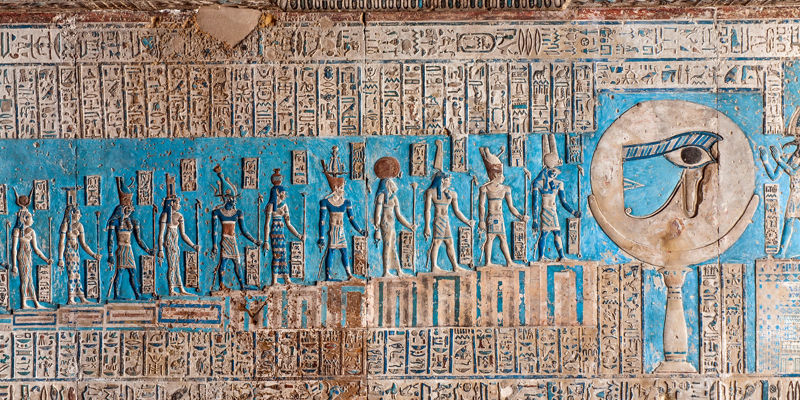
While hieroglyphics were often used for administrative and literary purposes, they served a crucial spiritual purpose as well. Known in Egyptian as medu netjer (“words of the gods”), hieroglyphics were deeply intertwined with religious ideology. Writing was considered a divine invention, and hieroglyphic inscriptions adorned temple walls, tombs and ritual objects. These texts served not only as records but were believed to play an active role in maintaining cosmic order. The script’s visual beauty reinforced its sacred aura, making it a powerful tool for expressing authority and spiritual concepts.
Dendera Temple
Visitors to Egypt can see hieroglyphics in a variety of contexts, from the intricately adorned royal tombs of the Valley of the Kings to the grand temples of Luxor, Esna and Edfu. One of the most notable sites for viewing these elegant characters is Dendera Temple, located on the west bank of the Nile River in Qena. This massive complex dates to the mid-4th century BC, although archaeologists believe that a temple has existed on the site since 2250 BC. Its stone gate and towering columns adorned with hieroglyphics are some of Egypt’s best-preserved structures.
-
History—Ancient Egypt’s feats of science & engineering
The modern world owes a debt of gratitude to the thinkers of ancient Egypt. These brilliant minds developed inventions and ironed out key concepts in math and science that went on to form the basis for many of the innovations we now hold dear.
Ancient Egyptians’ prodigious engineering skills might be most visible in the awe-inspiring Great Pyramids of Giza. Each piece of stone was set at an almost perfect right angle, an impressive feat in itself, while the stones were cut with finite precision. The pyramids’ cornerstones benefitted from a ball-and-socket design, which allowed the structures to adapt to changes in the area’s climate, while their sides were oriented to the four cardinal points on a compass—a tool that had not yet been invented when the pyramids were completed.
Research has shown that some of the stone blocks used to construct the pyramids were manufactured from an early form of concrete. To aid their construction projects, Egyptians also used simple machines and invented both ramps and levers.
Resourceful and imaginative, the Egyptians also experimented with glassmaking, became master shipbuilders, pioneered mining in the Sinai Peninsula and mass-produced pottery for export.
Their intellectual achievements were no less great. Produced around 3000 BC, Egyptian papyrus is the distant cousin of modern-day paper. Today’s alphabets are indebted to Egyptian hieroglyphics, and Egyptians also used the first-known decimal system. The Egyptian astronomical calendar, invented around 2400 BC, was used for centuries after its creation.
-
How early Egyptians harnessed the Nile River
The gift of the Nile
Geography often shapes a nation’s fate, and Egypt stands as a prime example, relying extensively on the life-giving Nile River for sustenance. With nearly 90% of its land as desert, the fertile banks of the Nile, adorned by lush farmlands and the sprawling Nile Delta, hold exceptional importance in Egypt’s history, contributing to one of the world’s most remarkable civilizations.
A thriving society takes shape
The choice to settle along the Nile granted ancient tribes the luxury of time and resources to foster specialized labor, refine crafts and redefine societal structures. The Nile’s annual floods were dependable, enriching the land and allowing surplus crops to be stored. This abundance also catalyzed early Egyptians to craft items from natural materials, sowing the seeds of a rich cultural heritage.
The Nile shapes Egypt’s political world
Settlements along the Nile birthed a compact, organized civilization synchronized with the river’s cycles. Political unity thrived in riverside strips, with Pharaohs governing agriculture through taxes and policies. While labor was mandatory, leaders also stored surplus crops and averted shortages. Thus, large silos for storing grain, which was the backbone of Egypt’s economy and served as a medium of exchange, dotted the landscape as the Nile laid the foundation for the world’s first centralized civilization.
The fertility of the Nile endures
Today, the Aswan High Dam replaces the Nile’s floods with extensive irrigation. Yet, the river’s influence persists, often shaping politics. Water scarcity can spark conflicts or cooperation, exemplified by the Nile Basin Initiative, an intergovernmental partnership uniting ten nations to equitably manage the river’s waters, fostering sustainable socioeconomic growth.
-
Khan el-Khalili, a crossroad of trade & culture
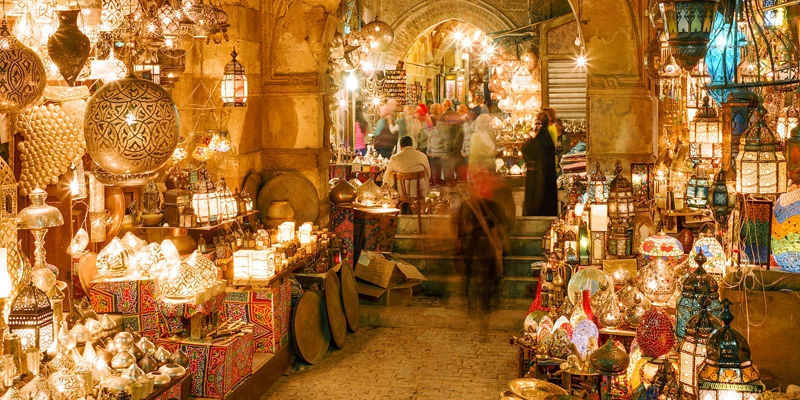
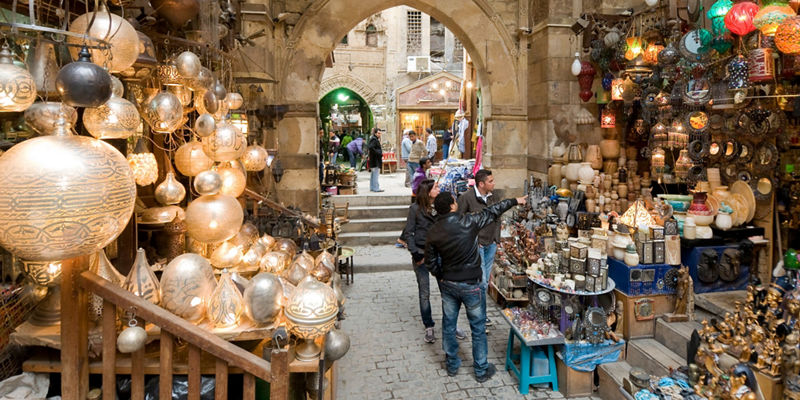
Browsing the innumerable stalls of Khan el-Khalili is akin to stepping back in time, when camel caravans arrived to sell goods to merchants, lavishly robed carpet dealers unfurled their wares and artisans skillfully hammered brass and copper into ornate lanterns, their rhythmic taps echoing through the narrow alleys.
The soul of Egypt
Souks (marketplaces) are central to Egypt’s social, cultural and economic traditions. A microcosm of the city, they provide a glimpse into local life, history, art, crafts and food. Originally established in 1382 as a caravansary—an inn where caravans rested at night—Khan el-Khalili is not only the largest souk in Cairo, but also the oldest in the Middle East. Its vast labyrinth of passageways is lined with bustling stalls and shops offering a wide range of goods. In tiny cafés, you can find locals sipping mint tea, smoking hookahs and playing backgammon.
What you will find
In today’s market, glittering brassware, vibrantly patterned carpets, expertly crafted leather goods, papyrus scrolls and endless other products spill into narrow warrens. The stalls along the main street of al Badestan overflow with souvenirs, and the scents of spices and perfumes waft through the air. Duck down one of the alleyways near Al-Azhar Mosque and you can find the gold market—a magnet for local grooms-to-be shopping for wedding jewelry. Or, search for antiques, including vintage furniture and Aladdin lamps. A richly textured cross section of Egyptian traditions, Khan el-Khalili remains a vital part of life and culture in Cairo.
Pro tip
If you visit Khan el-Khalili, do not be afraid to bargain for the best price, as it is an integral part of the marketplace experience.
-
Luxor
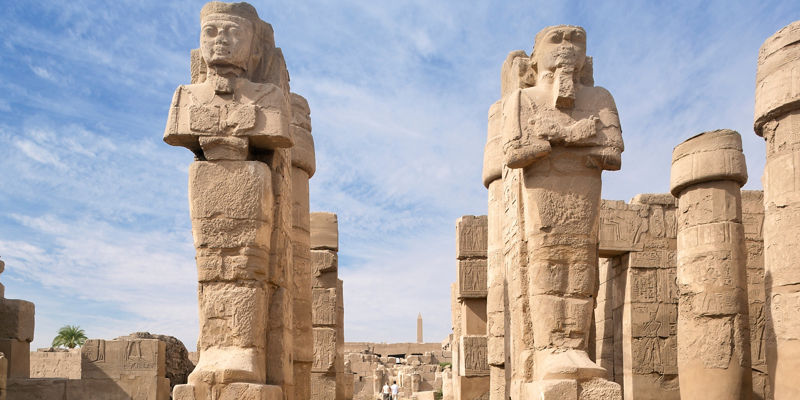
Luxor, set on the east bank of the Nile River, is a UNESCO World Heritage Site lined with beautiful colonial hotels and some of Egypt’s most ancient and significant ruins. Often referred to as one of the world’s greatest open air museums, this historic city, built upon the once-powerful capital city of Thebes, is home to the imposing Temple of Karnak and the well-preserved Temple of Luxor. These sprawling temples on the east bank are linked by the ancient Avenue of the Sphinxes. On the west bank, in the Valley of the Kings, lie the tombs of Egypt’s great pharaohs.
Temple of Karnak
The Temple of Karnak is one of the largest religious complexes of antiquity. The first known builder at Karnak is the Middle Kingdom pharaoh Senusret I (reigned c. 1971-1926 BCE), but the temple was developed continually for around 2,000 years, with additions by every major pharaoh. The site reflects Egypt’s evolving religious, artistic and political landscape over millennia, making it a key source of information for Egyptologists.
Karnak is dedicated to the god Amun, patron god of Thebes and the namesake of one of our Nile River ships, the Viking Amun. Karnak exemplifies monumental temple design, featuring towering pylons, obelisks and hypostyle halls (architectural spaces where the roof is supported by rows of columns). The Great Hypostyle Hall, built under Seti I and Ramses II, is particularly notable for its 134 colossal columns, symbolizing cosmic order and divine power. The site also demonstrates advanced engineering and urban planning, including walls that adapted to shifts in the Nile River over centuries.
Temple of Luxor
The magnificent Temple of Luxor complex was built around 1400 BC. Commissioned by Amenhotep III, it was completed during the reign of Tutankhamen and was later expanded by other pharaohs, including Ramses II. Unlike other major temples, Luxor was dedicated not to a single deity but to kingship itself. Some of the site’s ancient hieroglyphics illustrate the extravagant Opet Festival, which ensured a good harvest and symbolized the renewal of the pharaoh’s divine authority.
The temple also bears evidence of later adaptations, including Roman-period frescoes and a granite shrine of Alexander the Great, illustrating its continuous religious and political significance over time. Luxor’s unique role in royal cult practices and its layered history make it one of Egypt’s most historically and architecturally significant sites.
Avenue of the Sphinxes
The Avenue of the Sphinxes is a 1.7 mile (2.7 km) processional road linking the two temples. Constructed primarily under Amenhotep III and expanded by Nectanebo I, it originally featured over 1,000 sphinx statues, symbolizing divine guardianship and cosmic order. Today, the avenue stands as a testament to ancient urban planning and ceremonial architecture, embodying Egypt’s distinctive synthesis of art, religion and political ideology.
Luxor Museum
Aside from visiting these remarkable ancient sites, one of the best ways to experience the rich history and cultural heritage of Luxor is by visiting the Luxor Museum. Located downtown, its doors have been opened to the public since 1975, when it was founded under the initiative of the Ministry of Culture of Egypt. Its thoughtfully curated collection showcases artifacts spanning from the Old Kingdom to the Mamluk sultanate.
-
Marriage & divorce in ancient Egypt
Civil contracts for unions
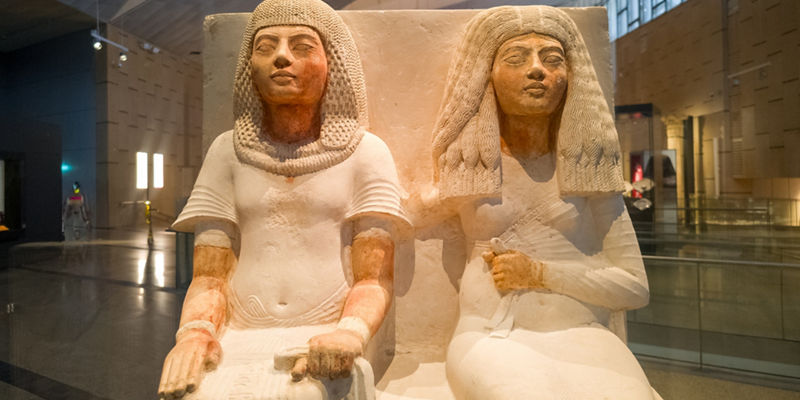
In ancient Egypt, marriage was not a sacred rite, but primarily a social and economic agreement that regulated property. Although the groom often gave the bride and her family gifts, there was no formal engagement or elaborate wedding ceremony; marriage was considered complete when the couple began living together. Married couples entered into a civil contract, in which the man committed to providing for the woman, and she in turn managed household duties, financial obligations, children and even her husband’s eventual mummification. Love poems and letters, however, suggest romantic affection was valued.
Empowered wives in contracts
Texts indicate that each spouse maintained control of the property that they brought to the marriage, while other property acquired during the union was held jointly. Legal documents written in the Demotic script, known as Demotic contracts, showcased a married woman’s financial autonomy. Women engaged in land transactions, lending money and state dealings independently of their husbands. Papyri in the collections of museums in Paris and Vienna highlight women’s interactions with the government. A pivotal legal document recounts Shakhferi, a female trader or businesswoman, reclaiming payment for military supplies. Divorce, though costly, did not erode women’s economic standing. Contracts, resembling modern prenuptial agreements, ensured fidelity, and breaches led to compensation.
Religious underpinnings
While marriage was a pragmatic venture and royal unions were most often politically motivated to consolidate power or maintain dynastic bloodlines, matrimony had some religious roots in Egyptian culture. The concept of divine pairs influenced Egyptians’ behavior. The saga of Isis and Osiris—in which a devoted goddess resurrects her murdered husband to conceive their son, symbolizing the triumph of love and loyalty over death—epitomizes their beliefs. Egyptians believed marriage and family life reflected the harmony and stability of the present world. This belief motivated people to marry and have children, because family life was considered essential for maintaining order both in society and in the spiritual realm.
Duality of genders
Marriage equality was rooted in ma’at, the universe’s harmony. Ancient Egyptians believed in a duality of genders and considered both gods and goddesses crucial. This ideology influenced marital advice, echoing contemporary wisdom.
-
Medical discoveries of Ancient Egypt
The discovery of 12 papyrus documents, known as the medical papyri, provides us with insights into the scientific treatments and remedies used in ancient Egypt. Previously thought to be “irrational” and non-scientific, the medical practices outlined in the documents have since been proven to show that many of the methods used by ancient Egyptians were not only rational, but far ahead of their time in their attempt to resolve a medical problem through careful observation and thoughtful intervention.
Ahead of their time
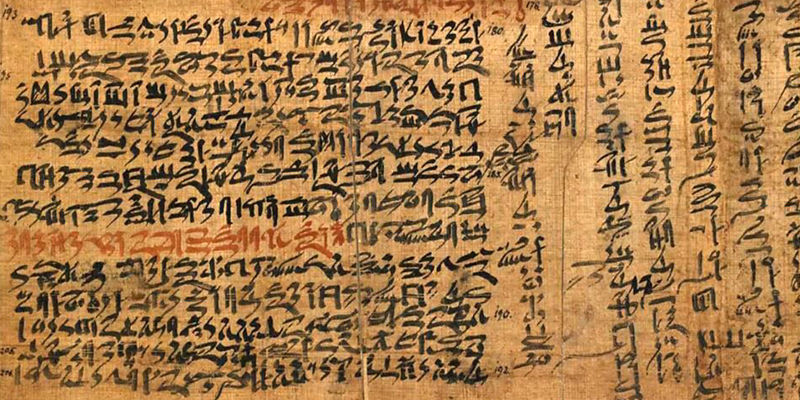
A key document is the Edwin Smith papyrus. Purchased by its namesake in the mid-19th century, it is a guide to diagnosing and treating 48 wounds. The oldest known surgical book in the world, it dates to 1600 BC and chronicles the treatment of head and torso injuries, leading some to propose that it may have been written for the battlefield. Additionally, the document is an extremely early example of a text that mentions the human brain, pulse, role of the heart in circulation and the role of the brain in voluntary movement.
An ancient apothecary
The 12 medical papyri have also opened doors to a fuller understanding of the ancient Egyptian apothecary. Some conditions were treated with prescribed medicines made from local plants and ingredients brought from the Near East, Africa and the Mediterranean. About 2,000 remedies, preparations and applications are covered in its pages. Remarkably, half of the ingredients listed are still in use today, though some are synthesized.
What mummies tell us
Recovered papyri is not the only source of information we have about medicine in ancient Egypt. Mummified remains provide a more intimate glimpse of treatments. The healed fractures and amputations of mummies’ preserved skeletons, for instance, reveal that practitioners had the tools, skills and knowledge to perform surgery successfully. In another case, researchers examined artificial toes found on preserved mummies, uncovering history’s first known prostheses.
-
Nubia & Ramses II
Situated along the Nile River, Nubia was an ancient region encompassing lands in present-day southern Egypt and northern Sudan. Its strategic location made it a vital corridor for trade, linking sub-Saharan Africa with Egypt and the Mediterranean world. Nubia—rich in gold, ivory and other valuable resources—was a key trade partner with Egypt, and throughout the centuries, the relationship between the two civilizations oscillated between cooperation and conflict. This close connection left a profound legacy on both cultures.
Intertwined histories
As early as 3100 BC, Egyptian records mention the kingdom of “Ta-Seti,” or “Land of the Bow,” referencing the famed Nubian archers who often served in Egyptian armies. During the Middle Kingdom (c. 1980–1760 BC), Egypt expanded into Nubian territory to secure trade routes and resources, constructing forts along the Nile. Later, Nubia exerted influence over Egypt during the 25th Dynasty (744–656 BC), when Nubian kings ruled as “Black Pharaohs,” reviving traditional Egyptian religious practices and monumental architecture.
Cultural exchange between the two regions was extensive. Nubians adopted Egyptian religious customs, art styles and hieroglyphic writing, while Egyptians incorporated Nubian military expertise and goods into their society. This cultural interplay illustrates a nuanced blend of rivalry and integration that spanned millennia.
Ramses II
Within this historical context, Ramses II (reigned 1279–1213 BC), often hailed as “Ramses the Great,” played a pivotal role in shaping Egypt’s dominance over Nubia. Renowned for his military prowess and monumental building projects, Ramses II conducted campaigns in Nubia early in his reign to secure Egypt’s southern frontier and maintain control over its wealth and trade routes.
Beyond military action, Ramses II’s architectural legacy in Nubia underscores his political and cultural ambitions. He commissioned six temples in Lower Nubia, the most famous being the Great Temple at Abu Simbel.
The temples at Abu Simbel
Visitors to Abu Simbel can view two monolithic temples that Ramses II constructed in Nubia during the 13th century BC. The impressive Great Temple features colossal statues and intricate bas-reliefs depicting Ramses II’s victories and divine connections. The Small Temple is dedicated to Queen Nefertari, Ramses II’s first wife, who died early in his reign. Inside, you will find sculptures honoring the pharaoh and his illustrious queen. Rediscovered during the early 19th century, this majestic UNESCO World Heritage Site was relocated in stages between 1964 and 1968 during the construction of the Aswan Dam.
An enduring legacy
Ramses II’s reign marked the height of Egypt’s imperial control over Nubia, blending military might with cultural integration. His efforts ensured that Nubia remained a crucial part of Egypt’s economic and religious sphere, while his monumental projects immortalized this dominance in stone. Ultimately, the interconnected histories of Nubia and Egypt—shaped by trade, warfare, and cultural exchange—reflect a dynamic relationship that profoundly influenced the trajectory of ancient Northeast Africa.
-
The evolution of a beloved board game
Backgammon
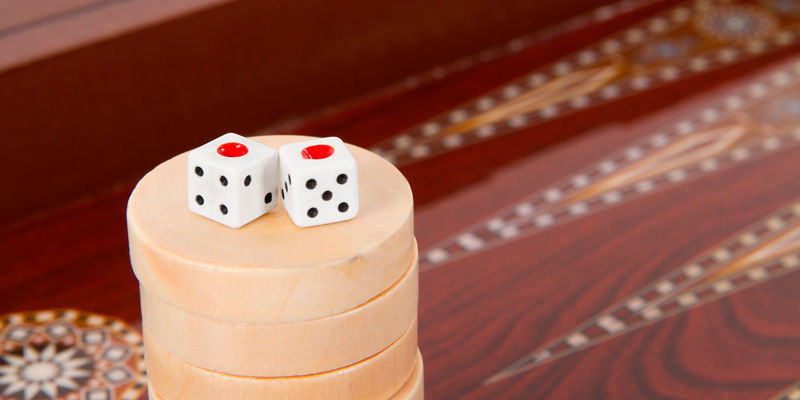
One of the world’s oldest games, backgammon dates back 5,000 years to Mesopotamia, the region known today as Iraq. The Egyptian form is believed to have originated from the ancient game of senet. Researchers estimate that senet dates to 3100 BC, based on their discovery of a hieroglyph that represented this game of moving pieces. Actual paintings of Egyptians playing senet appear on tomb walls from around 2500 BC, while intact boards have been unearthed from the Middle Kingdom (2055–1650 BC). The most spectacular, a lavishly decorated blue board inscribed to Amenhotep III, dates to the 14th century BC.
Playing games with the afterlife
During or before the New Kingdom (1550–1077 BC), senet took on a profound meaning. Archaeologists uncovered papyrus writing from this period that they called the “Great Game Text,” which suggested that the movement of pieces around the board came to represent the journey of the ka, or soul, into the afterlife. Religious-themed markings on the unearthed boards themselves supported this finding, as did the writings in Chapter XVII of the Book of the Dead, the ancient text written by priests to guide the deceased into the next world.
The longest game in history
Ancient trade routes allowed Egyptians to share senet with other cultures throughout the Eastern Mediterranean and beyond. Its simplicity and the primitive pieces it required for play made it easy to replicate using crude or improvised boards. Senet proved so enduring that it branched off into many versions, including brädspel—a game recovered from the Viking warship Vasa—and backgammon.
Lucky rolls and strategic movement
In today’s world of board games, backgammon is classified as a “race game” in that its object is to move all your pieces off the playing board first. This is accomplished with a combination of lucky rolls of the dice and strategic movement of your pieces relative to your opponent. It is astonishing that it has remained so prevalent and beloved over millennia, continuing to captivate the attention of Egyptians and board gamers across the world.
-
The Giza Plateau
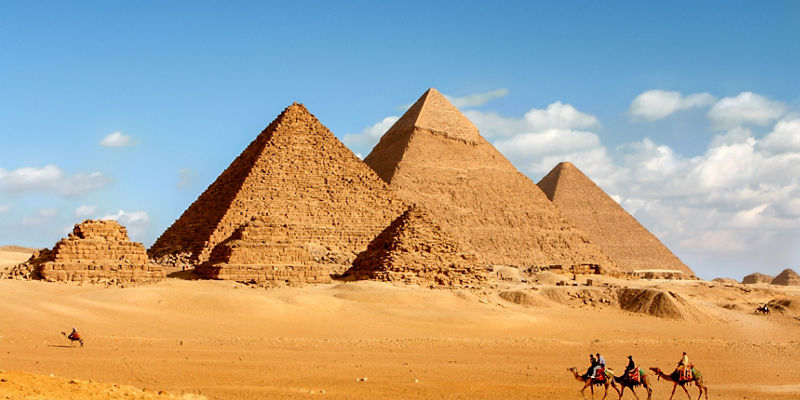
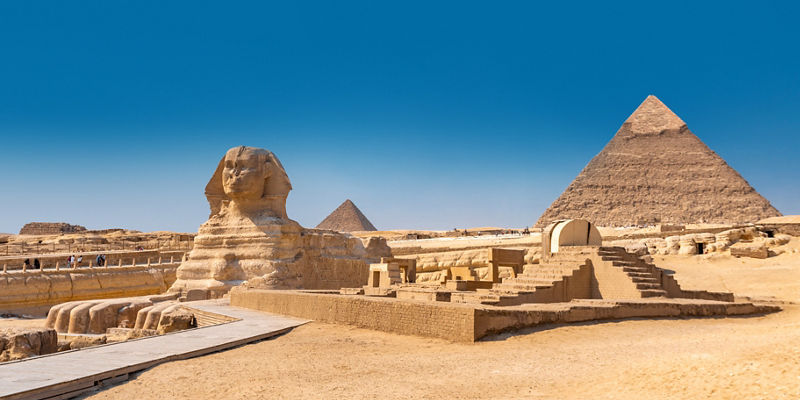
The Giza Plateau, located on the west bank of the Nile near present-day Cairo, became the focal point of royal burial practices during Egypt’s Old Kingdom (c. 2575–2230 BC). It houses the pyramid complexes of Khufu, Khafre and Menkaure—monumental projects that reflect the political and religious ideology of Egypt’s Fourth Dynasty—along with subsidiary pyramids, temples, cemeteries and the iconic Great Sphinx. Together, these sites form part of the UNESCO World Heritage Site of Memphis and its Necropolis—the pyramid fields from Giza to Dahshur. These monuments were not isolated tombs but parts of elaborate complexes designed to ensure the pharaoh’s divine afterlife and reinforce his centralized authority.
The Pyramids of Giza
The Great Pyramid of Khufu, the only one of the Seven Wonders of the Ancient World still remaining, dominates the landscape of the Giza Plateau. Built by Khufu, the second king of the Fourth Dynasty (c. 2543–2436 BC), the massive structure was completed in the early 25th century BC. Consisting of approximately 2.3 million limestone blocks and originally rising to a height of 482 feet (146.6 m), this remarkable monument was the tallest man-made structure for nearly four millennia.
The middle pyramid was built for Khafre, the fourth king of the Fourth Dynasty. It originally measured 471 feet (143 m). The smallest of the three pyramids was constructed for Khafre’s successor, Menkaure, and its completed height was 218 feet (66 m). Although the interiors and exteriors of all three tombs have been plundered over the millennia since they were built, these incredible structures remain enduring testaments to one of history’s greatest civilizations.
The Great Sphinx
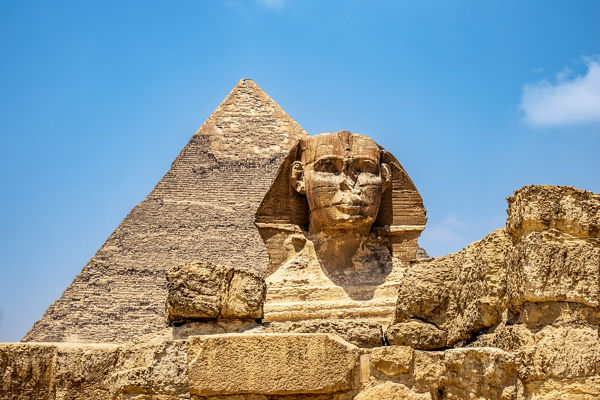
The Great Sphinx, known as Abu al-Hol, serves as a symbolic guardian of these monumental tombs. This colossal recumbent half-lion, half-human is one of the world’s largest sculptures, measuring 240 feet (73 m) long and 66 feet (20 m) high. Carved from a single piece of limestone, the statue dates from Khafre’s reign (c. 2575–c. 2465 BC), and likely bears Khafre’s face, framed by a traditional Egyptian royal headdress.
Over the years, the Great Sphinx has deteriorated, suffering erosion to the body and damage to the face, including a missing nose. Pigment residue also reveals that the Great Sphinx was once painted. Today, the Sphinx is one of Egypt’s most iconic landmarks, and it remains a potent symbol of the royal power wielded by the pharaohs.
Surrounding structures
Around the three pyramids are extensive fields of mastabas, flat-topped structures used for nonroyal burials. Arranged in a grid pattern, these tombs were created for royal officials or relatives of the king.
Additional excavations have also revealed workers’ districts, including bakeries, workshops and the nondescript tombs of laborers and artisans. Initially, scholars believed the ancient Greek historian Herodotus, who suggested that the construction of the Great Pyramid required 100,000 workers, most of whom were agricultural laborers in need of work when the Nile River flooded. More recently, archaeologists have suggested that the builders lived on-site permanently and that the workforce was more limited—only around 20,000 laborers, plus the people necessary to support their community, such as priests, bakers and physicians.
-
The goddess Isis & the Temples of Philae
One of the most important goddesses in ancient Egypt, Isis was believed to possess great magical powers, often invoked for protection and healing. She symbolized motherhood and was associated with fertility and nurturing. Beyond Egypt, the cult of Isis spread into the Greco-Roman world, where she was worshipped as a goddess of life and navigation.
Stunning architectural treasures
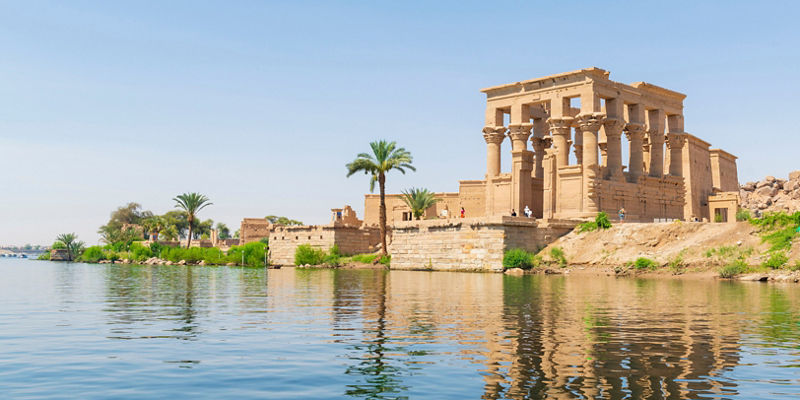
Construction began on the Temples of Philae—built to honor Isis—around 690 BC on Philae Island, near Aswan. The massive pylons of the Temple of Isis lend the site a monumental air. A large courtyard between them, flanked by two colonnades, hints at the ceremonies that once unfolded there. Adjacent, the lofty and elegant Kiosk of Trajan was constructed by the namesake Roman emperor. Sometimes called “the emperor’s bed” for its resemblance to a canopy bed, it is believed to have been built to shelter the barque of Isis (a sacred ceremonial boat that played a central role in religious ceremonies).
A site of religious importance
The island of Philae was a vital religious center from Pharaonic times until the 6th century AD. So influential was the cult of Isis that even Ptolemaic and Roman rulers worshipped there to align themselves with her power. Under the Byzantine Empire, Philae became a seat of Christianity. There is evidence that one of its chapels, originally dedicated to Osiris (god of the afterlife), was later used to worship Jesus.
A meticulous recreation
The remarkably preserved temple complex was relocated to the island of Agilkia in the 1970s to save it from rising waters after the completion of the Aswan High Dam. The Temple of Isis, the Temple of Hathor, the Kiosk of Trajan and other structures were all placed and reconstructed to resemble the original complex on the island of Philae. Even the island’s landscaping was replicated, providing a fascinating glimpse of one of Egypt’s most significant sites.
-
The Grand Egyptian Museum
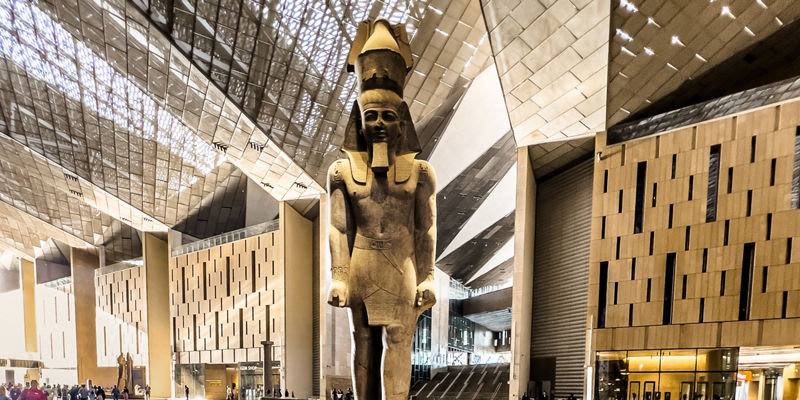
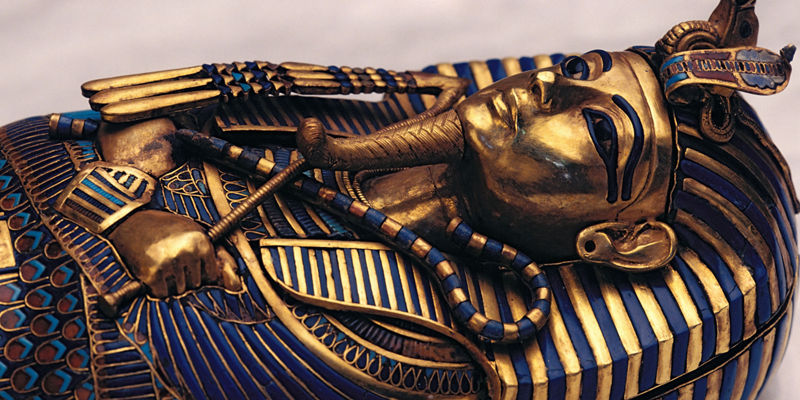
Located near the iconic pyramids on the Giza Plateau, the long-awaited Grand Egyptian Museum spans 120 acres and houses the world’s largest collection of ancient Egyptian artifacts. The complex—two decades in the making and billed as the world’s largest archaeological museum—showcases approximately 100,000 objects, including the imposing 3,200-year-old statue of Ramses II. King Tutankhamen’s gold mask and sarcophagus are the crown jewels of the permanent exhibit of treasures from the boy-king’s tomb. A visit to the Grand Egyptian Museum promises an unparalleled journey through Egypt’s rich history.
An architectural marvel
The Grand Egyptian Museum is not only a trove of historical artifacts but is also an architectural masterpiece. Designed by Heneghan Peng Architects, a renowned international firm based in Ireland, the museum features a striking facade of translucent alabaster stone that reflects the desert sun. Its vast atrium offers breathtaking views of the Giza pyramids, creating a seamless connection between Egypt’s ancient wonders and modern innovation. The layout is thoughtfully designed to guide visitors through a chronological journey of Egypt’s history, from prehistoric times to the Roman era.
A long-awaited opening
In 1992, Egypt’s president Hosni Mubarak announced plans to build an extensive museum dedicated to housing the country’s ancient artifacts. A decade later, the government announced a worldwide competition for the design of the Grand Egyptian Museum, and in 2005, construction began. The highly anticipated official opening of the museum took place on November 1, 2025. Building a facility capable of housing thousands of priceless artifacts required cutting-edge conservation technology and meticulous planning to ensure the safety of Egypt’s cultural treasures. Global collaborations, funding hurdles and the commitment to create a world-class experience meant that every detail—from architectural design to artifact transport—was executed with extraordinary care. Today, the museum stands as a testament to Egypt’s dedication to preserving its heritage for future generations.
Cutting-edge technology
Beyond its impressive collections, the museum integrates state-of-the-art technology to enhance the visitor experience. Interactive displays, immersive virtual reality exhibits and advanced lighting systems bring ancient stories to life in vivid detail. Climate-controlled galleries ensure the preservation of delicate artifacts, while digital archives allow scholars and enthusiasts worldwide to access Egypt’s cultural heritage. This fusion of history and technology positions the Grand Egyptian Museum as a model of museum innovation.
Cultural and educational hub
The museum functions not only as a historical showcase but also as a center of learning and cultural exchange. With research facilities, conservation labs and educational programs for students and professionals, it is poised to serve a large international community of Egyptologists. Visitors can also attend lectures, workshops and temporary exhibitions that delve deeper into ancient Egyptian civilization and archaeology. With its expansive gardens, restaurants and retail spaces, the museum offers a holistic experience that combines education, leisure and cultural enrichment.
-
The temples at Abu Simbel
Today, two awe-inspiring monuments of the ancient world can be found on the western bank of Lake Nasser: the temples of Abu Simbel. Commissioned in the 13th century BC by Ramses II, one of Egypt’s most powerful rulers, these colossal structures were originally carved into a sandstone cliff along the banks of the Nile. One temple honors the gods Ra-Herakte, Amun-Ra and Ptah, while a smaller temple was dedicated to the goddess Hathor and the pharaoh’s beloved wife, Nefertari.
The location of the temples
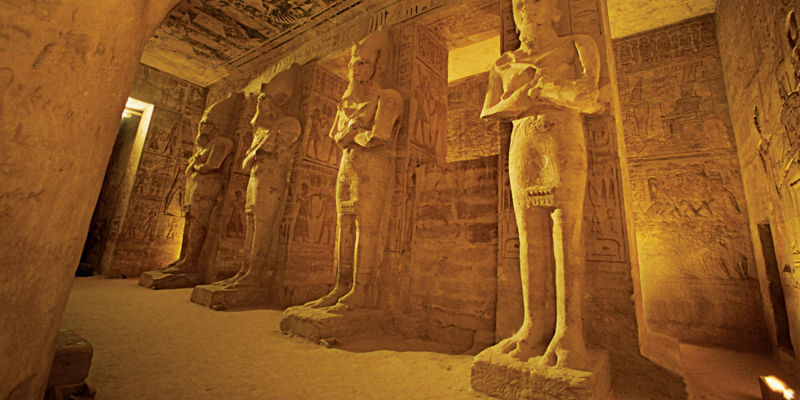
Abu Simbel stood guard over Egypt’s southern frontier, symbolizing dominance over Nubia and control of vital trade routes. Travelers who approached Egypt from Nubia would be greeted by these towering figures, a silent proclamation of Ramses II’s power and divine favor. The four colossal statues of Ramses II at the entrance of the main temple, each soaring 66 feet (20 m) high, were designed to impress and intimidate.
In the 1960s, rising waters caused by the construction of the Aswan High Dam threatened to submerge Abu Simbel. In one of the great archaeological engineering projects in history, UNESCO oversaw a piece-by-piece relocation of the temples. The relocation project included the construction of an artificial mountainside—a stunning replica designed to honor the original setting of the temples.
The interior of the main temple
Inside, the temple walls are adorned with vivid reliefs depicting the pharaoh’s military triumphs, reinforcing Ramses II’s image as a warrior-king favored by the gods. Every detail—from the towering pylons to the intricate hieroglyphs—speaks of a culture that fused art, religion and politics into a single, monumental vision.
Abu Simbel is not only a marvel of size and beauty but also of celestial precision. Twice each year—on or around February 22 and October 22—the rising sun pierces the larger temple’s inner sanctum, illuminating the statues of Ramses II and the gods seated beside him. This phenomenon, which coincides with the pharaoh’s birthday and coronation day, reflects the Egyptians’ deep understanding of astronomy and their belief in cosmic harmony. The alignment required extraordinary planning and execution, underscoring the sophistication of ancient engineering.
The temple of Nefertari
The temple dedicated to Queen Nefertari and the goddess Hathor lies just north of the main temple and is known as the Small Temple of Abu Simbel. While smaller in scale, it is still a grand monument that is adorned with 35-foot statues of the king and queen.
The temple walls feature intricate reliefs that depict Queen Nefertari in various roles—playing music, making offerings to the gods alongside her husband and receiving divine blessings. The architecture and detailed artwork showcase the remarkable craftsmanship of ancient Egyptian artisans and highlight Ramses II’s devotion to his beloved wife.
Why Abu Simbel matters today
Designated a UNESCO World Heritage Site, Abu Simbel attracts travelers and scholars from around the globe. Standing before those colossal statues, one can feel the weight of history and the brilliance of a civilization that thrived over 3,000 years ago. From feats of engineering and deep spiritual significance to remarkable artistic beauty and enduring emotional resonance, Abu Simbel promises an experience that lingers long after you leave.
-
Unearthing a slice of the ancient Egyptian diet
A menu for the afterlife
When researchers discovered three small ceramic jars of cheese in the tomb of a noblewoman at the necropolis of Sakkara, they were astonished. Previously, almost nothing had been known about the consumption of cheese in ancient Egypt. Buried around 3000 BC, the cheese resembled Çökelek and Lor cheeses produced in present day Turkey. This incredible discovery, along with artwork of milking cattle and bags of milk products, indicates that cheese making was an important component of ancient Egyptian agriculture.
A feast fit for a pharaoh
Members of the nobility were buried with many foods, including meat, for the afterlife. Like the bodies of the deceased, meats were preserved through a process of slow drying with salt, bandaging and coating with a resin. King Tutankhamen’s tomb contained 48 wooden boxes of dried meats stored beneath a ritual cow-shaped couch. Finely woven baskets in the boy king’s tomb held wheat and barley, bread loaves, figs, dates, melons and grapes, while jars contained the residues of honey and wine.
Delicious Egyptian cuisine for this life
Today, Egyptians are consummate hosts who love to share their cuisine. During a visit to the country, you might sample molokhia (a favorite thick green soup of leafy vegetables, often served with chicken), faseekh (a salted dried fish), freshly baked pita bread or mint tea.
-
Unveiling the legacy of Queen Hatshepsut
A pioneering pharaoh
Among ancient Egypt’s powerful queens, none scaled the heights of authority quite like Hatshepsut. A beacon of inspiration, she shattered norms by assuming full pharaonic power. Her reign ushered in an era of peace and prosperity, marked by extensive trade routes reaching Punt, possibly modern-day Somalia. Her architectural prowess surpassed her male predecessors, with the crowning glory being Deir el-Bahri, a majestic temple in western Thebes that once hosted myrrh trees and refreshing fountains.
Breaking gender boundaries
Hatshepsut’s statues often portray her with a beard, not to mask her gender, but to align her with male forebears through pharaonic iconography. Linguistically feminine pharaonic names, however, strategically cemented her authority and goddess-like status, as the pharaoh was deemed on par with a deity.
Elevated women of antiquity
Egypt’s grand monuments echo the legacy of female pharaohs, queens and goddesses. Hatshepsut’s mark is indelible in the grandeur of Deir el-Bahri. Mighty women like Queen Nefertari and Cleopatra, preceding the Roman Empire, were resolute leaders. Respected goddesses—led by Isis, Mother of the Gods—embodied fertility, health and prosperity.
Influence on the women of Ancient Egypt
Tomb paintings and wall adornments reveal the essence of everyday Egyptian women. Poised and productive, they engaged in temple rituals, agriculture, hunting and market transactions—a rarity in their time. Elite women served as judges, priestesses and overseers, embodying strength and influence across society’s strata.
-
Unveiling Tutankhamen's treasures
The triumph of discovery
In November 1922, a historic moment unfolded as Lord Carnarvon and Howard Carter, partners in Egyptology, uncovered the treasures within Tutankhamen’s tomb. As Carter illuminated the chamber, Carnarvon inquired, “Can you see anything?” Carter famously responded, “Yes, wonderful things.”
Tutankhamen’s trove
Tutankhamen’s tomb yielded over 5,000 artifacts, including a golden coffin, thrones, archery bows, food, wine, sandals and even a dagger with a blade crafted from a meteorite. Carter meticulously cataloged these riches over a decade, with many items touring global museums. The discovery ignited Egyptian Revivalism—an architectural movement reflecting ancient temple aesthetics.
A king’s modest resting place
Despite ruling during Egypt’s zenith from ages 9 to 19, King Tut’s tomb was unexpectedly small for a pharaoh of his stature. Some speculate his untimely demise led to his interment in a tomb intended for another.
The fateful unveiling
Lord Carnarvon and Carter meticulously planned their Egyptian expeditions in Highclere Castle’s esteemed chambers. Battling financial strain and war-induced halts, their 1922 decision to unearth one last area marked the turning point.
A lifetime devotion
The duo’s groundbreaking discovery of history’s most renowned buried tomb rekindled global interest in ancient Egypt. Beyond Lord Carnarvon’s passing, his widow shared these treasures with museums, and some reached the Metropolitan Museum of Art. The 8th Earl and Countess of Carnarvon at Highclere Castle now preserve Carter’s discreetly stored items, uncovered in 1987. Among these treasures are resplendent jewelry, gilded masks, noblewoman's coffins and intricately carved figures, complemented by items graciously returned by the British Museum and Newbury Museum.
-
Valley of the Kings
Situated near Luxor along the Nile River, the Valley of the Kings is a renowned ancient burial site for Egypt’s pharaohs, including Tutankhamen, Ramses IV and Seti I, among others. Dating from the 16th to the 11th century BC during the New Kingdom, the royal necropolis features dozens of tombs, intricately adorned with hieroglyphics, carved columns and vibrant wall paintings. Visitors to this UNESCO World Heritage Site can enter some of the tombs to experience an immersive look into the vibrant culture of ancient Egypt.
A discreet location
The pharaohs of the New Kingdom feared for the safety of their elaborate tombs, so they chose to conceal them in this lonely valley, which was part of the ancient city of Thebes. Sunk into the heart of the mountains, the tombs often consisted of a descending corridor intersected with deep shafts designed to perplex potential grave robbers. The royal mummy was laid to rest in a stone sarcophagus in a burial chamber located at the end of the corridor. This was surrounded by additional store chambers that were filled with furniture, everyday objects and treasures, all destined for the king’s use in the afterlife.
Clearing out the tombs
Despite these elaborate precautions, most of the tombs in the valley were robbed throughout history. Some were plundered, but others were systematically stripped during the 21st dynasty, as a means of protecting the corpses and returning the objects to the royal treasury. By the time Tutankhamen’s tomb was discovered in 1922, it was the only resting place left intact. The artifacts within, now housed in the expansive Grand Egyptian Museum, revealed to scholars precisely how elaborate a pharaoh’s burial would have been.
Hatshepsut
Hatshepsut was a female ruler of Egypt who adopted the full titles and dress of a pharaoh. She ruled as a coregent between 1479 and 1473 BCE on behalf of her stepson, Thutmose III, who inherited the throne as an infant. Within seven years, she had been crowned king, and she ruled independently from 1473 to 1458 BCE.
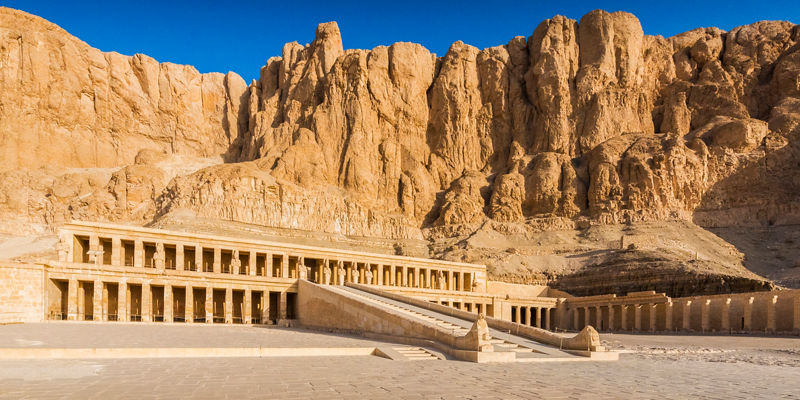
Hatshepsut’s tomb, cut high into a cliff above the valley floor, is the longest in the Valley of the Kings. Her burial chamber lies almost 700 ft (215 m) from the entrance, descending 320 ft (100 m) into the rock. A short distance from the Valley of the Kings, visitors can visit Hatshepsut’s grand, three-terraced mortuary temple, constructed against the cliffs of Deir el-Bahari. It is now considered a masterpiece of ancient architecture.
Hot air balloons
Hot air balloon rides over the Valley of the Kings are a popular attraction. From above, balloon passengers can experience panoramic views of the Nile River, the Theban Necropolis and the rugged cliffs and tomb entrances of the Valley of the Kings itself. This early-morning adventure provides stunning views of the sunrise illuminating the ancient landscape. It is a unique and serene way to appreciate the grandeur of Egypt’s historic sites.


Nile Highlights
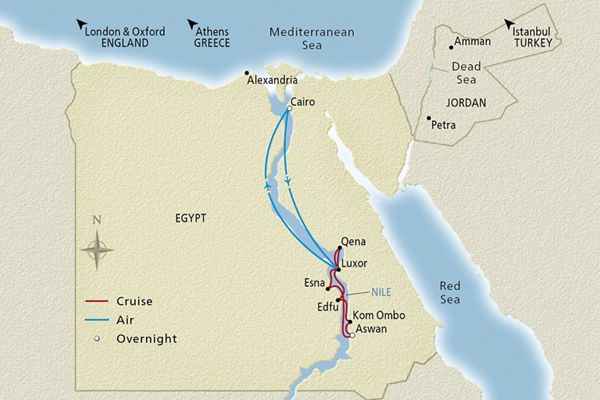
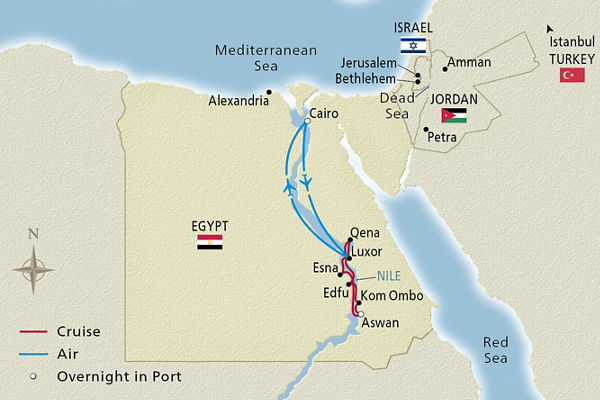
Follow the timeline of Egyptian civilization, beginning in Cairo and culminating with a spectacular Nile River cruise from Luxor to Aswan and back. Let your imagination soar as your ship meanders through panoramic desertscapes, fertile farmlands, colorful villages and UNESCO World Heritage Sites that preserve the ancient glory of Egypt’s greatest temples, palaces and tombs. Included excursions in every port reveal highlights like these:
- Visit the iconic pyramids of Giza and the Sphinx
- Discover the treasures of King Tutankhamen
- Explore Luxor’s Karnak Temple complex
- Tour the pharaonic tombs of The Necropolis of Thebes
- View the stunning Luxor Temple, with its sphinx-lined avenue
- Visit Seti I’s tomb to view its impressive vaulted ceilings
- See the temple of Hatshepsut, Egypt’s only female pharaoh
- Peruse the exquisite art in the temple of Hathor at Dendera
- Stroll through Aswan’s atmospheric souk
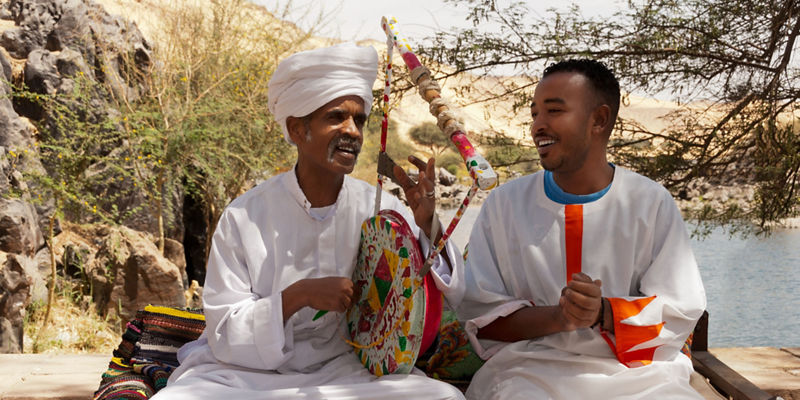
- Enjoy a memorable visit to a Nubian village and school
- Visit the romantic, waterbound Temple of Isis at Philae
- Step into the magnificently preserved Temple of Horus in Edfu
Destination Insight Videos

Tutankhamen and Highclere Castle (9:26)
Uncover the fascinating history behind the discovery of Tutankhamen’s tomb by archaeologist Howard Carter and George Herbert, the 5th Earl of Carnarvon, and get an exclusive look at Highclere Castle’s collection of Egyptian relics.

Lord Carnarvon Invites You to Egypt (1:33)
Join the 8th Earl of Carnarvon, godfather of the Viking Osiris, as he shares highlights from his family’s trip to Egypt in November 2024 for the naming of our newest ships on the Nile River. Lord Carnarvon’s great‑grandfather, the 5th Earl of Carnarvon, was Howard Carter’s benefactor and co‑explorer, whose excavation uncovered the tomb of King Tutankhamen almost exactly 102 years earlier on November 4, 1922.

Nile Travel FAQ
All-Inclusive Itineraries—Nile
Choose one of our enriching, all-inclusive voyages and discover the many benefits of exploring in Viking comfort.