

Discover Portugal
Experience Portugal’s picturesque landscapes and diverse cultural treasures. From Porto’s cobblestone streets to the Douro Valley’s scenic vineyards, this enchanting country offers visitors a variety of delights. Read on to learn more about a hearty local sandwich, enhance your knowledge of fado music and delve into the lives of two notable Portuguese explorers.
Portugal
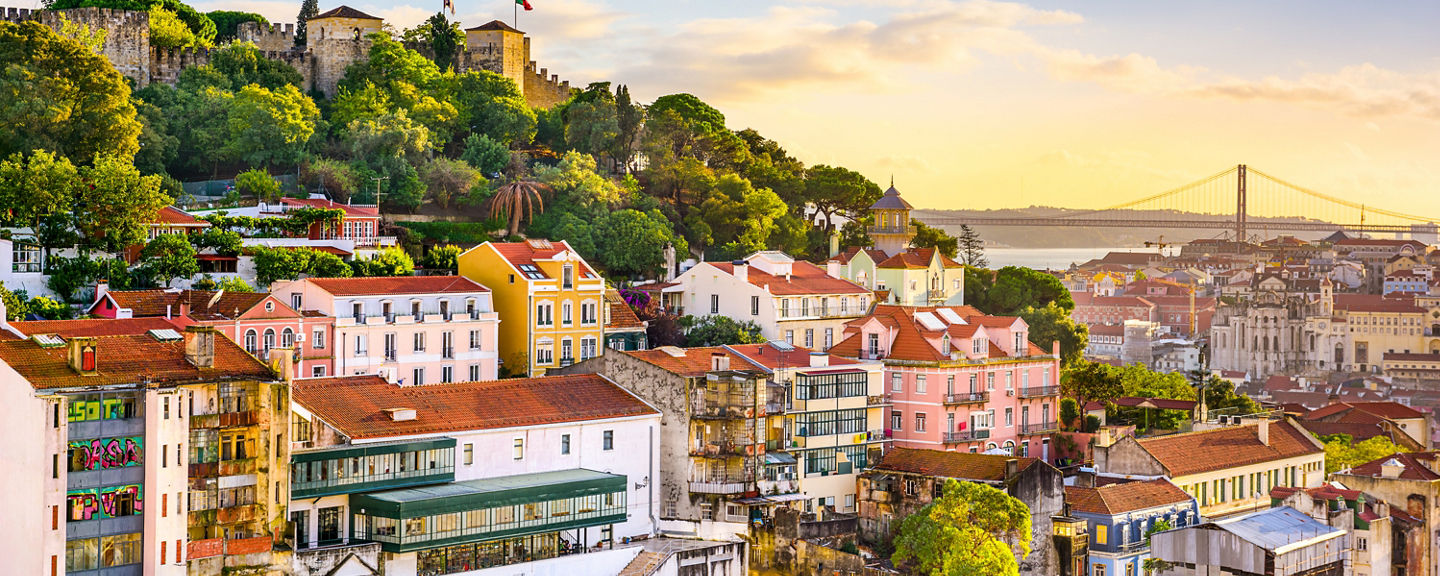
Portugal lies along the Atlantic coast and occupies one-sixth of the Iberian Peninsula, as well as two island groups in the Atlantic: the Azores and Madeira Islands. While it is not a large country, Portugal contains a great deal of geographical diversity, from low-lying plains to the towering Estrela Mountains. Its northern coast and mountainous interior tend to be sparsely settled, while the warm, fertile south is more populous. Temperatures average about 75°F (24°C) in summer and 50°F (10°C) in winter, although the weather can be cooler at higher elevations.
Lisbon, Portugal’s capital city, was settled roughly four centuries before Rome and is the second-oldest European capital after Athens, Greece. The country has had the same defined borders since 1249, making it one of the oldest countries in Europe. Once a great world power, Portugal’s legacy can still be traced through linguistic patterns. Beyond Portugal, Portuguese is also the official language of Angola, Brazil, Cape Verde, East Timo, Equatorial Guinea, Guinea-Bissau, Macao, Mozambique, and São Tomé and Príncipe. It is the sixth most spoken language on Earth.
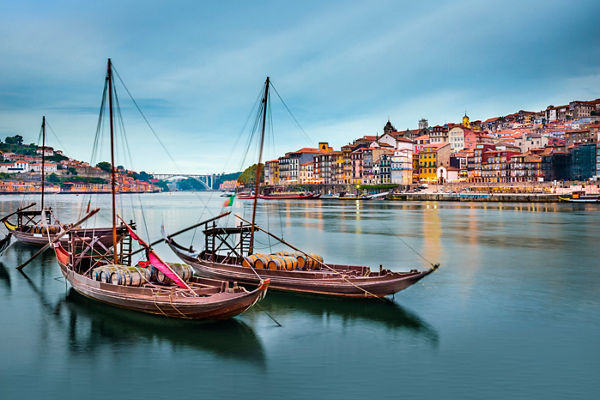
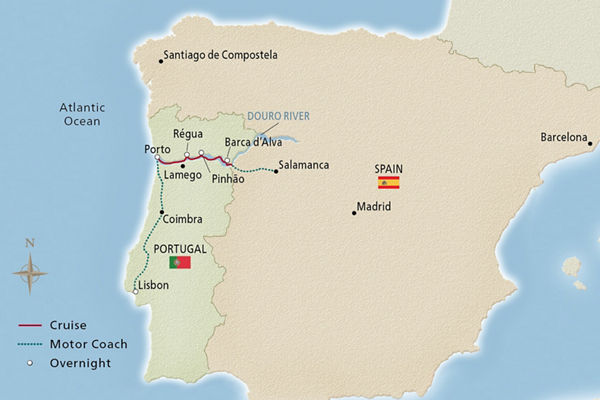
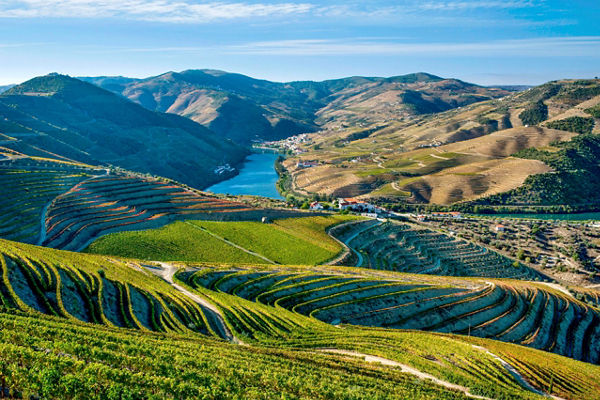
Portugal is home to more than 15 UNESCO World Heritage Sites, including the Douro wine region, which is known for its famous port wine. Much loved for its characteristic full-bodied sweetness, port has been produced in the area for more than 300 years. According to the guidelines established by the European Union’s Protected Designation of Origin, only wine produced in the Douro Valley may be labeled “port” or “porto” (although this is not required in the US).
In 1994, Lisbon was designated a European City of Culture, and it hosted the World’s Fair in 1998. The latter event catalyzed the city’s largest renewal project since the rebuilding in the wake of the 1755 earthquake, including the construction of Europe’s longest bridge: the Vasco de Gama Bridge in Lisbon, which spans 10.5 mi. (17.2 km).

-
Fado
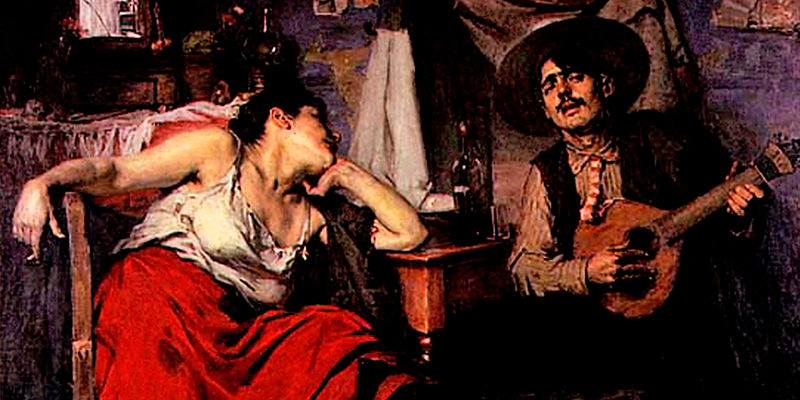
Recognized as an expression of Intangible Cultural Heritage by UNESCO in 2011, fado is a Portuguese musical style known for its emotional intensity, poetic lyrics and haunting melodies. Fado has been performed in the streets, taverns and neighborhoods of Lisbon for nearly two centuries and remains one of the country's most cherished cultural expressions.
Its origins can be traced to the working-class districts of Lisbon during the early 19th century, particularly in neighborhoods such as Alfama, Mouraria and Bairro Alto. Historians believe fado emerged from a blend of influences, including Portuguese folk traditions, Afro-Brazilian musical styles and songs brought to the city by sailors, merchants and immigrants. As a bustling Atlantic port, Lisbon served as a meeting point for cultures from Europe, Africa and South America, helping shape the music’s unique sound.
The name derives from the Latin term fatum, meaning "fate" or "destiny," themes that frequently appear in its lyrics. Many songs explore love, loss, longing and saudade, a uniquely Portuguese concept expressing a deep sense of yearning for something absent or unattainable. This emotional depth is what gives fado its enduring appeal.
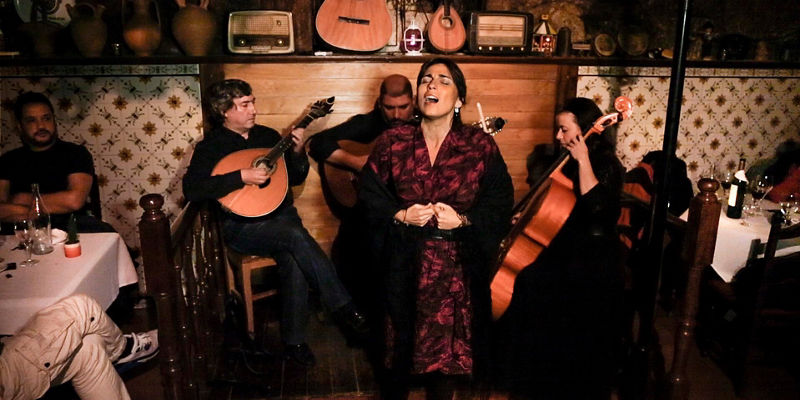
Traditionally, the performances center on a solo singer, known as a fadista, accompanied by a classical guitar and the Portuguese guitar—a distinctive, pear-shaped 12-string instrument. Performances often take place in intimate venues known as casas de fado, where audiences listen in respectful silence as singers convey stories of destiny, heartbreak and hope.
One of the genre’s most influential figures was Amália Rodrigues, often called the "Queen of Fado." During the mid-20th century, she helped transform a local Lisbon tradition into a globally recognized art form. Her recordings and performances remain highly influential today, and visitors can learn about her legacy at the Casa-Museu Amália Rodrigues, a museum that was established in her longtime home.
Today, fado continues to thrive in Lisbon. Passed down through generations, it remains a living tradition that connects the city to its past while continuing to evolve. The genre continues to gain international recognition through acclaimed artists such as Ana Moura, one of Portugal’s most celebrated fado singers and the godmother of the Viking Hemming. Whether heard in a centuries-old tavern in Alfama or on a concert stage, this rich cultural tradition offers visitors a powerful expression of Lisbon’s history, passion and enduring spirit.
-
Fado music
In early 19th-century Lisbon, fado emerged as a new music genre. Derived from the Latin word for fate (fatum), it was born out of the music and dance traditions of the marginalized Iberian and Afro-Brazilian populations residing in the city’s Alfama District. Fado was typically performed in taverns and cafés, poetically depicting the everyday struggles and passions of the working class through melancholy tunes and moving lyrics.
By the 1830s, fado had gained widespread acclaim. This rapid rise in its popularity is often credited to the famed fadista Maria Severa Onofriana. Her soulful odes resonated with her audience, and her signature dark shawl even inspired the ensemble worn by later fadistas. Since then, fado has secured its place as an emblem of Portugal, inscribed in 2011 on UNESCO’s Intangible Cultural Heritage List.
Today, fado is traditionally performed by one singer—male or female—accompanied by Portuguese stringed instruments such as the guitarra portuguesa (12-string guitar), viola (6-string guitar) or viola baixo (8-string bass guitar). The songs are sung with so much emotion, even those who do not speak Portuguese feel as though they understand every word. At a performance’s end, you are left with the distinct impression that you have caught a glimpse into the soul of the Portuguese people.
-
Pastel de nata
Few foods are more closely associated with Lisbon than the pastel de nata, Portugal’s famous custard tart. With its crisp, flaky shell and creamy custard filling caramelized to golden perfection, this beloved pastry has become a symbol of Portuguese culinary culture and an essential part of any visit to Lisbon.
The origins of the pastel de nata can be traced to the Jerónimos Monastery in the Belém district. During the 18th and early 19th centuries, monks used large quantities of egg whites to starch clothing and linens, leaving an abundance of egg yolks. Rather than waste these ingredients, they incorporated them into a variety of desserts, eventually creating this signature treat.
The next chapter in the dessert’s history is linked to a turbulent period during the early 19th century. In 1820, the Liberal Revolution sparked political and social reforms that gradually weakened the influence of the monarchy and the Catholic Church. In 1834, the Portuguese government dissolved monasteries and convents and confiscated many church properties. Facing the loss of their traditional sources of support, the monks began selling their pastries. Soon afterward, the recipe was acquired by a local sugar refinery, which opened a bakery in 1837 to produce the tarts commercially. That bakery, known today as Fábrica de Pastéis de Belém (Belem Pastry Factory), continues to use its closely guarded recipe and remains one of Lisbon's most famous culinary landmarks.
Preparing pastéis de nata (the plural of pastel de nata) requires skill and precision. The recipe begins with a laminated dough similar to puff pastry, rolled into thin layers that develop into a crisp, flaky shell. The filling is made from egg yolks, milk or cream, sugar and flour, cooked into a smooth custard. The tarts are then baked at very high temperatures, allowing the tops to develop the characteristic browned and lightly blistered surface that distinguishes an authentic pastel de nata.
Today, pastéis de nata are enjoyed around the world, but Lisbon remains their spiritual home. Locals often pair them with a strong espresso, enjoying them as a morning treat or afternoon snack. Many cafés serve them dusted with cinnamon or powdered sugar, a traditional accompaniment that enhances their rich flavor. Whether sampled in a neighborhood bakery or the café of the famed Fábrica de Pastéis de Belém, the pastel de nata offers a delicious taste of Lisbon’s history, culture and enduring culinary traditions.
-
2 remarkable Portuguese explorers
During the 15th and 16th centuries, Portugal played an integral role in the Age of Discovery, a period in which Europeans sought new trade routes across the globe. While Portugal had many notable explorers, here are two of the most intrepid:
Bartolomeu Dias (1457–1500)
Almost nothing is known about the life of Bartolomeu Dias before 1487, except that he had a place at the court of João II, king of Portugal, and was a superintendent of the royal warehouses. In 1486, João appointed Dias to head an expedition to find a sea route to the Indian Ocean, and his two ships departed circa August 1487.In January 1488, Dias’s ships were rounding the southernmost tip of Africa when storms blew them away. Dias ordered a turn to the south, hoping southeasterly winds would keep his ships from being dashed on the notoriously rocky shoreline. His decision was risky, but it worked, and the crew found the much warmer waters of the Indian Ocean. When the mariners returned to Portugal, they were met by triumphant crowds, and João ordered that maps now display the name for Cabo das Tormentas (Cape of Storms) as Cabo da Boa Esperança, or Cape of Good Hope.
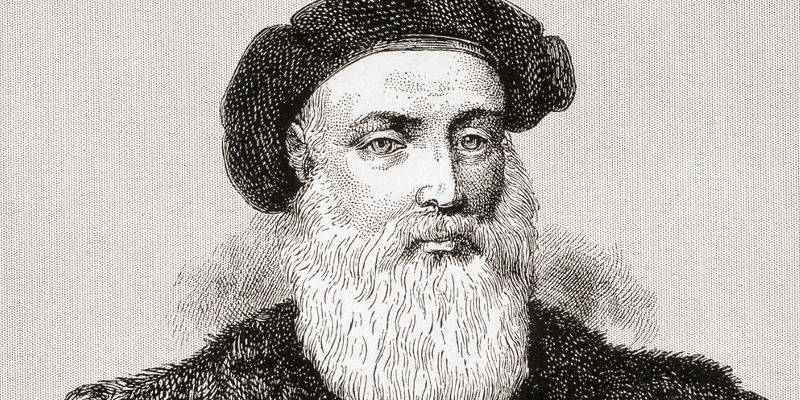
Vasco da Gama (1460–1524)
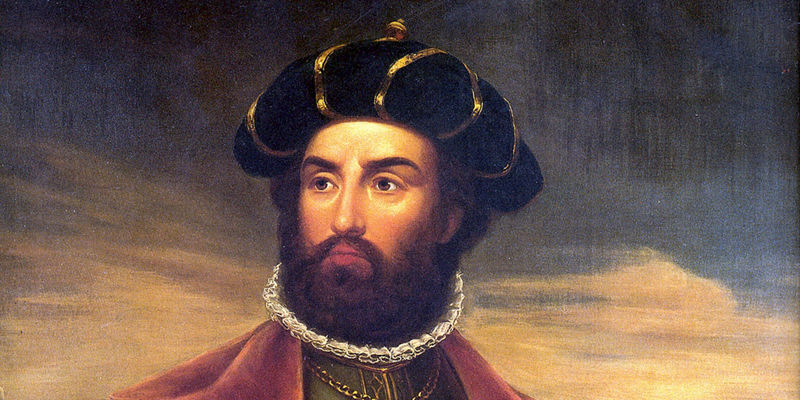
Explorer Vasco da Gama was born into a noble Portuguese family around 1460. When he was old enough, da Gama joined the navy, where he earned a reputation as a tough and fearless navigator. In July 1497, da Gama captained a team of four vessels and set off to find a direct trade route to India and the East.After several months at sea, he rounded the Cape of Good Hope and made his way up the eastern coast of Africa. In May 1496, he reached Calicut, India, where he and his crew were welcomed by the local Hindu ruler. They stayed for three months.
In August 1498, da Gama and his men took to the seas again to begin their journey home. His timing could not have been worse, as his departure coincided with a monsoon. By early 1499, several crew members had died of scurvy, and in an effort to economize his fleet, da Gama ordered one of his ships to be burned. The first ship in the fleet did not reach Portugal until July 1499. In all, da Gama’s journey covered almost 24,000 miles in roughly two years, and only 54 of the crew’s original 170 members survived.
-
Notable figures associated with Lisbon
Lisbon has long been associated with influential explorers, statesmen, writers and artists whose achievements helped shape Portugal’s history and culture. From navigators who charted new sea routes to poets, musicians and reformers, these individuals reflect Lisbon’s legacy as one of Europe’s great cultural capitals.
- Prince Henry the Navigator (1394–1460)—Although he rarely undertook voyages himself, Prince Henry the Navigator was among the principal architects of Portugal’s Age of Discovery. The royal prince sponsored expeditions along the coast of Africa, promoted advances in navigation and cartography and helped establish Portugal as Europe’s leading maritime power. His vision laid the groundwork for the global explorations that transformed the city into one of the world's most important ports and centers of commerce. He is the foremost figure on Lisbon’s renowned Monument to the Discoveries.
- Vasco da Gama (c. 1460s–1524)—One of history’s most celebrated explorers, Vasco da Gama achieved lasting fame when he led the first successful voyage from Europe to India via the Cape of Good Hope in 1498. Departing from Portugal and returning with valuable knowledge of a direct maritime route to Asia, his expedition ushered in a new era of global trade and cemented Portugal’s status as a major world power. Vasco da Gama's legacy remains deeply connected to Lisbon, where monuments and memorials commemorate his achievements, particularly in the historic Belém district.
- King Manuel I (1469–1521)—Known as "Manuel the Fortunate," King Manuel I presided over the golden age of Portuguese exploration and prosperity. Under his reign, Portugal’s overseas trade flourished, bringing immense wealth to Lisbon. He commissioned many of the city's most enduring landmarks, including the Jerónimos Monastery and Belém Tower. The distinctive Manueline architectural style, characterized by elaborate maritime motifs and decorative stonework, bears his name and remains one of Portugal’s most important artistic contributions.
- Luís de Camões (c. 1524–1580)—Widely regarded as Portugal’s national poet, Luís de Camões immortalized the nation’s maritime achievements in his epic poem Os Lusíadas (The Lusiads), first published in 1572. The work celebrates Vasco da Gama’s voyage to India while exploring themes of heroism, exploration and national identity. Camões is commemorated throughout Lisbon, most notably in Praça Luís de Camões, a prominent square that serves as one of the city’s cultural gathering places.
- Sebastião José de Carvalho e Melo, Marquis of Pombal (1699–1782)—One of Portugal’s most influential statesmen, the Marquis of Pombal served as prime minister between 1756 and 1777, during the reign of King José I. Following the catastrophic Lisbon earthquake of 1755, he directed one of the most ambitious urban reconstruction projects in European history. The wide avenues, orderly street grids and elegant squares of downtown Lisbon owe much to his leadership.
- Fernando Pessoa (1888–1935)—Fernando Pessoa transformed Portuguese literature through his innovative writing and creation of more than 75 literary alter egos, which he referred to as his "heteronyms.” Much of his life was spent in Lisbon, where he worked, wrote and frequented the city's cafés. His poetry and prose explored identity, philosophy and modernity, earning him international recognition and securing his place as one of Portugal’s greatest writers. For visitors to Lisbon, the two works most associated with Pessoa are The Book of Disquiet—a “factless autobiography” published posthumously in 1982—and Mensagem (1934), a collection of poems celebrating Portugal's history, heroes and maritime achievements.
- Amália Rodrigues (1920–1999)—Often called the "Queen of Fado," Amália Rodrigues elevated Portugal’s traditional musical genre to international prominence. Born in Lisbon, she became the defining voice of fado during the 20th century, captivating audiences with her expressive performances and emotional interpretations of songs centered on love and longing. Her legacy continues to be celebrated throughout Lisbon, particularly in the historic neighborhoods of Alfama, Mouraria and Bairro Alto, where fado continues to thrive today.
-
The must-have Portuguese sandwich
The francesinha is a rich, savory sandwich that has moved beyond its humble origins in Porto to become a nationwide staple. Even though the name francesinha means “little Frenchie,” there is nothing little and hardly anything French about this robust meal.
The idea for the sandwich is credited to a Porto native named Daniel da Silva, who immigrated to France in the 1960s. Upon his return to Portugal’s Alentejo region, he tried to modify the classic French croque monsieur (an open-faced ham, cheese and egg sandwich) for Portuguese tastes. It was not a smashing success, but when da Silva returned to his native Porto, he developed a heartier version.
The now-classic francesinha begins with thickly sliced bread layered with fried pork belly or bacon, smoked chorizo or linguiça sausage, roast pork slices and medium-rare beefsteak. The meat is then topped with a fried egg and cheese, and the assembled sandwich then gets slathered with a generous ladling of a sweet, salty and tangy sauce—a tomato- and beer-based concoction with a dash of Portuguese pepper sauce and a mixture of spices. Many eateries guard their francesinha sauce recipes like state secrets, but you can now buy various bottled varieties in Portuguese supermarkets.
Today, you can also find vegetarian versions or variations that include pastrami or tuna, codfish, shrimp or prawns. There is even a breadless option called a pica-pau, which means “woodpecker,” in which the meat is cut into bite-sized pieces that can be eaten with toothpicks.


Portugal Highlights
From Lisbon’s lively art scene and Porto’s historic city center to enchanting hilltop villages and world-famous wine estates, we invite you to immerse yourself in Portugal’s stunning scenery and rich cultural traditions. Here are some highlights you may experience during a visit to this remarkable country:
- The dramatic melodies of fado music
- Lisbon’s UNESCO-listed Jerónimos Monastery
- Tales of the legendary Age of Discovery
- The storied architecture of Porto, the “City of Bridges”
- Castelo Rodrigo, a charming 16th-century village
- The idyllic terraced vineyards of the Douro Valley
- A port tasting in the heart of Portuguese wine country
- The sacred pilgrimage town of Lamego
Destination Insight Videos

Fado, Music of Portugal (2:36)
Learn about the dramatic songs of fado, born along Portugal’s waterfront. This music of passion often depicted the longing of women waiting for their men to return from sea.

History of Port Wines (3:58)
Take a journey with Karine as she explores Portugal’s history of wine and gains insight into its production and the various types of port, with a local expert on hand.


Portugal Travel FAQ
All-Inclusive Itineraries—Portugal
Choose one of our enriching, all-inclusive voyages and discover the many benefits of exploring in Viking comfort.