

Immerse yourself in the charms of France
France captivates visitors with its world-class wines in Bordeaux and architectural highlights such as Avignon’s grand Palace of the Popes—Europe’s largest Gothic building. Read on to discover France’s rich culinary traditions, showcased in everything from soup to dessert. Then, deepen your understanding of French customs and discover the legendary Seine River.
France
France stands out as a nation in Western Europe by offering a rich blend of culture, history and natural beauty. Roughly the size of Texas and four times that of England, it stretches from the Atlantic to the Mediterranean and shares borders with eight countries, making it a gateway to both northern and southern Europe. Fertile plains, lush forests and dramatic mountain ranges like the Alps and Pyrenees shape its landscape, while its varied climate—from cool and humid in the north to warm and dry in the south—makes it a year-round destination.
France enjoys a temperate climate with four distinct seasons. Average temperatures across France in the winter can range from 36 °F to 45 °F (2 °C to 7 °C), while summer temperatures can fall between 63 °F and 79 °F (17 °C to 26 °C).
From the elegance of its capital city of Paris and the bucolic countryside of Provence to alpine scenery outside of Lyon, France offers something unforgettable for every traveler. Notable landmarks and cultural highlights in France include:
- Eiffel Tower—Civil engineer Gustave Eiffel designed his namesake iron structure and led a team of 132 workers and 50 engineers, who completed the mammoth task in under two years. It served as the grand entrance to the Paris World Exposition of 1889. The Eiffel Tower stands 986 ft. tall (300 m), and millions of visitors climb the structure’s 1,710 steps each year.
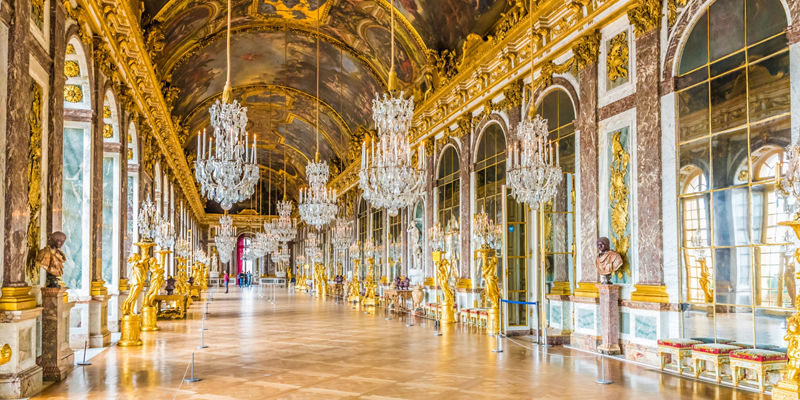
- Palace of Versailles—The former residence of Louis XVI and his queen, Marie Antoinette, this opulent palace unabashedly symbolized the power of the absolute monarchy. Of its 700 rooms, the most famous is the Galerie des Glaces, or the Hall of Mirrors. Outside, the renowned landscape architect André Le Nôtre laid a 225-acre garden designed to stretch as far as the king could see, satisfying His Majesty’s view that he even ruled nature.
- Monet’s Gardens—Claude Monet’s masterpiece at Giverny, northwest of Paris, is widely considered one of the world’s most beautiful gardens. Anchored by its iconic Japanese bridge, the water garden blooms throughout the spring with azaleas, wisteria, lily of the valley and the famed water lilies that inspired many of Monet’s paintings.
- Strasbourg Cathedral—Officially called the Cathédrale Notre-Dame de Strasbourg, this cathedral is acclaimed as one of the world’s most beautiful examples of high or late Gothic architecture. With a spire that soars 466 feet into the air, it is the world’s sixth-tallest church and the highest extant building constructed entirely during the Middle Ages.
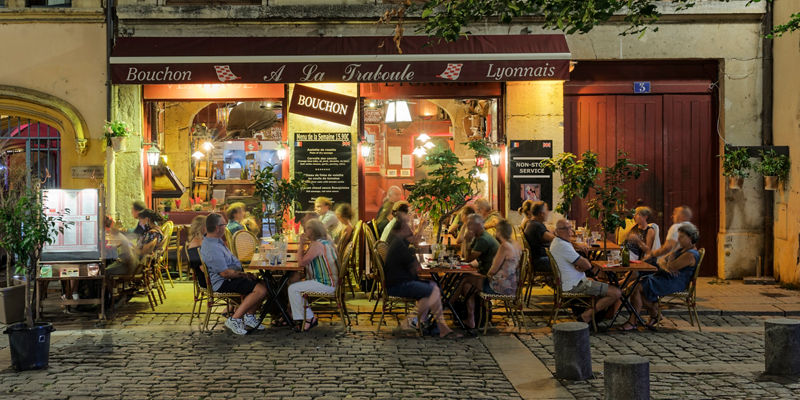
- Lyonnaise cuisine—Lyon, often hailed as the gastronomic capital of France, is home to both Michelin-starred restaurants and the beloved bouchons Lyonnais—cozy, convivial eateries where locals gather to enjoy hearty, traditional fare, such as Salade Lyonnaise, a warm salad of frisée lettuce, bacon lardons, croutons and a poached egg.

-
3 renowned dishes from France
France’s culinary heritage is a cornerstone of its cultural identity. Recognized by UNESCO in 2010 as an intangible cultural heritage of humanity, the “gastronomic meal of the French” is more than just food—it is a ritual that celebrates community, tradition and artistry. The country is home to the world’s highest number of Michelin-starred restaurants, and the Michelin Guide itself—a globally respected culinary award—originated in France. Prized ingredients come from every corner of France, including butter and apples from Normandy, black truffles from Périgord, goat cheese from the Loire Valley and lavender and olive oil from Provence. These regional specialties reflect the deep connection between French food and its terroir—the unique characteristics of the land.
Here are three popular French foods that visitors may wish to try:
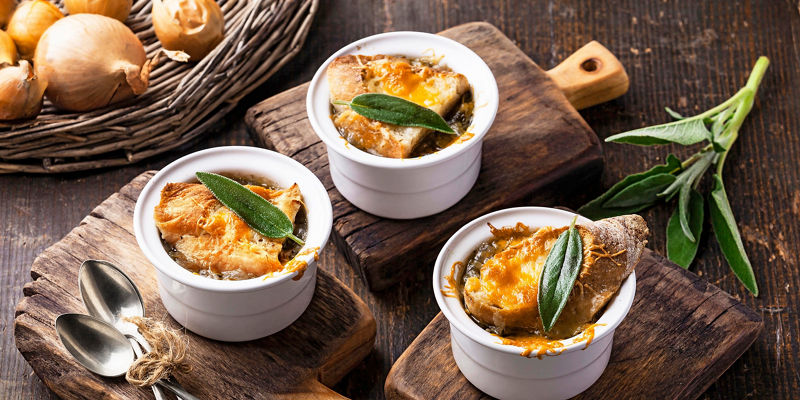
- French onion soup
This heartwarming mélange of caramelized onions, beef stock and sherry with a cap of grilled Comté or Gruyère cheese is a French classic. Onion soup has been a staple food for poor people in almost every national cuisine, but according to legend, it was a French monarch who elevated the humble soupe à l’oignon to something regal. - Coquilles Saint-Jacques
Nestled along the coast of France, Normandy is known for its picturesque fishing villages and fine seafood. Coquilles Saint-Jacques, for example, is a beloved appetizer that features baked scallops served in a creamy sauce and topped with breadcrumbs. - Profiteroles
These filled pastries (also called choux à la crème, cream puffs or éclairs) are rounded mounds of choux pastry dough. Upon baking, they hollow out and then receive a variety of fillings such as whipped cream, custard, ice cream, lemon curd, chocolate mousse, fruit preserves and more. Profiteroles may be left plain or garnished with chocolate ganache, caramel, apricot glaze or a dusting of powdered sugar.
- French onion soup
-
3 unique French customs
France is known not only for its cuisine and culture but also for its deep-rooted traditions and social etiquette. Understanding a few unique French customs can enhance any visit and help travelers connect more meaningfully with locals.
- French Greetings and Politeness
Politeness is essential in French culture. When meeting someone for the first time, it is customary to say bonjour madame/monsieur (“good day”) and offer a single, firm handshake. Upon leaving, say au revoir (“goodbye”). In shops and restaurants, always greet staff with bonjour or bonsoir (“good evening”) and say au revoir when exiting. Bonne nuit (“good night”) is reserved for bedtime or when leaving someone’s home in the evening. - The Art of the French Kiss Greeting
The French cheek kiss, or la bise, is a well-known custom. While not used during first introductions between adults, it is common among friends and family. Women kiss women and men and men kiss women—but rarely other men unless they are close. The kiss is a light brush of the cheeks with a kissing sound rather than a true kiss. The number of kisses varies by region: two is standard, four is common among friends and six may be exchanged between old acquaintances. Other terms include le bisou (a warmer kiss) and le baiser (a romantic kiss). Though rare today, some older French gentlemen may still greet married women with a hand kiss, known as baise-main. - Dining Etiquette in France
Dining in France is a ritual of manners. If invited to a French home for dinner, do not expect drinks until all guests have arrived—even if some are late. Strong cocktails are uncommon; instead, hosts may offer an aperitif like kir, cognac or champagne. Wait for a toast before sipping, and never pour your own drink (except water). If you are not offered another drink, it is a polite signal that the evening is winding down.
Before a meal, the French say bon appétit (literally “good appetite,” which essentially means “enjoy your meal”), and guests should wait for the host to begin eating. It is courteous to finish everything on your plate. Cheese is traditionally served before dessert, so save room.
- French Greetings and Politeness
-
A paradise for man and beast in the Camargue and Aigues-Mortes
The Camargue is a government-protected habitat beloved by the French. Humans and animals have long lived side-by-side in this picturesque landscape of wetlands, pastures and salt flats.
France’s Mediterranean menagerie
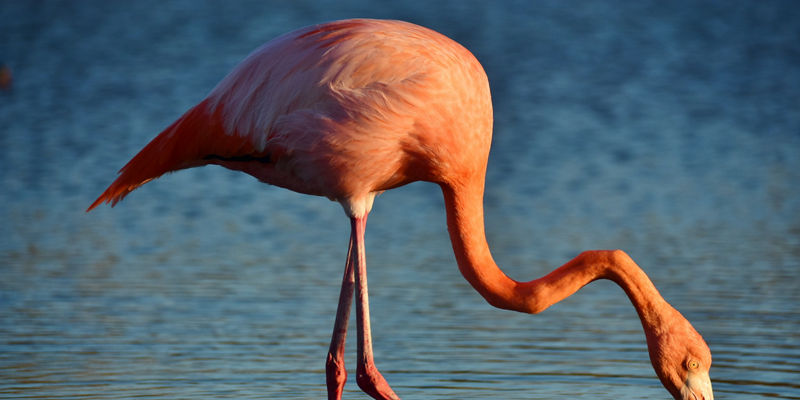
The natural beauty of the Camargue hosts a surprising concentration of wildlife unrivaled in France. Horizons seem to stretch out endlessly here as the watery delta draws some 400 species of birds, 160 of which are just passing through on migratory routes. Flocks of flamingos number in the thousands and herds of wild bulls and white horses are overseen by Europe’s last cowboys, les gardians.
A medieval town amid the marshes
This untamed region is also home to one of France’s most fascinating villages, Aigues-Mortes. Kissed by salty breezes, this most authentic of medieval sites rises up from marshy plains and upholds a long tradition of bull and horse breeding. Its magnificent ramparts are among the best preserved in Europe, and within its walls lies an impressive collection of churches, towers and other treasures.
-
Avignon, the city of popes
From a bridge made famous by a children’s song to a palace made famous by popes, Avignon offers much to discover.
“On the Bridge of Avignon...”
You might have heard about Avignon in “Sur le pont d’Avignon,” a French song that children sometimes learn in school.
Sur le pont d’Avignon, L’on y danse, l’on y danse tout en rond...
“On the bridge of Avignon, there they dance, there they dance all in a circle...”
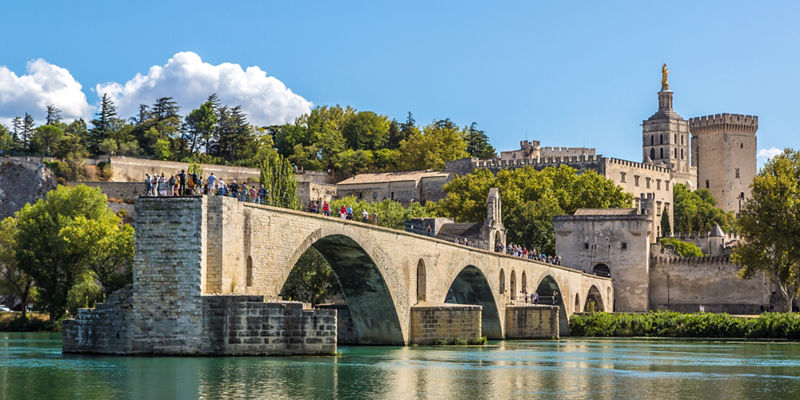
The song is about the 12th-century Pont Saint-Bénezet—better known as the Pont d’Avignon—which originally spanned the Rhône River. The bridge suffered frequent collapses over the centuries, and in the 17th century, a catastrophic flood damaged the bridge beyond repair. Today, only four of its original 22 arches remain.
Palace of the Popes
The extraordinary Palais des Papes (Palace of the Popes) is located prominently in the historic center of Avignon. Both a fortress and a residential palace, the sprawling complex was the seat of Western Christianity for most of the 14th century. Six papal enclaves were held there, electing Benedict XII, Clement VI, Innocent VI, Urban V, Gregory XI and Benedict XIII.
Avignon Papacy
The Avignon Papacy began in 1309 amid the chaos following the election of Clement V. It continued until 1377, when the papacy returned to Rome. During the Papal Schism that followed, there were popes in Rome and “antipopes” (Clement VII and Benedict XIII) in Avignon until 1403. The Palais, whose papal library attracted some of the most important scholars of the day, remained under papal control for the next 350 years.
Napoleon and beyond
Gradually, however, the magnificent complex deteriorated. It was used as a prison during the French Revolution and functioned as military barracks and a stable under Napoleon. In 1906, it became a national museum, and has been under restoration ever since. Today, the fortress that used to be the residence of popes is home to a convention center and an annual arts festival.
-
Bordeaux’s rich tradition of oyster farming
Oyster farming off the coast of France is often compared to winemaking in Bordeaux. The beloved bivalve might take four years to fully mature, requiring the same care and attention as a barrel of red wine.
Ideal growing conditions
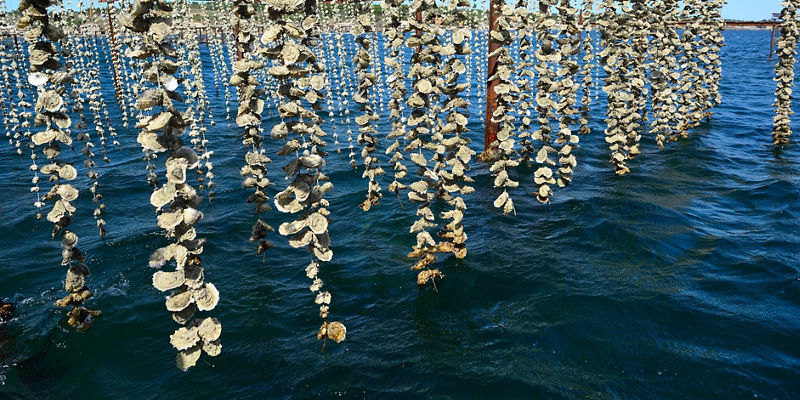
The beauty of growing oysters in the sheltered bay of Arcachon is its simplicity and purity. For generations, farmers have cruised into open waters to tend to their beds, thoughtfully positioned with tides, water temperature and other factors in mind for optimal growth. On approach by boat, each bed looks like a forest of stripped branches sticking straight out of the water. But underneath the surface, thousands of oysters cling to each branch as they feed on rich marine nutrients.
Enjoy oysters at their purest
Like all things French, oysters are best enjoyed fresh and served cleanly on the plate. Their presentation is simple and pure, most often served on a bed of ice with a spritz of lemon and a crisp, dry white wine. It’s the very best of Bordeaux, on your plate and in your glass.
-
Learn about the wine tied to papal history
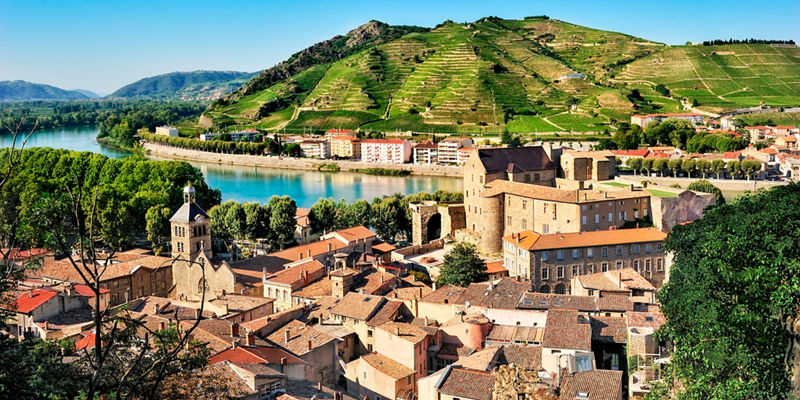
The Grenache and Shiraz grapes (known to the French as Syrah) from the Rhône Valley produce a fruity wine. One of the region’s most cherished varieties had humble beginnings, and today enjoys great prestige.
The wine of popes
One of the Rhône Valley’s most celebrated wines is the Châteauneuf-du-Pape AOC. The elixir—and the village in which it is produced—has a rich history. After the papacy was relocated to Avignon in 1308, Pope Clement V and his successors, perhaps feeding their own love of the Burgundy grape, spread viticulture throughout the region, encouraging vineyard development along the banks of the Rhône.
A prized vintage
Pope John XXII continued transforming the landscape and culture. After he built his hilltop summer residence, the village and the wine it produced were renamed Châteauneuf-du-Pape, “the pope's new castle.” Today, this charming hamlet remains blanketed in vineyards that produce some of the southern Rhône's most exemplary wines.
-
The gastronomic secrets of Provence's joie de vivre
From savory to sweet, there is no end to the culinary delights of Provence, where locally sourced ingredients lift traditional cuisine and beloved confections to new heights
The perfect marriage of bread and olives
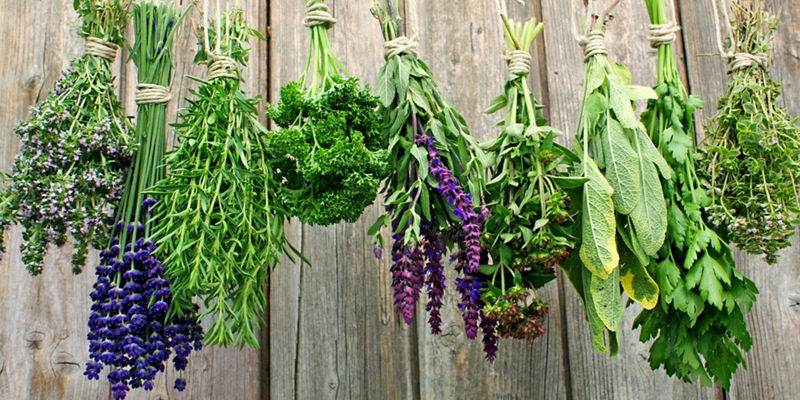
There is simply no better dip for freshly baked bread than a golden-hued puddle of freshly pressed olive oil. Indeed, the French have been enjoying this classic pairing for centuries. Better still, tapenade was invented here—this earthy blend of olives, capers and anchovies puréed with olive oil creates the perfect hors d’oeuvre spread. As for the bread, one of Provence’s most delicious is fougasse, a flatbread that may be prepared with olives or cheese.
Satisfying the French sweet tooth
Few sweets compare to those prepared with milk, butter and fruits from a Provençal farm. Fourrés are a favorite—traditional sweet biscuits that may be filled with chocolate hazelnut, caramel or fruit preserves. Bite-sized chocolate pralines and ganache, too, are masterfully created with the finest cacao butter in artisanal workshops throughout southern France.
-
The great wine regions of Bordeaux
Ideal wine growing conditions
The Bordeaux region enjoys a maritime climate, which produces mild but rainy winters and hot, dry summers. While the soil is not especially fertile for growing most crops, it provides the perfect climate and soil for viniculture—the growing of wine grapes. Vines have been cultivated in the region since Roman times, for nearly 2,000 years. Over many generations, the locals, known as Bordelais, have mastered soil management and other techniques to produce and harvest the best grapes.
Bordeaux regions and their grape varieties:
The Médoc Region follows the rive gauche (left bank) of the Gironde River. Planted mainly with tannic cabernet sauvignon grapes, this area has three subregions, including the exclusive Haut-Médoc, home to the four appellations Margaux, Saint-Estèphe, Saint-Julien and Pauillac. The hallowed Châteaux Lafite Rothschild, Mouton Rotahschild, Latour and Margaux are based here.
Graves is a gravelly region south of Médoc on the rive gauche of the Garonne. Known to produce wine as early as the 14th century, its most famous château is Haut-Brion, mentioned by Samuel Pepys in his diary of 1663 and loved by Thomas Jefferson, who acquired more than 100 bottles in the 1780s.
Sauternes is a small area within the Graves Region. This is where the famous dessert wines are produced in small quantities. White Sémillon grapes are left to shrivel on the vines, concentrating their sugars and resulting in a honey-like wine.
Saint-Émilion and Pomerol are regions along the rive droite (right bank) of the Dordogne, which is planted mainly with softer Merlot grapes. These rich plummy wines have low tannins and a deep, intense color. The most famous—and most expensive of them—is Château Petrus.
-
The iconic Seine River of Paris & beyond
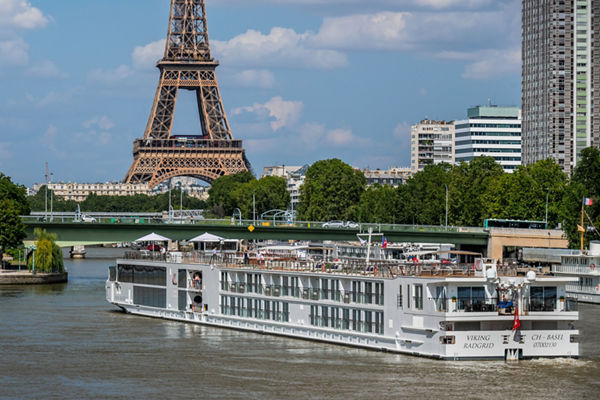
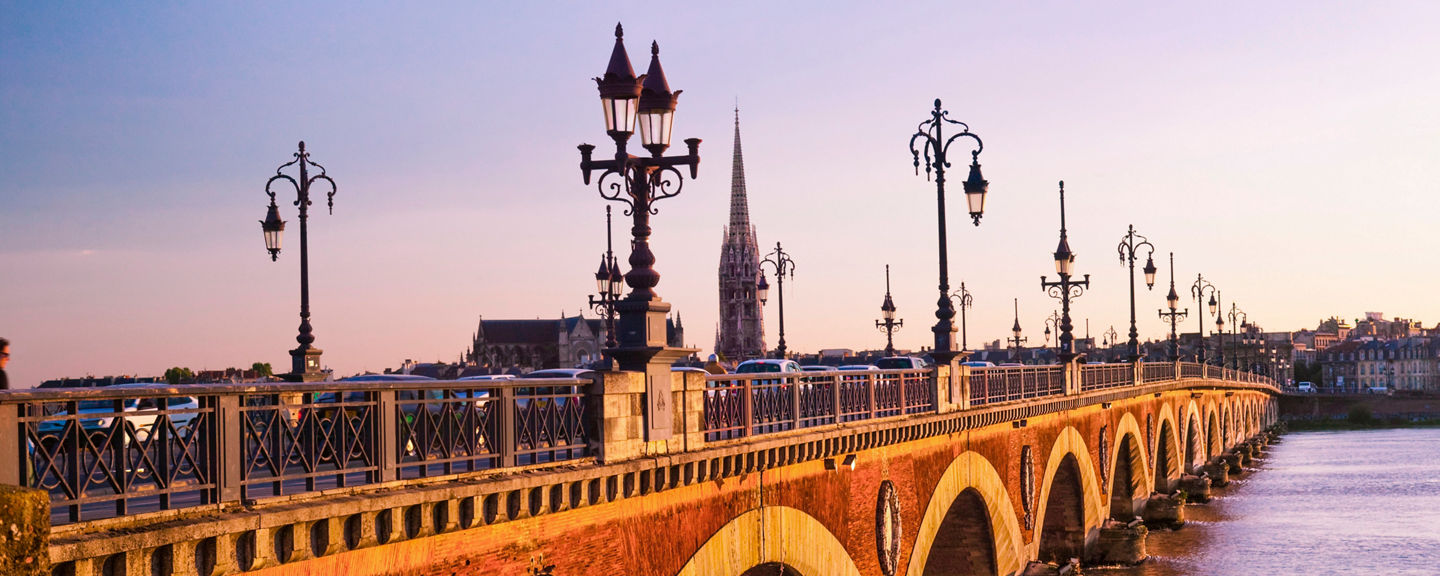
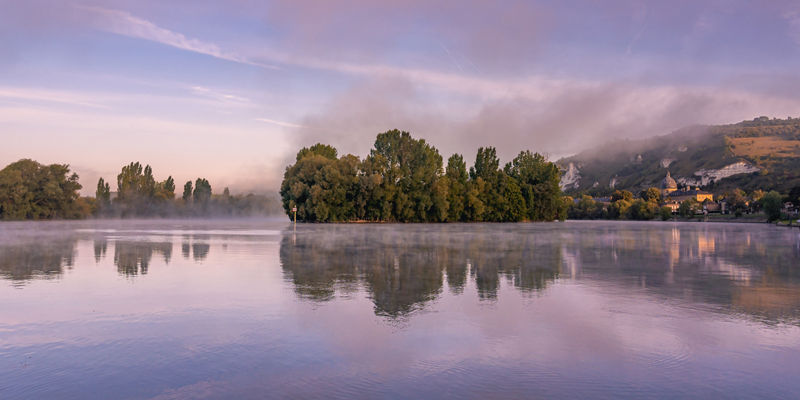
The Seine River, stretching 482 mi (776 km), is the second-longest river in France and one of the most iconic waterways in Europe. Originating near Dijon in the Burgundy region, the Seine flows northwest through Troyes and into the heart of the French capital, Paris—dividing the city into the famous Right Bank and Left Bank. Landmarks such as the Eiffel Tower and Musée d’Orsay grace the Left Bank, while the Louvre and Sacré-Coeur Basilica highlight the Right Bank.
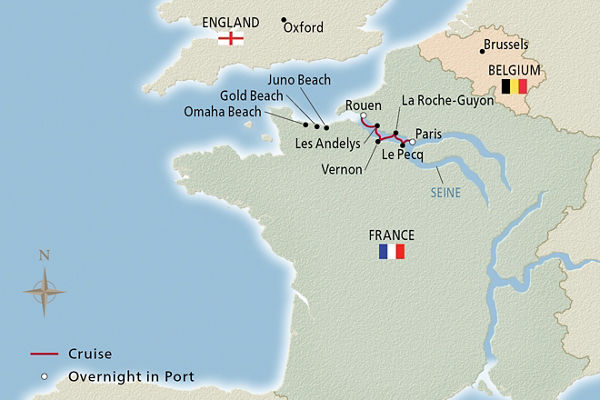
Beyond Paris, the Seine winds through Rouen before reaching the English Channel at Le Havre. This vital river is dredged to allow oceangoing vessels to dock as far inland as Rouen, 75 mi (120 km) from the sea. As France’s busiest inland waterway, the Seine plays a crucial role in commerce, connecting the Île-de-France and Normandy regions with the Atlantic Ocean and northern Europe via an extensive canal network.
The Seine River is also a haven for biodiversity. Its banks are home to a variety of wildlife, including grey herons, buzzards, owls, red deer, wild boar and even beavers. The river supports over 30 species of fish, including carp, pike, trout and salmon—once nearly extinct in the Seine but now returning thanks to decades of environmental restoration.
The Seine River offers a rich blend of history, culture and natural beauty—whether visitors wish to explore Paris by boat or journey along its waters by cruise ship to experience the scenic countryside of Normandy.
-
The splendid vistas and hallowed interior of the Sacré-Cœur Basilica
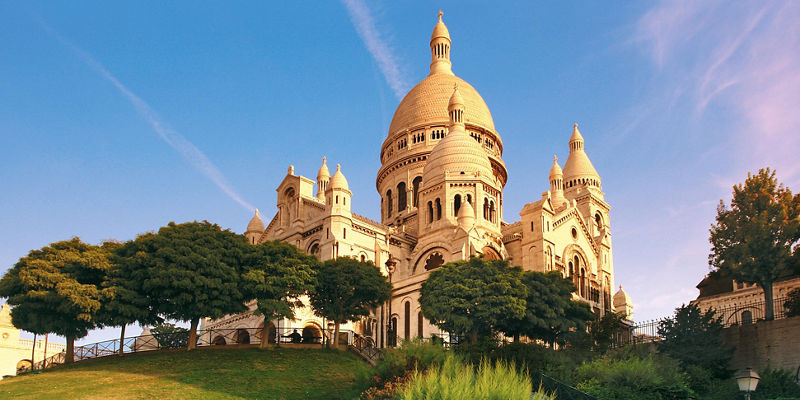
The Basilica of the Sacred Heart stands in stark contrast over Paris’s famously carefree Montmartre district, where bohemian artists once gathered at the Moulin Rouge cabaret. The church’s ovoid dome soars 271 feet, the second highest point in Paris after the Eiffel Tower. The view alone is worth the visit. And behind its gleaming white, domed facade, this national landmark hosts revered treasures.
Place of pilgrimage and national pride
Since the basilica’s opening in 1919, it has been a perpetual site of prayer among pilgrims from around the world. Above the high altar, the Blessed Sacrament is stored in a traditional monstrance and one of the world’s largest mosaics portrays Christ with a golden-hued heart and outstretched arms. Yet Sacré-Cœur is not without its nationalist pride, illustrated by the equestrian statues of Joan of Arc and King Saint Louis IX and by the Savoyarde bell, a 19-ton behemoth commemorating the annexation of Savoy.
Place du Tertre
At the foot of Montmartre Hill, the spirit of the district’s famed artists can be found in the cozy Place du Tertre. Some of the city’s most renowned painters lived here more than a century ago, Pablo Picasso among them. Today, it is a tiny cobblestone square lined with red-awning cafés, artists leaning over their easels and the shade of plane trees.
-
The transformation of Paris at night
Paris is as magnificent in person as it is in your dreams. So perhaps it is apt that the best time to fully experience its beauty is after the sun sets and the city is awash in light, casting its elegant palaces, sculptures and bridges over the Seine in a soft, sublime glow.
A brilliant play of light and shadow
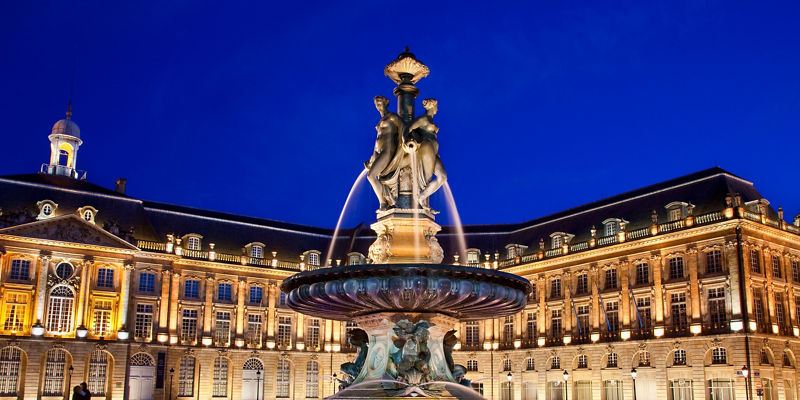
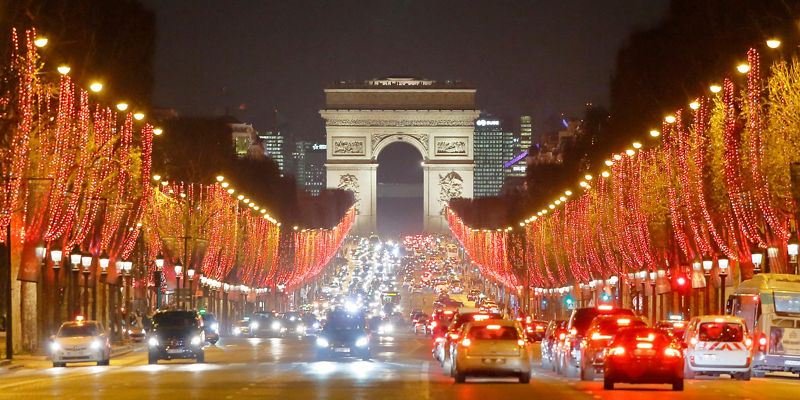
Somehow, Paris is even grander in the evening. Church spires, majestic domes and magnificent monuments to empire take on vibrant demeanors. The Arc de Triomphe watches over the illuminated Champs-Élysées like a night sentinel. The monumental Fontaines de la Concorde, located in the Place de la Concorde, comes alive in the light. The baroque details of grand Palais Garnier opera stand out in spotlight against contrasting shadows. Street lamp reflections dance on the surface of the Seine as it drifts past the graceful Louvre.
A glittering Parisian icon
The pièce de résistance of any evening visit to Paris is the Eiffel Tower. Visible from throughout the city, it shimmers like a beacon. Any time of day, it elevates the City of Light to new heights. But at night, it is a sight not to be missed.
-
Walk through halls of history in Versailles
The sprawling Palace of Versailles gives visitors a chance to follow in the footsteps of kings and world leaders, from the intimate chambers of the king’s grand apartments to the famous Hall of Mirrors (Grande Gallerie), where World War I came to an end with the signing of the Treaty of Versailles.
Walk the gardens
The splendor of the Palace might be surpassed by the stunning beauty of the gardens. In the 17th century, 37,000 acres were cleared to accommodate tree-lined terraces, winding paths, thousands of plants, some 50 fountains and 400 pieces of sculpture. The gardens took 40 years to complete, and Louis XIV treasured them as much as the palace. Marie-Antoinette built her own private estate—resembling a Norman village—on the grounds.
The Grand Trianon
With its impressive pink marble structures and lush gardens, the 17th-century Grand Trianon has been a destination for leaders throughout the centuries, beginning with the Sun King. Napoleon Bonaparte regularly stayed there, and Charles de Gaulle turned one of its wings into a presidential residence. Today, the Grand Trianon hosts guests of France’s head of state.
France Highlights
From riverside ruins and lush vineyards to glittering cities of elegance and grandeur, France’s history and culture await your discovery. Here is a selection of treasures you may experience on a journey through France:
- The elegant architecture of Paris
- Historic Avignon, known as the “City of Popes”
- Lyon’s legendary cuisine
- Normandy’s American Military Cemetery
- Scenic landscapes that inspired Impressionist artists
- Rouen’s spectacular cathedral
- Farms and forests of Aquitaine
- Fine wines of Bordeaux, Beaujolais and Burgundy
- Charming villages and dreamy vistas of Provence
- The medieval wine-growing town of Saint-Émilion
Destination Insight Videos

NBC’s Mary Carillo & Viking’s Jean Newman Glock in Provence (3:16)
Join Mary Carillo, former professional tennis player and correspondent for NBC’s coverage of the Olympic Games, and Jean Newman Glock, Viking’s Ambassador-at-Large, as they explore Provence.

Shakespeare & Co. (1:57)
Peruse this literary haven in Paris, a favorite of book lovers and renowned authors since 1919. Browse its stacks and learn about the “tumbleweeds” who work and reside here.

Monet’s Gardens (1:44)
Join Karine at Giverny as she visits the Japanese bridge, gardens and water lilies that inspired one of history’s great painters, founder of impressionism Claude Monet.

Explore the Rhône Valley’s Roman past with Viking’s Nikolas Rabogliatti (32:57)
Take another look at this special episode on the wines of Southern France with Viking Ambassador-at-Large Jean Newman Glock and Nikolas Rabogliatti, Corporate Enrichment & Program Manager at Viking. Together, Jean and Nikolas venture out on an invigorating hike through the vineyards overlooking the Rhône Valley. Enjoy magnificent views of the vine-covered slopes before Jean and Nikolas are rewarded for their efforts with a tasting of the local vintage. Refreshed, Jean then heads to Vienne, where she uncovers Roman history.

France Travel FAQ
All-Inclusive Itineraries—France
Choose one of our enriching, all-inclusive voyages and discover the many benefits of exploring in Viking comfort.