

Be inspired by Europe’s history & culture
Discover the storied cities and signature old-world charm of Europe. Read on to learn more about the countries that comprise this diverse region and delve into the unique experiences that await you in Italy, France, Germany and beyond. Trace the history of an iconic Swiss dish, uncover some common misconceptions about Spain’s siesta tradition and explore the powerful legacy of Normandy’s beaches.
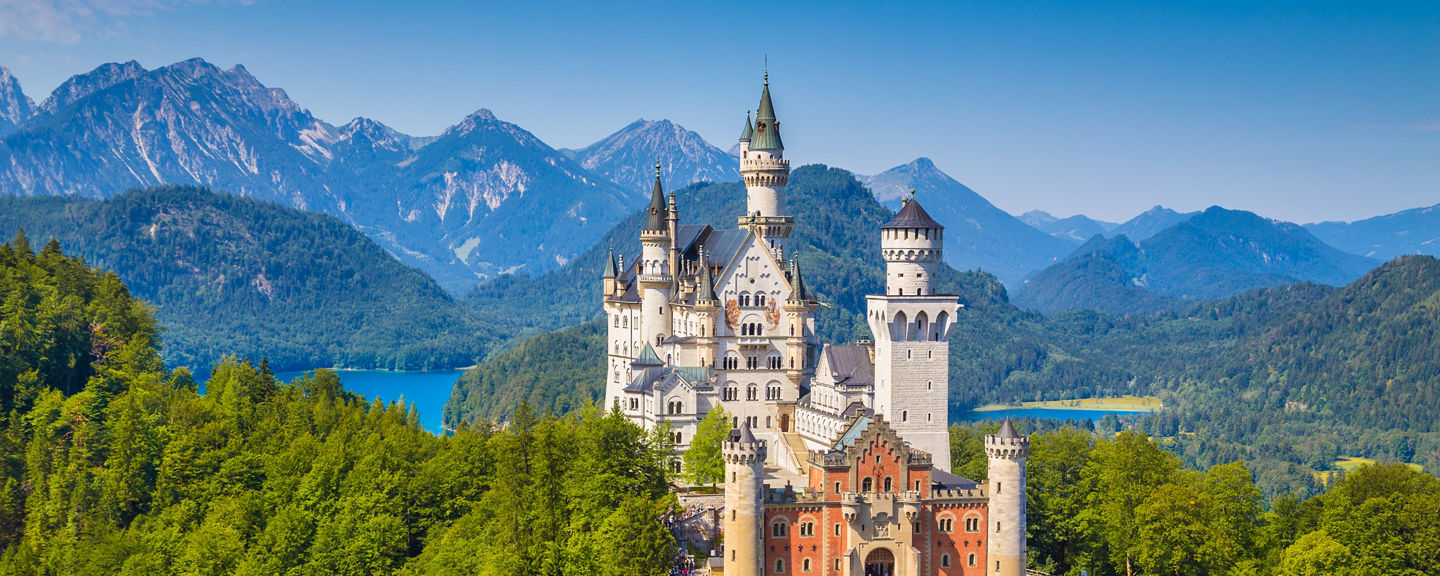
Europe
Europe, the second smallest of the world’s continents, is a treasure trove of natural beauty and historical significance. It is bordered by the Arctic Ocean to the north, the Atlantic Ocean to the west and the Mediterranean Sea, Black Sea and Caspian Sea to the south. Europe is home to 44 countries, including England, Ireland, France, Germany, Italy, Hungary, Spain, Greece and many others. Each country offers its own rich history and unique landscapes, from the snowy peaks of Austria and Switzerland in the Alps to the sunny beaches of the French Riviera and the Adriatic Sea. The climate varies greatly, with temperate conditions in the west, Mediterranean climates in the south, and colder, more continental climates in the east and north.
Over the centuries, Europe’s rich culture has been reflected in its music, art, architecture and cuisine, which have had a profound influence on the world. The continent is known for its remarkable landmarks and ancient sites, such as:
- The Eiffel Tower—Located in Paris, France, this iconic structure is one of the most recognizable landmarks in the world.
- The Colosseum—This ancient amphitheater in Rome, Italy, is a testament to the grandeur of the Roman Empire.
- The Acropolis—Situated in Athens, Greece, this ancient citadel is home to several significant historical buildings, including the Parthenon.
- The Alps—Stretching across several countries, including France, Switzerland and Austria, the Alps offer breathtaking natural beauty and are a popular destination for skiing and hiking.
- The Louvre Museum—Located in the heart of Paris, the Louvre is the world's largest art museum and a historic monument.
- La Sagrada Família—This large, unfinished Roman Catholic basilica in Barcelona, Spain, is a masterpiece of architect Antoni Gaudí.
- Stonehenge—This mysterious monument in Wiltshire, England, is one of the world's most famous prehistoric landmarks.
- Geirangerfjord—Norway’s stunning, UNESCO-listed fjord is one of Europe’s most cherished natural treasures and home to majestic waterfalls that can be visited even in the winter.
Europe’s diverse landscapes and climates, combined with its rich cultural heritage, make it a fascinating year-round destination for travelers from around the world. Whether exploring cosmopolitan cities, the picturesque countryside or historic landmarks, visitors are sure to be captivated by the continent's charm and beauty.

-
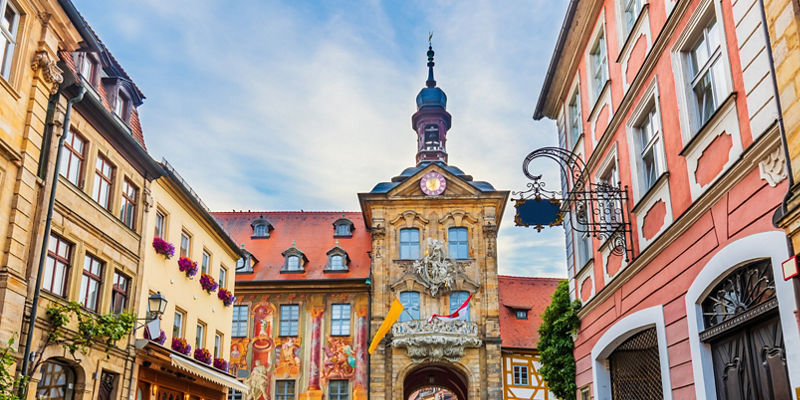
Charming Bamberg
Bamberg has been called “Franconian Rome” because it has seven hills, each crowned by a church, and is also known as “Little Venice” because of its canals. This pastoral Bavarian town in Upper Franconia is located on both sides of the Regnitz River, a tributary of the Main.
A distinctive city
The oldest part of the city is the Episcopal town on the west bank, where you will find the Romanesque Bamberg Cathedral with its four towers, and the hilltop Benedictine abbey of Michaelsburg, which was a functioning abbey from 1009 to 1803.
Bamberg’s Town Hall
In the 14th century, the citizens of Bamberg wanted to build a city hall, but the bishop would not supply any land. So, the rathaus, or town hall, was built on a manmade island and double-arched bridge in the Regnitz. This building served both sides of the town for 350 years until its replacement by the neues rathaus, or new town hall, in 1736. Today, Bamberg’s new town hall offers excellent views of the city and the colorful Little Venice area with its quaint fishermen’s cottages.
Smoke-flavored beer
Should you wish to toast to Bamberg’s seven hills, its canals or its town halls, raise a glass of rauchbier, the beloved smoked beer for which Bamberg is known. You can easily find it at one of the town's nine breweries.
-
Cuisine—The history of Swiss fondue
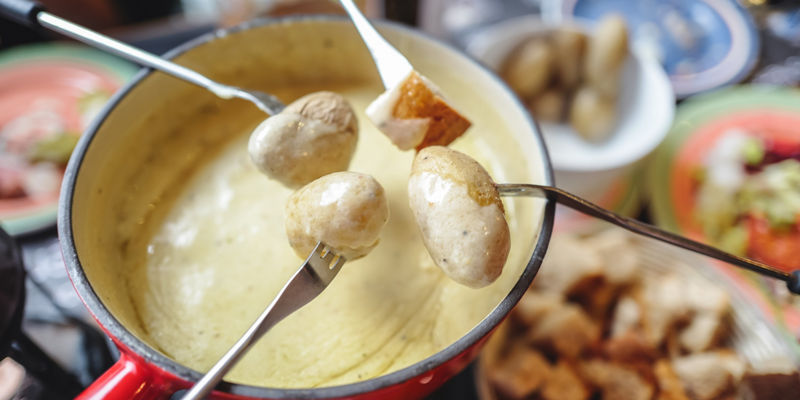
Few things are as comforting as a piping-hot meal of fondue. This deceptively simple dish of cubed bread dipped in warm, melted cheese was declared the national dish of Switzerland during the 1930s. In the years since, this culinary delight has grown from humble entrée to worldwide indulgence.
The origins of fondue can be traced to 18th-century Switzerland, when families in Alpine farm villages invented the dish to use up their stale bread, excess cheese and day-old wine. Dipping the hardened bread into the cheese made it soft and delicious once more, while heating the wine along with the cheese enhanced the flavors of both ingredients. From these unassuming origins grew a beloved winter tradition.
Throughout Switzerland, various regions boast their own favored fondue iterations. In Valais, for example, Gruyère is often mixed with raclette, whereas those in Bern prefer to blend their Gruyère with Emmental (i.e., what most Westerners call “Swiss cheese”). No matter how it is prepared, you are sure to enjoy the delicious, indulgent flavors of this classically Swiss combination.
-
Culture—The Spanish siesta tradition
Here is a scenario that might be familiar to many a traveler in Spain. Having spent the morning exploring some charming village, you decide around noon that a cool glass of sangria and a savory bocadillo sandwich may be just what you need. But none of the restaurants seem to be open. It might occur to you that things have shut down for the siesta, the traditional afternoon nap that is still observed in many parts of Spain. But, that would not be technically correct.
Most restaurants in Spain don’t open until about 2:00 PM, when businesses close for the long midday break called mediodía (midday). Spaniards usually have a light breakfast followed by a late-morning snack called an almuerzo. Around 2:00 PM comes la comida, the largest meal of the day, which can be a three-course social affair, perhaps with wine. The actual napping, the siesta, comes after this heavy meal and lasts for only about 15 minutes. Workers may return to work after their comida or siesta and finish by 8:00 PM. They may then visit a tapas bar for drinks and snacks before the last meal of the day, the light supper called la cena, served between 9:00 and 11:00 PM.
While many foreigners have uncharitably labeled the Spanish as “lazy” because of their siestas, Spaniards actually work longer hours than their European counterparts and get less sleep. In fact, midday naps have been a part of many cultures for thousands of years, particularly those in warmer climates where the populace needed rest and shelter from the noontime sun. Yet, despite ample scientific evidence that napping is good for productivity, cardiac health and emotional well-being, the siesta tradition could soon be put to permanent rest.
-
Delft pottery, from imitation to worldwide sensation
As early as 1602, Dutch potters started to make the Dutch version of Chinese porcelain—the latest trend. For the next two centuries, it was popular among wealthy families who would show off and compare their Delft Blue collections.
The boom of Delftware
Delftware pottery includes blue-and-white jars, vases, pictorial plates and tiles. It's estimated that 800 million of the distinctive tiles were produced over a period of 200 years. The international popularity of the pottery, known as Delft Blue, skyrocketed. At the height of the Delft Blue boom, there were 33 factories in Delft. Between 1600 and 1800, Delft was one of Europe’s major pottery producers.
The bust . . . and the survivors
The end of the 18th century marked the end of the road for most Delftware manufacturers. As a result of increasing European competition, emerging manufacturing methods and flagging demand for Delftware, all but a few of the Delft factories shuttered. De Koninklijke Porceleyne Fles (“porcelain jar”), also known as Royal Delft, and De Candelaer still remain from the 17th century. And at both factories, Delftware is still entirely hand painted—just as it has been for centuries.
-
Dutch cheese
It takes an experienced cheese lover to know the difference between an Edam and a Gouda. Yet there is more to Dutch cheese than these two popular varieties. Over a dozen cheeses are produced in The Netherlands, from Beemster and Maasdam to Vlaskaas and Nagelkaas. And each cheese—or kaas, in Dutch—has been shaped by an enduring tradition that dates back some 3,000 years. Today, it is among the world's most delicious, with a unique creamy flavor and firm texture.
Dutch favorites
One of the most popular Dutch cheeses is Edam, typically aged in round, red cylinders of paraffin wax. The pale yellow cheese has a mild, nutty flavor and a sharpness that increases with age. The flavors of Gouda change with age as well, ranging from fudgy and nutty to fruity and sweet. The mild Maasdam is the Dutch answer to swiss cheese, pocked with holes from its unique ripening process. One of the more pungent cheeses is Nagelkaas, developed in the Frisian Islands and spiced with cloves and cumin.
An enduring culinary tradition
Cheese has been made in The Netherlands since around 800 BC, when stored milk naturally fermented on its own. A more rigorous production dates to 1184, when Gouda cheese was first traded in village markets. As wealth poured into Holland during the Dutch Golden Age, cheese production grew to meet demands and fill the pantries of newly rich merchants. Today, hundreds of millions of pounds of cheese are produced annually in The Netherlands.
-
Experience the inspiration of the world’s music capital
If you are drawn to Vienna for the music, you are not alone—more famous composers have lived here than in any other city. Strauss, Schubert and Schönberg were born in Vienna, while Mozart, Beethoven, Haydn, Bruckner, Brahms and Mahler all worked there. From waltzes to operettas, from classical to contemporary, from the Vienna Boys’ Choir to the Philharmonic Orchestra to the State Opera, music is always in the air.
Vienna is a music lover's paradise. It has three orchestras, a world-famous boys’ choir—and even its own musical genre (Wienerlied). But the music of two composers, Wolfgang Amadeus Mozart and Johann Strauss, is inextricably linked with the city.
Mozart
Mozart’s introduction to Vienna happened when the six-year-old child prodigy performed for Maria Theresia at Schönbrunn Palace in 1762. Mozart moved to Vienna in 1781, married Constanze Weber at St. Stephen's Cathedral in 1782 and composed many of his best-known symphonies and operas in Vienna, including The Marriage of Figaro. Although the composer died before he turned 36, his music lives on in the city he called home.
Strauss
Johann Strauss II, also referred to as “the Younger,” is perhaps best known as the Waltz King. Born in Vienna in 1825, Strauss was the son of Johann Strauss the Elder, who established a musical dynasty in Vienna. The prolific Strauss the Younger would eventually eclipse his father, writing more than 500 compositions, including 150 waltzes. The Blue Danube established Strauss II as the Waltz King, and the beloved work is a staple of the Viennese repertoire.
-
Explore Antwerp’s universally beloved food
Ask any Antwerp resident and you will hear how frites were invented in Belgium. The French, of course, will disagree. But all concur they are one of Western Europe’s most irresistible snacks. And though the French and the Dutch might claim to have invented the waffle, the Belgians arguably elevated the treat to an art form.
The many forms of frites
Sold either at street stalls or in specialty shops called friteries, frites are accompanied by a large variety of sauces, from garlic mayonnaise to curry ketchup, and are an integral part of experiencing Belgian culture. They are also indispensable to moules et frites, or mussels and fries. Especially beloved on the Flemish coast, this variation of Britain's fish and chips is Belgium’s national dish.
Antwerp’s sweet treats
Belgian waffles are found on most any Antwerp menu, but locals know that street or truck vendors make some of the best. Waffles can be topped by any number of fruits or syrups, from strawberries to chocolate and whipped cream. For a simpler yet equally delicious snack, sample the Antwerpse Handjes, a hand-shaped biscuit created to symbolize a local legend involving a giant who lost his hand to the saber of a young hero.
-
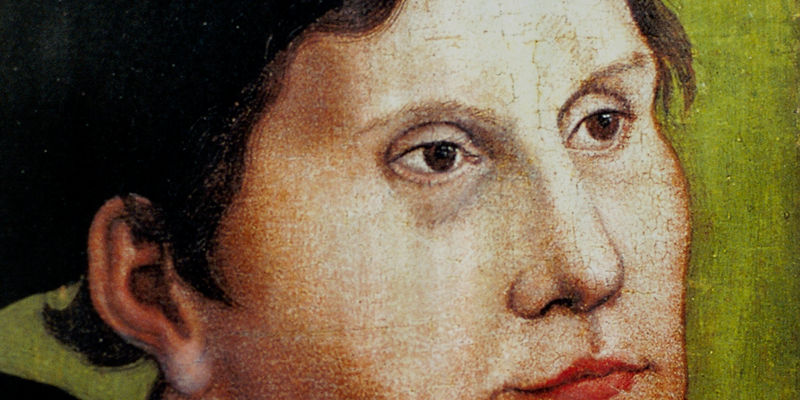
Explore the landmarks & legacy of Martin Luther
Martin Luther’s Ninety-Five Theses were the culmination of his frustration with the corruption of the Roman Catholic Church, especially its practice of selling “indulgences,” for the forgiveness of sins. But the famous Castle Church door where those theses were nailed is just one of several historic destinations travelers can visit.
Wittenberg
Visitors may walk the streets of the town where the Protestant Reformation was born and tour the house where Luther lived, along with St. Marien’s, the church where he preached. Travelers may also visit the Castle Church to see the door where Luther nailed the theses that would quickly be translated from Latin into German and widely shared.
Torgau and Dresden
In Torgau, visitors can explore the town that played a key role in the Reformation. A safe haven for Protestants, Torgau is where the houses of Luther’s wife Katharina von Bora and his trusted companion Philip Melanchton are located. In Dresden, travelers can see the Frauenkirche, one of the very first churches built according to the principles outlined by Luther.
-
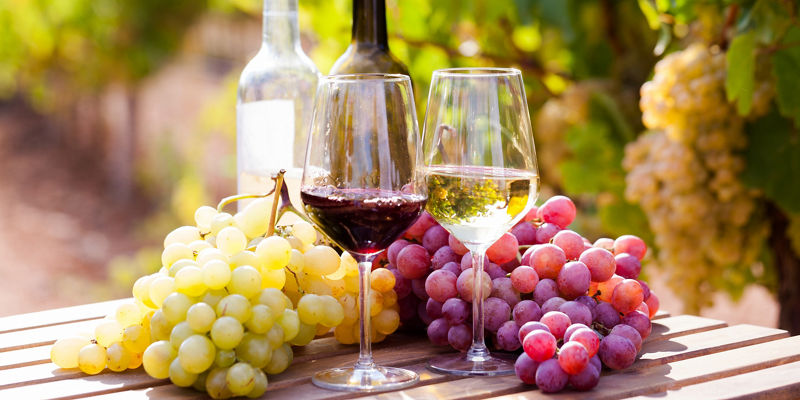
French wines have been enjoyed since Roman times
French wines are loved the world over. Their popularity is nothing new—attracted by ideal conditions for growing grapes, the Greeks and Romans planted grapevines in France as early as the 6th century BC. Monasteries continued the viticultural (wine-making) tradition for centuries until the French Revolution, when church vineyards were confiscated.
Terroir
Terroir is the combination of factors—such as the climate, soil quality, composition of the underlying bedrock and slope and altitude of the terrain—that give a wine from a certain area its distinctive character. Terroir is also the foundation of France’s appellation system, which was established in the 1930s to formally control and certify the quality and integrity of various French wines and labels.
Celebrated French wine regions
French wine regions are legendary: Alsace, Beaujolais, Bordeaux, Burgundy, Champagne, Loire, Provence, Rhône and more. Each region—each vineyard, even—has its own terroir, and each region produces specific grapes. Bordeaux, Burgundy and Rhône produce primarily red wines (with the notable exceptions of Burgundy’s Chablis and Chardonnay areas); Alsace and Loire produce mainly whites; Champagne yields rosés and sparkling wines; and Provence produces rosés and reds. Wines can be made from a single type of grape or a blend of grapes. Some wines can be sold young, while others must be aged in wine cellars before they are ready to be consumed.
Wine-tasting tips
Ideally, you will analyze four aspects, or “stages,” of a wine when you are tasting it. The point is to slow down and experience each stage fully.
Appearance—Appreciate the wine’s color as you swirl it in the glass. Check to see that it is mixed well and has clarity.
Aroma—Sniff the wine to sense its “bouquet.” The wine’s aroma is a significant indicator of its taste.
Mouth Feel—Before swallowing, hold the wine in your mouth to assess its flavors, texture and acidity.
Finish—Once you have swallowed the wine, note its aftertaste.
Taking notes
Using your senses, you may be able to detect hints, or “notes,” of fruits, vegetables, herbs, spices, flowers, chocolate, vanilla, licorice, smoke or the wooden barrel in which the wine was aged.
-
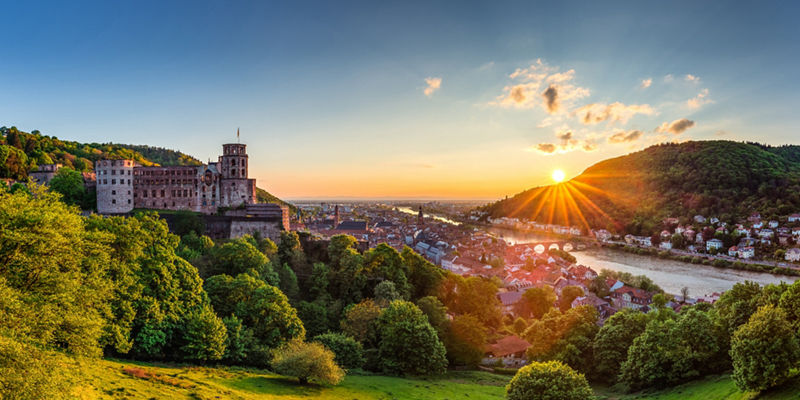
Historic Heidelberg
Set on the banks of the Neckar River—a tributary of the Rhine—Heidelberg has a well-deserved reputation as an intellectual center and is home to both the oldest university and oldest public library in Germany. Learn about the Philosopher’s Walk and the red sandstone castle ruins that overlook Heidelberg’s charming, baroque-style Old Town.
Heidelberg University
In 1225, the Bavarians took over Heidelberg. In 1386, Heidelberg University was founded by Bavarian Count Palatine Rupert I, also known as Rupert the Red. Heidelberg’s library, founded in 1421, is the oldest public library in Germany. On the northern side of the Neckar, the path known as the Philosopher’s Walk offers scenic views of the Old Town and the castle—it got its name because of the long walks Heidelberg’s philosophers and university professors would take on the mountainside path as they conversed.
As a major university, Heidelberg was one of the centers of the sport of academic fencing, which was popular in Germany and Austria in the 19th century. Since the sport involved university students, fencing—or “dueling”—was a mark of class, and the facial scars the participants received were regarded as a sign of courage.
Heidelberg Castle
While its history dates to the early 13th century, Heidelberg Castle has repeatedly been destroyed by enemies, accidental gunpowder explosions and lightning, then rebuilt again and again. As a result, the structure is a hodgepodge of styles from Gothic to Renaissance. Despite this architectural blending, its ruins are considered one of the most significant Renaissance structures in the region and the red sandstone castle remains a dramatic presence on the hill.
-
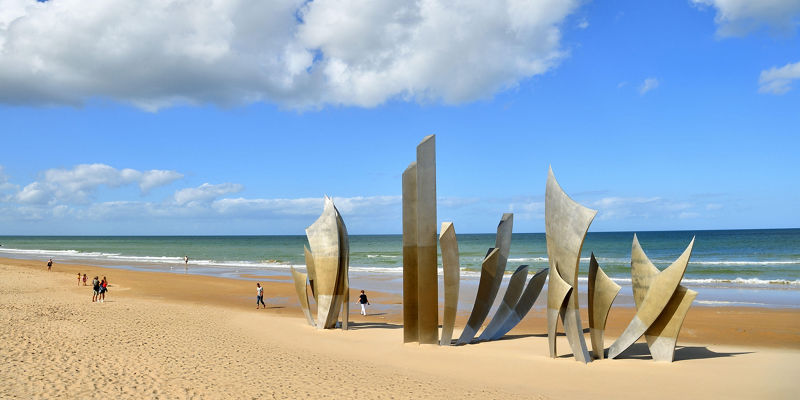
History—A pilgrimage to the Normandy beaches
The Normandy beaches, famously etched into history on June 6, 1944, during the Allied invasion of Nazi-occupied France, hold a unique place in the hearts and minds of visitors today. Walking along the revered shores of Utah, Omaha, Gold, Juno and Sword, the remnants of D-Day serve as a powerful testament to the bravery and sacrifice of countless soldiers.
Along the beaches are poignant reminders of the monumental events that unfolded here. Among the most striking are the rusted remains of German bunkers, guns still aimed at the empty beaches and the abandoned Mulberry Harbor. A visit to these sobering sites offers travelers a rare opportunity to experience history on such a visceral level.
A short distance from the beaches, you will find the church of Sainte-Mère-Église, which served as a makeshift field hospital during the invasion. This is also where American paratrooper John Steele’s parachute was famously caught on the church’s steeple, making it a special place to remember the brave paratroopers of the Allied forces. Today, the D-Day beaches remain a storied landmark where one can reflect on the impact of this historic event on the course of world history.
-
La vie bohème
Bohemia is an historic region of Europe roughly equivalent to what is now the western two-thirds of the Czech Republic. (The former states of Moravia and Silesia make up the rest.) Bohemia was a kingdom during the time of the Holy Roman Empire, and was subsequently part of the Habsburg’s Austrian Empire, bordered by Austria, Bavaria, Saxony, Lusatia, Silesia and Moravia. All of this changed in 1918 when it was made part of Czechoslovakia.
A brief history of Bohemia
The name “Bohemia” came from the Roman Boihaemum, homeland of the Boii tribe whom the Romans conquered there. Slavic tribes called Czechs came into the area in the 6th or 7th century. Ruled by the Přemysl dynasty for several hundred years, the kingdom of Bohemia achieved its peak in the 14th century when it was joined with the House of Luxembourg through marriage. Charles IV, who became King of Bohemia in 1346, founded Charles University, central Europe’s first university. In 1348, he united the lands of Bohemia, Moravia, Silesia, Upper Lusatia and Lower Lusatia and was the first king of Bohemia to also be elected Holy Roman Emperor.
In 1526 Bohemia became part of the Habsburg Empire. Bohemia enjoyed great religious freedom in the 15th and 16th centuries, and was considered one of the most liberal countries of the Christian world at that time. When Ferdinand II began oppressing the rights of Protestants in Bohemia, it led to the outbreak of the Thirty Years’ War in 1618.
The Bohemian lifestyle
In the 19th century the word “Bohemian” began to be used in the English language to connote a certain freedom—an unconventional, somewhat nomadic lifestyle. At that time many creative types—artists, writers, musicians and the like—were living in an unorthodox manner, expressed through free love, sometimes voluntary poverty and generally emulating the Romany people who had come to western Europe from the area of Bohemia.
The lifestyle was romanticized in the operas Carmen and La Bohème, the latter of which in turn formed the basis for the 1990s musical Rent with its song “La Vie Bohème.” The idea of Bohemianism was also popularized in William Makepeace Thackeray’s 1848 novel, Vanity Fair. Charles Aznavour sang a song, “La Bohème,” about the Bohemian lifestyle in Paris’s Montmartre district, a phenomenon that is also referenced in the 2001 film Moulin Rouge.
San Francisco’s Bohemian Club
The idea also arose in pre–Civil War America with the arrival of Bohemian nationals—war correspondents, traveling from place to place to cover the war, began to refer to themselves in this way. Several writers, like Bret Harte and Mark Twain, celebrated the Bohemian lifestyle, and writers, artists and musicians in San Francisco formed a gentlemen’s Bohemian Club in 1872. Wealthy businessmen were intrigued and soon joined the club.
After visiting the club in 1882, Oscar Wilde is reported to have remarked, “I never saw so many well-dressed, well-fed, business-looking Bohemians in my life.” Current men-only membership lists are secret, but past members have included U.S. presidents, cabinet officials, CEOs and military contractors. Whether the idea of Bohemianism had anything to do with the unusual religious freedom enjoyed by the medieval Bohemian citizens or was simply a reference to the wandering Romany people of Europe, we may never know.
-
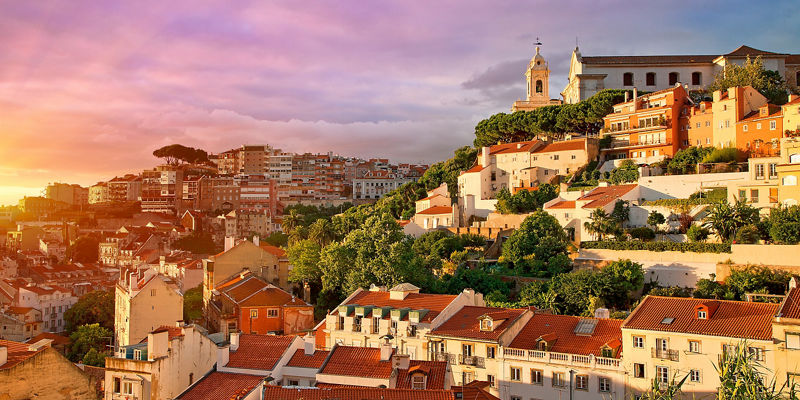
Lisbon, Portugal’s historic capital city
With a population of more than 500,000 people, Lisbon is Portugal’s largest city. It is also one of the oldest cities in Europe, boasting more than 2,000 years of continuous human habitation.
A desirable destination for centuries
Lisbon was occupied by the Romans, various Germanic tribes and the Moors before the Crusaders recaptured it in the 12th century. Lisbon’s long, eclectic history and strategic location as a seaport have contributed to its unique mix of cultures, while its Mediterranean climate and affluent lifestyle make it one of the most livable cities in the world.
Two UNESCO World Heritage Sites
Lisbon is home to two adjacent UNESCO World Heritage Sites. The Jerónimos Monastery is one of the most prominent examples of the Portuguese late Gothic Manueline-style architecture. Not far from the monastery, the Belém Tower stands on the bank of the Tagus River. Built in the early 16th century to defend the port entrance, the tower was dedicated to St. Vincent, the patron saint of Lisbon.
Exploring Alfama
The Alfama district is one of the oldest quarters in Lisbon and still retains much of its original layout. Decorative tiled building facades line narrow medieval streets. In the evening, visitors can hear haunting strains of fado, a distinctively Portuguese style of music, emanating from the old quarter’s many cafés and restaurants.
Other delights
From history and architecture to food and wine, Lisbon has something for many appetites. You can sample the local cuisine and port wines for which Portugal is famous and visit the city’s fascinating museums and beautiful cathedrals.
-
Meet the Dutch Masters
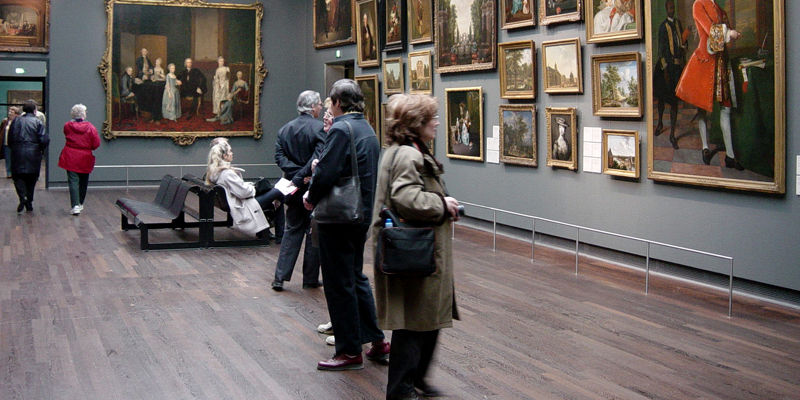
The Dutch Golden Age (17th century) was a prodigious period for Dutch trade, science and the emergence of noteworthy artists who would come to be known as the Dutch Masters. Meet five of them below and find out where you can see artwork from this celebrated era while you are visiting The Netherlands.
- Frans Hals (1583–1666) – Known as Hals the Elder, he is known for his group portraiture and painterly brushwork that helped usher in the more dynamic and lifelike Golden Age painting style.
- Rembrandt van Rijn (1606–1669) – Considered by many to be the most important painter in Dutch history, Rembrandt produced an extraordinary body of work, including both paintings and etchings. He focused on Biblical and historical subjects and created many portraits and self‑portraits.
- Aelbert Cuyp (1620–1691) – This native of Dordrecht was best known for his landscapes, particularly Dutch and Italian ones. He painted large vistas of the Dutch countryside in the early morning or late afternoon light, with particularly compelling renderings of clouds.
- Jan Steen (1629–1679) – From Leiden, Steen captured daily life in all its lusty, chaotic glory. There is even a Dutch expression, een huishouden van Jan Steen (“a Jan Steen household”), which means a messy, cluttered scene. He painted historical, mythological and religious scenes as well as portraits and still lifes—always with insight and humor.
- Johannes “Jan” Vermeer (1632–1675) – With only 34 extant works attributed to him, Vermeer may not have been the most prolific Dutch Master, but he worked with great care and his domestic scenes are beloved. Two of his best-known works are Girl with a Pearl Earring and The Milkmaid.
Works of the Dutch Masters are on display around the world. In The Netherlands, you can see them at the Rembrandt Museum, the Rijksmuseum, the Amsterdam Hermitage and the Royal Picture Gallery at The Hague.
-
Normandy’s tradition of farm-to-table cuisine
Nothing compares to sampling some of the world’s finest culinary delights at their source. In Normandy, where dairy cows graze under apple blossoms, the opportunities to do so are endless.
The secret to French pastries and digestifs
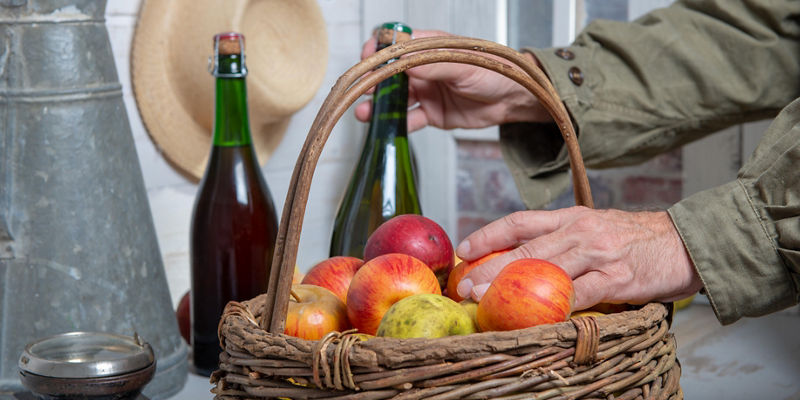
The Norman landscape is famously blanketed with row after row of apple orchards. Each fall, the harvest promises an endless indulgence of tarts and cakes. Those apples that are not delivered to bakeries are sent to press, where their juice is transformed into cidre bouché, or sparkling cider. Normandy’s answer to wine also lies in this versatile fruit as local distilleries produce the region’s famous Calvados brandy.
Indulge in some of the world’s best cheese
Few cheeses compare to the tangy, creamy ones made with the milk of vaches normandes, Norman cows. Each bovine produces up to seven gallons each day, destined for cheese boards around the world. Of them, the soft and often gooey Camembert may be the star. Others include the grassy Pont L'Évêque, the sharp Livarot and the bold Pavé d'Auge.
-
Portugal, the land of explorers
With its long Atlantic coastline, Portugal has a prolific seafaring past. Six centuries ago, explorers began to sail from Portugal’s shores to establish trade routes with India, Brazil and beyond, and to lay claim to new lands.
Evolution of discovery
After the bubonic plague took its devastating toll in the 14th century, King Alfonso IV ordered the first exploratory journeys to encourage maritime commerce. Over the years, Portuguese sailing ships grew larger and sturdier, adding cannons and other weaponry. Square sails gave way to the triangular sails of the double-masted caravel, which borrowed the shape from North African sailing ships. By the 15th century, Portuguese ships featured three masts so they could travel farther and accommodate more cargo. Portuguese navigators took Arabic technologies like the quadrant and the astrolabe and improved them. These navigators mapped previously uncharted territories and helped create and refine the astronomical tables used in almanacs.
Pantheon of explorers
Portugal boasts some of history’s most celebrated explorers. Infante Henry, better known as Henry the Navigator, is revered as the patron saint of Portuguese exploration. Vasco da Gama, the first European to reach India by sea, enabled Portugal to establish a colonial empire in India. Five of his six sons also ventured out to sea. Ferdinand Magellan led the expedition that resulted in the first circumnavigation of the globe in 1522. Although Magellan was killed in the Philippines, his crew successfully completed the historic expedition. Before Christopher Columbus sailed for Spain, he applied twice to sail for Portugal but was rejected both times.
Empire and influence
Because of this exploration, Portugal was able to take early possession of many colonies. Beginning in 1415 with Cueta, a small area on Africa’s north coast just across from Gibraltar, Portugal built a vast network of territories, creating wildly successful trade routes and establishing colonies in Africa, Asia and Latin America. During the 20th century, all the colonies achieved their independence, culminating with the handover of Macau in 1999. Portugal’s influence, however, is still evident. To this day, Portuguese is spoken in Brazil, Argola, Cape Verde, Guinea-Bissau, Mozambique, São Tomé, Principe and East Timor.
-
Rothenburg
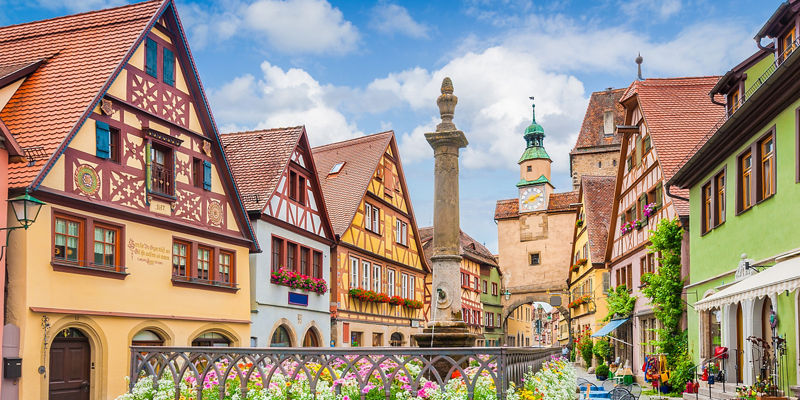
Long celebrated as one of Germany’s last remaining walled medieval towns, Rothenburg has been lovingly preserved. Its authenticity and medieval ambiance are unrivalled, providing inspiration to German painters and poets and drawing moviemakers eager to capture the Middle Ages on film.
Explore a city frozen in the Middle Ages
Rothenburg ob der Tauber, or the “Red Fortress above the Tauber,” was one of the 20 largest cities of the Holy Roman Empire. It was a thriving merchant town overlooking the Tauber River until two devastating events of the 17th century sent it into ruin: the Thirty Years’ War and the plague. The city thus stopped developing, which explains its seemingly untouched atmosphere today.
Stroll fairy-tale lanes
In 1802, the German Romantic movement “rediscovered” Rothenburg and embraced it as part of the nation's medieval heritage, bolstering restoration efforts. Today, the streets and structures of Rothenburg seem torn from a storybook. Tidy half-timbered houses lean over cobblestone alleyways. Vibrant flowers spill over window boxes clinging to old patrician houses, and reminders of a rich past unfold at every turn.
-
Spain Throughout History
At the beginning of recorded history, the Iberian Peninsula, which now comprises Spain and Portugal, was home to three main tribal peoples: the Iberians, the Basques and the Celts. The peninsula was later occupied by the Romans, then Germanic tribes. In the 8th century it was conquered by the Moors, who would rule for centuries.
The rise of Iberia’s Christian kingdoms
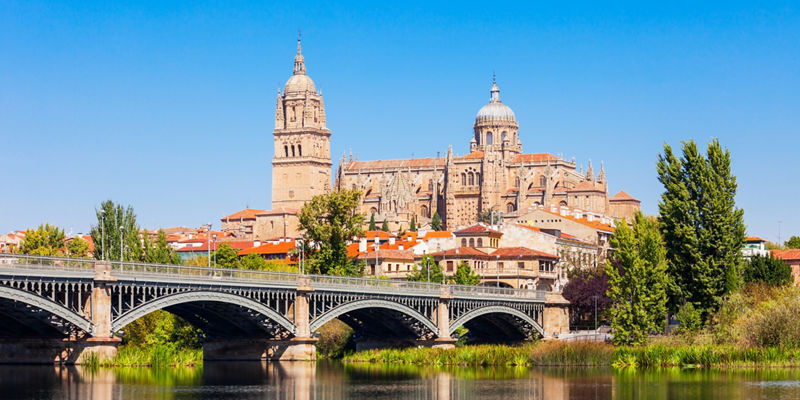
By the 11th century, Iberia’s Christian kingdoms began to capture control of the northern areas, including the holy site of Santiago de Compostela and the city of Toledo. In the 13th century, the Muslim outposts at Córdoba and Seville fell to Christian Spain. It was around this time that some of Spain’s greatest universities, including the one at Salamanca, were established.
A European powerhouse
In the 15th and 16th centuries, Spain controlled vital trade routes and expanded its empire across the Americas, parts of Europe and the Mediterranean coast. Spain stood as a prominent European force during the 16th and 17th centuries. Decline followed due to piracy, plagues, conflicts with the Turks and France, and the Protestant Reformation. Meanwhile, France ascended. In 1793, Spain lost a war against France, leading to a 1795 peace treaty that made Spain a “client state” of Napoleon's France. This marked a challenging era of enduring French rule into the 19th century, losing colonies and facing internal division. The Spanish-American war in the late 19th century, known as El Desastre, added to the turmoil. The 20th century brought further unrest, including a civil war and prolonged military rule under Francisco Franco, until his death in 1975, which proved transformative for Spain.
A desirable destination
Today, Spain is a member of NATO, the European Union and the Eurozone. After a long period of political and economic instability, the country has become a democratic constitutional monarchy—with both a king and a prime minister—and has experienced significant economic growth. With its history, art, natural beauty, temperate climate and world-famous cuisine and wines, Spain is an extremely desirable travel destination. The country showcases great architecture, from the palaces of Andalusia to the groundbreaking work of Antoni Gaudí, as well as diverse musical traditions.
-
The monastic wine heritage of the Rheingau
The Rheingau owes its wine pedigree to the monks who toiled in its vineyards and religiously recorded their progress. Clambering up steep slate slopes, carefully tending the vines and nurturing their fermentation was a slow and arduous labor of love. So why did they do it?
It was not merely because the monks liked to drink wine (though they did), or even because it was profitable (which it was). Wine was an essential component of the Eucharist, one of the Catholic Church’s holiest rites. Moreover, it was important for its medicinal properties as a disinfectant, analgesic, digestive aid and antimicrobial agent. Wine was also used as a medium for delivering unpleasant-tasting curatives called theriacs.
In other words, it was the spoonful of sugar that helped the medicine go down.
A tradition begins
Legend says that in the 8th century, Charlemagne allowed the first vines to be planted in the Rheingau. Romans had been cultivating grapes there since at least the 2nd century, but Charlemagne’s imprimatur spurred viticulture among the region’s monastic communities.
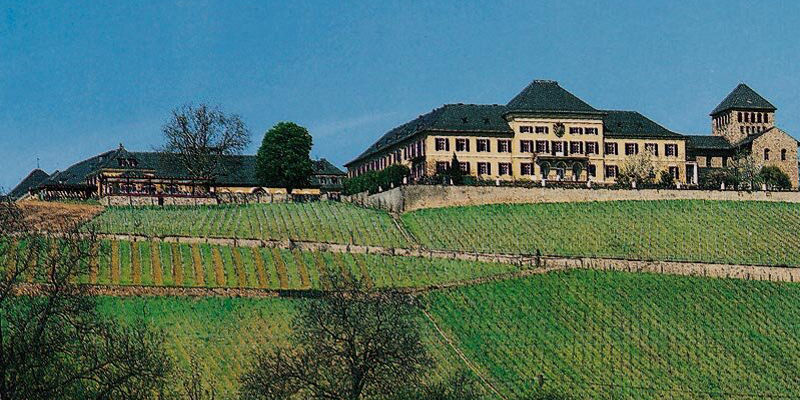
The Archbishop Ruthard of Mainz founded a wine-growing Benedictine abbey on the slopes above Geisenheim, which later became Schloss Johannisberg. His successor established a Cistercian monastery at Kloster Eberbach, whose monks came from the Clos de Vougeot vineyard of Burgundy.
Both of these Rheingau abbeys are famous for Riesling, and Schloss Johannisberg is credited as the (inadvertent) originator of the late harvest wines known as spätlese. The story goes that a messenger bringing the prince-bishop’s permission to begin the harvest was delayed. By the time he arrived, the vines were already infected with the botrytis fungus. But the monks discovered that, if picked at the right time, this “noble rot” produced wines of a particularly fine sweetness.
A legacy endures
Through their hard labor, constant documentation of techniques and yields, and perhaps their prayers, the monks of these orders preserved and expanded the knowledge of viticulture even throughout the fall of the Western Roman Empire and subsequent periods of war, plague and economic decline. More than 900 years later, both Schloss Johannisberg and Kloster Eberbach are still flourishing and producing high-quality wines that, if not heaven sent, are simply divine.
-
Tips for shopping in Portugal
In Portugal, particularly in the larger cities like Lisbon and Porto, you can find famous international brands as well as up-and-coming designers. There are several large shopping centers to visit, and Lisbon has an El Corte Inglês, a 9-story Spanish department store offering everything from clothing and furniture to cosmetics and groceries.
The urban Portuguese are a fashion-conscious people and make a point of wearing the best fabrics they can afford; Lisbon in particular is a great place to find sophisticated designs and especially fine leather goods like shoes and handbags. The outdoor markets have a wide variety of wares, but the quality may be better in the shops and department stores.
There are certain items unique to Portugal that you might want to look for. First of all, of course, there are the port wines. You can acquire these at the quintas (country villas or estates) you will be visiting—get a couple of bottles to enjoy on board your ship, or purchase some and have them sent to your home to enjoy later or to give as gifts.
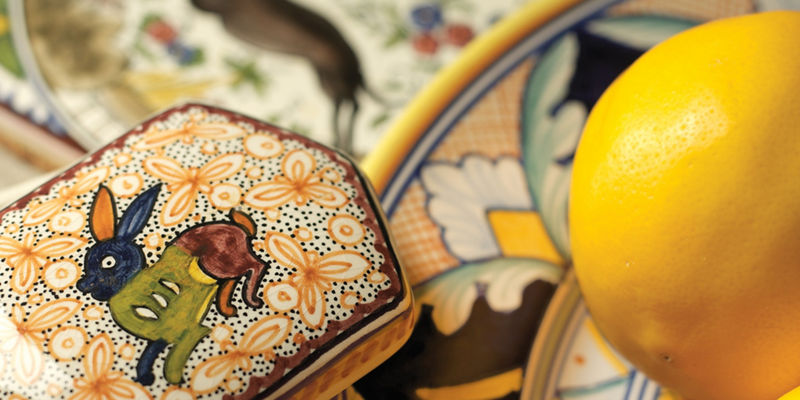
Craft treasures include glazed earthenware pottery—you can get some of Portugal’s famous tiles or colorful ceramic pieces such as trinket boxes, kitchen jars and the country’s iconic roosters. You can also look for dishes, serving pieces and cookware, including the pots used to make Frango na Púcara and other traditional dishes, and cheerful, rustic-looking plant containers for your home and garden.
The country’s seafaring past has led to the popularity of intricate model ships; you can find these either inside of bottles or on their own. They are delicate, so if you decide to purchase one make sure to get it carefully packaged for transport.
In the more crafts-oriented boutiques, you will find some products from the Portuguese archipelago of Madeira, including Madeira and port wines, handmade lace and hand-embroidered linens. You can also find some novelty items made from cork; most of the world’s cork comes from Portugal.
Portugal has a specialty in the jewelry arena: filigree. Look for intricate gold and silver filigree pieces, often heart- or leaf-shaped, including pendants, earrings and bangle or cuff-style bracelets. You can also find beautiful cross pendants, rosaries and crucifixes, both in shops and near the religious sites you will be visiting.
-
Wenceslas Square’s historic boulevard
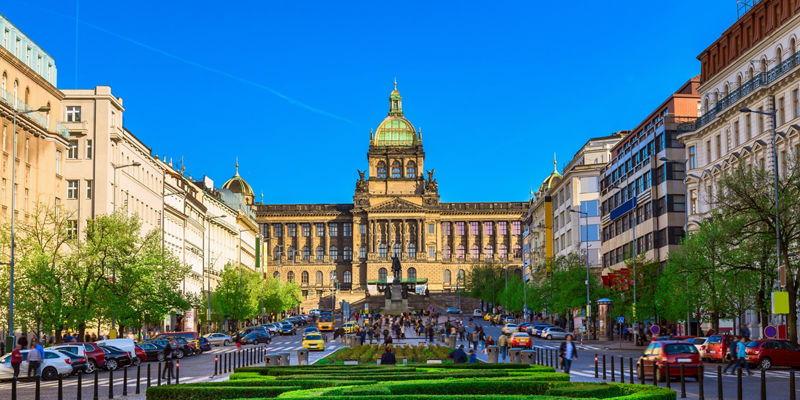
Wenceslas Square is located in the heart of Prague, one of Europe’s most beautiful cities. More rectangular than square, it is a wide boulevard with the Czech National Museum at its southeast end and the border between the city’s Old Town and New Town at its southwest end.
History, then and now
In the 14th century, the square was called the Horse Market. But in the mid-19th century, a monument to Saint Wenceslas, the patron saint of Bohemia, was erected and the square was renamed. Because of its size and central location, the square became a venue for proclamations, demonstrations and celebrations.
Here are just a few of the events that happened on this historic boulevard:
- In 1918, Czech writer Alois Jirácek read the proclamation of Czechoslovakia’s independence in front of the Saint Wenceslas statue.
- During World War II, the Nazis used the street for mass demonstrations.
- In 1945, the square was the site of the Prague Uprising—an attempt by the Czech resistance to liberate Prague from German occupation near the end of World War II.
- In 1969, an estimated 150,000 people thronged Wenceslas Square to celebrate the Czech ice hockey team's defeat of the U.S.S.R.
- In 1989, following two decades of Soviet occupation, the Velvet Revolution, a non-violent uprising, began in Wenceslas Square. Daily mass demonstrations happened here, and when Slovak politician Alexander Dubček and beloved playwright and dissident Václav Havel appeared on the balcony of the Melantrich Building, it galvanized the crowd. Russian occupation ended that same year.
- In 2011, crowds swarmed Wenceslas Square to mourn the passing of Havel, the final president of Czechoslovakia and the first president of the Czech Republic. Havel served from 1989 to 2003.
The echoes of history
Today, Wenceslas Square is lined by hotels, offices, department stores and restaurants. But if you listen closely, you can hear the echoes of history.
-
Witness a Celebrated Winemaking Tradition
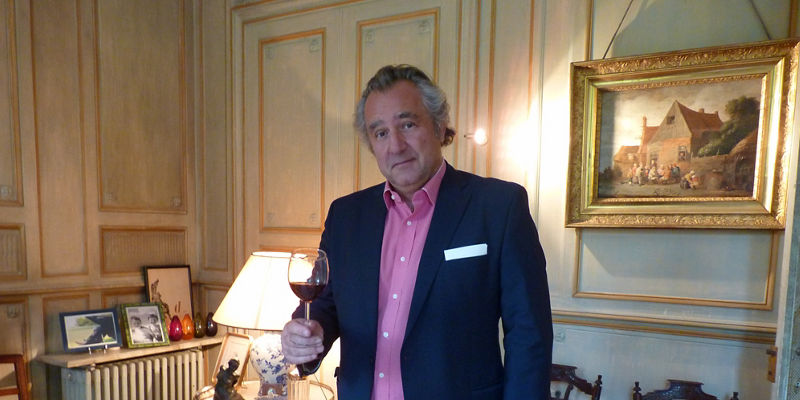
Home of the esteemed Calvet family for 150 years, Maison Bourgeois plays a central role in the viniculture of Bordeaux. The stunning hotel particulier, or private mansion, is gloriously set amid expansive vineyards and a charming forest glade. Oenophile and actor Renaud Calvet is the thoughtful caretaker of his family’s elegant château, honoring generations-old winemaking traditions.
Europe Highlights
Europe’s treasures reveal themselves in countless ways—from the breathtaking fjords of Norway to the storied shores of antiquity along the Mediterranean. Home to iconic cities like Venice, Vienna, Copenhagen, Prague and Dublin, as well as charming medieval villages, this is a continent best explored via its waterways. Here are a few of the highlights you may experience on a European journey:
- A leisurely boat ride through Amsterdam’s famous canals
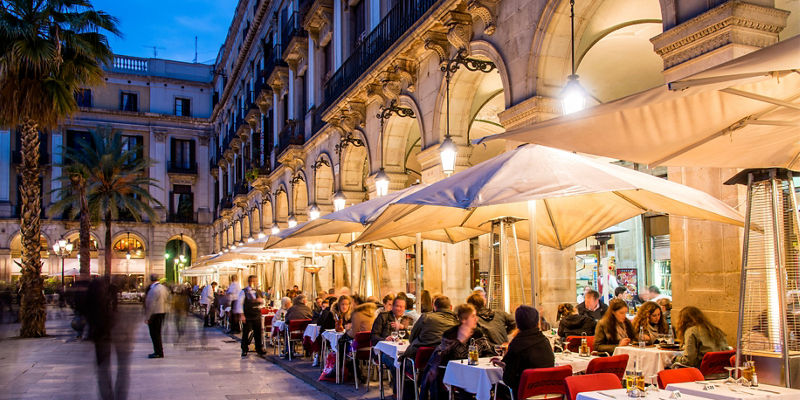
- Lively tapas bars showcasing Spain’s culinary scene
- The diverse collection of the British Museum in London
- The UNESCO-listed Palace of the Popes in Avignon
- Lisbon’s Jerónimos Monastery, a Manueline masterpiece
- The impressive collections of the Louvre Museum in Paris
- A moving visit to the Berlin Wall Memorial
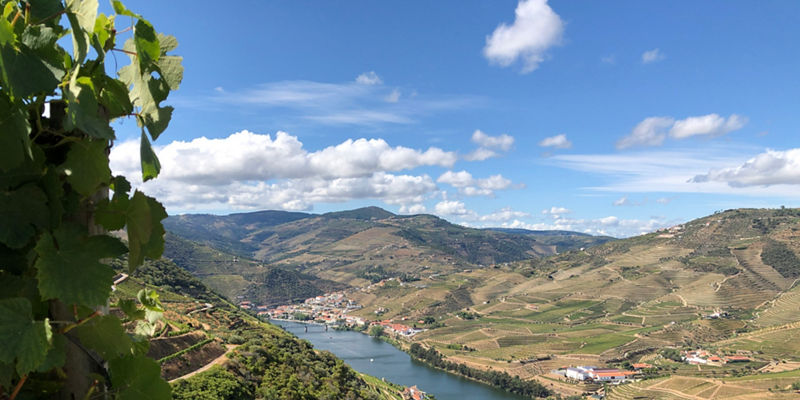
- Porto’s famous ruby-colored fortified wine
Destination Insight Videos
-
The Impressionists (3:19)
Learn the story of how impressionist paintings by Monet, Renoir, Cézanne and Degas forever changed the face of the art world and became a symbol of modern French life. Follow these iconic artists’ footsteps on a France river cruise with Viking.
-
Antoni Gaudí’s Architecture (3:53)
Step into the mind of Antoni Gaudí, the colorful Barcelona artist whose passion for nature led him to create astounding biomimetic architecture and seven UNESCO World Heritage Sites.
-
Inside Italy’s Coffee Culture (4:03)
If you cannot tell your macchiato from your espresso corto or you do not know why you should drink your coffee standing, join Karine and friends to explore Italy’s thriving coffee culture.
-
Fresh Pasta: Fast, Fun and Easy! (5:06)
Venture into the Tuscan countryside to learn the art of making fresh pasta. Under the watchful eye of a delightful Italian mama, Karine learns the secrets of this Italian favorite.


Europe Travel FAQ
All-Inclusive Itineraries—Europe
Choose one of our enriching, all-inclusive voyages and discover the many benefits of exploring in Viking comfort.
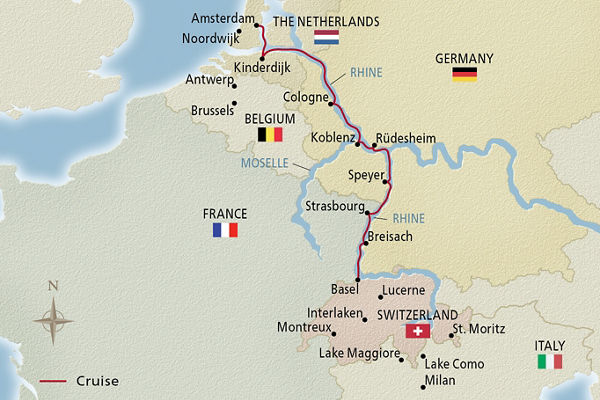
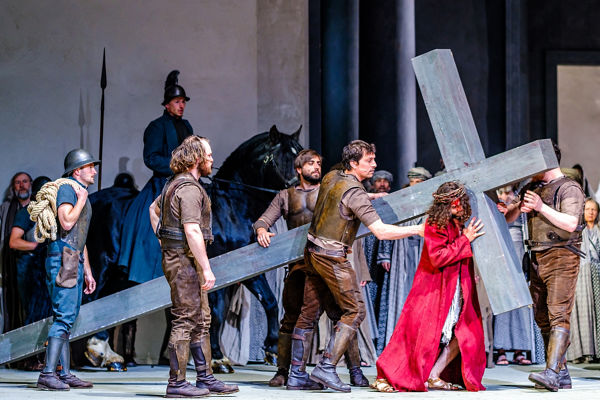
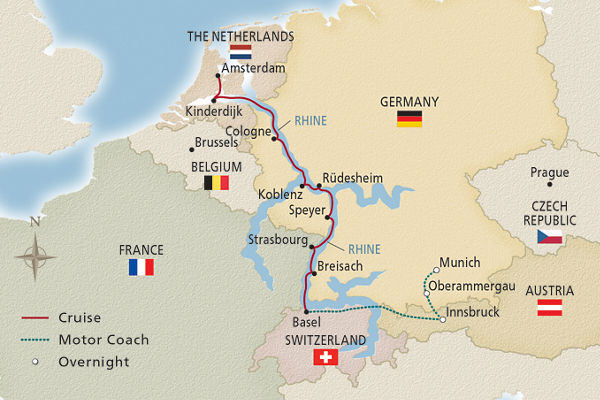
NEW! Oberammergau, Innsbruck & the Rhine