

Discover the treasures of Prague
With its splendid architecture, delicious cuisine and enthralling history, it is little wonder that Prague has become one of the world’s most popular destinations. Read on to discover a classic Czech soup, learn more about Prague’s vibrant theater scene and delve into the lives of some of the city’s most beloved figures.
Prague
Prague, the capital of the Czech Republic, is situated along the Vltava River in the heart of Central Europe. The city developed at a strategic crossroads of ancient trade routes and is built across a series of hills that descend toward the river’s banks.
Largely unscathed by World War II bombings, Prague is perhaps the best-preserved large medieval city in Europe. Its core includes several historic districts—Old Town (Staré Město), Lesser Town (Malá Strana), New Town (Nové Město) and Castle District (Hradčany)—many of which are connected by iconic bridges.
Prague has a temperate continental climate, with warm summers and cold winters. Average annual temperatures hover around 50 °F (10 °C). Summers are generally pleasant, with mild evenings, while winters often bring snow and crisp air, which enhances the city’s festive holiday atmosphere.
Prague’s recorded history dates back more than a thousand years. By the 9th century, the Přemyslid dynasty established Prague Castle (also known as Hradčany Castle) as a seat of power, and the city soon became a major political and cultural center of the Kingdom of Bohemia. Under the reign of Charles IV in the 14th century, Prague flourished as the capital of the Holy Roman Empire. Charles IV founded Charles University in 1348—making it one of the oldest universities in Europe—and oversaw the construction of landmarks that still define the city today.
Following centuries of Hapsburg rule, Prague became part of the Austro-Hungarian Empire until the empire’s collapse in 1918, when Czechoslovakia was established as an independent state. In 1939, Nazi Germany occupied Prague during World War II. After the war, the city fell under communist control from 1948 until the peaceful Velvet Revolution of 1989, which restored democracy. In 1993, Prague became the capital of the newly formed Czech Republic (also known as Czechia) following the amicable split of Czechoslovakia.
Today, Prague is celebrated as one of Europe’s most beautiful and historically intact cities. Below are some of the key cultural destinations you may encounter during a visit:
- Prague Castle—Founded in the 9th century, Prague Castle is the largest ancient castle complex in the world. It has served as the seat of Bohemian kings, Holy Roman emperors and modern Czech presidents. The complex includes palaces, courtyards, churches and gardens, offering sweeping views over the city and the Vltava River.
- St. Vitus Cathedral—Situated within Prague Castle, St. Vitus Cathedral is the city’s most important religious structure. Construction began in 1344 under Charles IV and continued for nearly 600 years. The cathedral is known for its soaring Gothic architecture, intricate stained glass—including a window designed by artist Alphonse Mucha—and the tombs of Bohemian kings and saints.
- Lobkowicz Palace—Also located within the Prague Castle complex, Lobkowicz Palace is the only privately owned building on the castle grounds. Today, the palace houses a museum showcasing family collections that include fine art, historical manuscripts and musical instruments.
- Charles Bridge—Constructed in the 14th century, Charles Bridge connects Old Town with Lesser Town and is one of Prague’s most recognizable landmarks. Lined with 30 baroque statues of saints, the bridge has long been a ceremonial route and remains a vibrant gathering place for artists, musicians and visitors.
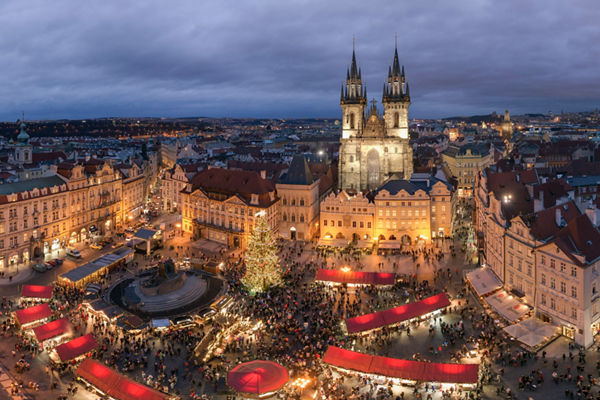
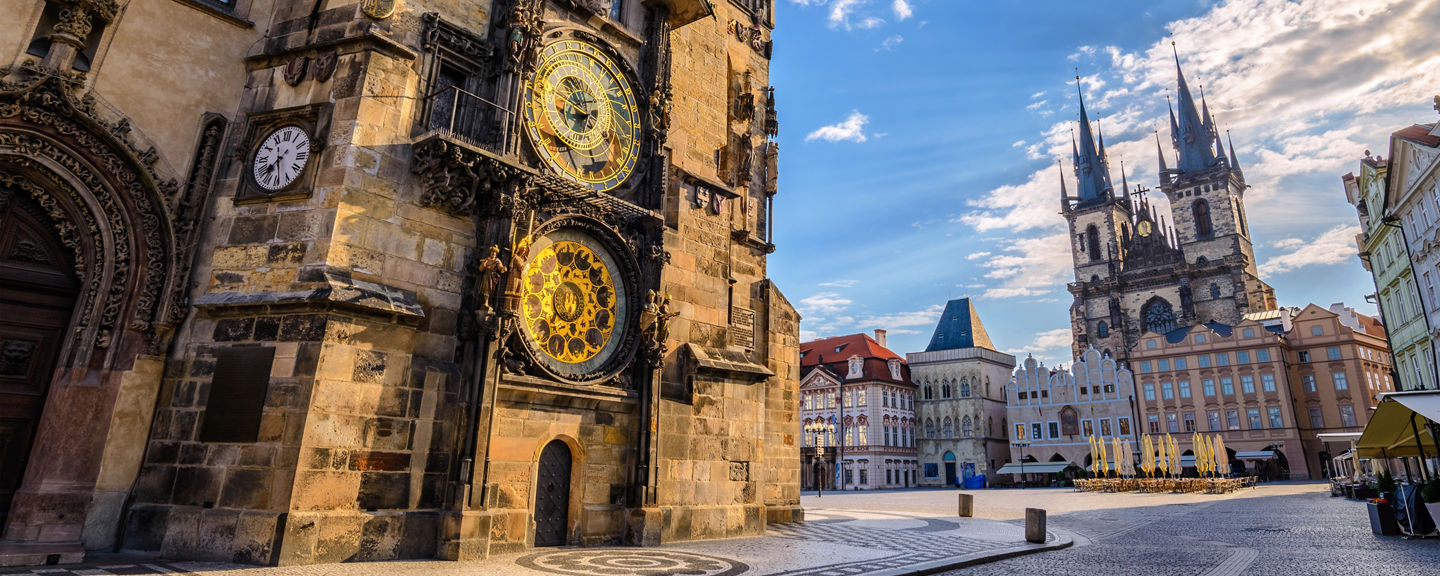
- Old Town Square & the Astronomical Clock—The historic heart of Prague, Old Town Square is surrounded by colorful baroque buildings, Gothic churches and lively cafés. At its center stands the Old Town Hall, home to the world's oldest functioning astronomical clock. The “Orloj” (as it is more commonly known among locals) dates to 1410 and marks each hour with a mechanical procession of the twelve apostles.
- Jewish Museum—This institution offers a comprehensive view of Jewish history in Prague, composed of several sites, including the picturesque Old Jewish Cemetery and the Altneuschul (Old New Synagogue). The Altneuschul, which has been in service since 1270, is the oldest active synagogue in Europe.
- Golden Lane—This colorful street in the Prague Castle complex boasts historic homes of artists and writers, including the house where Franz Kafka lived briefly with his favorite sister. Kafka fans may also wish to visit the Franz Kafka Museum, located in the Lesser Town (Malá Strana).
- Mucha Foundation Art Museum—Prague was once a hotbed of art nouveau. Today, examples of the design aesthetic are found across the city, thanks in no small part to Alphonse Mucha (1860-1939). This museum offers a taste of Prague’s unique culture, along with insight into the life and work of this great Czech artist.
- Wenceslas Square—Originally established as a medieval horse market, Wenceslas Square evolved into Prague’s commercial and cultural center. It has served as the stage for many major political events, including demonstrations during World War II and the Velvet Revolution.

-
Czech Theater
Czech theater has long served as a potent political tool, particularly in moments when conventional forms of expression were restricted. During the 16th century, the Hapsburg ruler Ferdinand I became King of Bohemia, and over the following centuries, the Czech language, local traditions and many aspects of Czech identity were curbed in favor of Austrian culture. Theater and puppetry became crucial means of preserving local ways of life.
During the 18th and 19th centuries, a Czech National Revival took place, and Czech productions became immensely popular. The stage became a public forum where history, folklore and national myths were dramatized, helping transform cultural expression into a subtle yet effective form of political self-assertion. The idea for a national theater emerged in the 1840s, but the project did not come to fruition until 1861, when Parliament purchased a site on the banks of Prague’s Vltava River to set up a temporary theater for Czech dramas and opera. A more permanent national theater opened its doors in the same location in 1881.
During the 20th century, this politicized theatrical tradition deepened as artists confronted fascism and, later, communist authoritarianism. Under censorship, theaters became spaces where audiences learned to read between the lines, forging a shared language of resistance. Czech theater thus functioned not only as art, but as a civic space where politics could be examined.
By the late communist period, Czech theater had become directly intertwined with political change. Dissident stages operated as hubs of intellectual opposition, openly questioning power structures. The work of playwrights like Ladislav Smoček and Václav Havel exemplified how theater could inspire civic courage. In this way, the artform did not merely reflect political history—it actively shaped it, contributing to the cultural groundwork that made the peaceful transformation of the 1989 Velvet Revolution possible. This large-scale protest movement, which ended more than 40 years of communist rule, culminated in the election of Havel as the president of a new, democratic government.
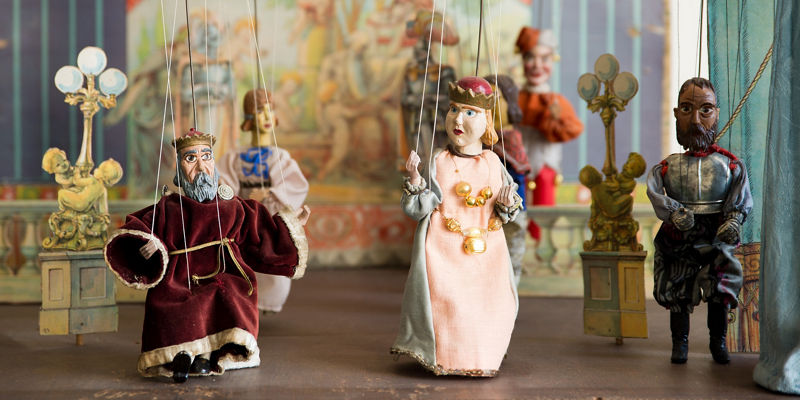
Today, the National Theater is still one of the most important symbols of Czech cultural identity. It includes four artistic companies—Opera, Drama, Ballet and Laterna Magika, often credited as the world’s first multimedia theater. Their performances grace five separate stages in Prague. The esteemed National Marionette Theater hosts some of the most popular shows in Prague; their puppet performances of Mozart’s Don Giovanni are a perpetual favorite. Another Prague invention, the acclaimed Black Light Theater, uses a darkened stage with ultraviolet illumination. This technique has been adopted by many troupes within the Czech Republic and around the world.
-
Famous Czech Figures
From medieval kings and renowned composers to modern artists and celebrated novelists, Czech history has produced figures whose influence reached far beyond the country’s borders. Here are five of the Czech Republic's most renowned creators and reformers:
- Charles IV (1316–1378)
One of the most influential rulers in Central European history, Charles IV served as Holy Roman Emperor and King of Bohemia, transforming Prague into a major political and cultural center. His reign marked a golden age for the region, during which he founded Charles University and oversaw the construction of enduring landmarks that shaped Czech identity for centuries. - Antonín Dvořák (1841–1904)
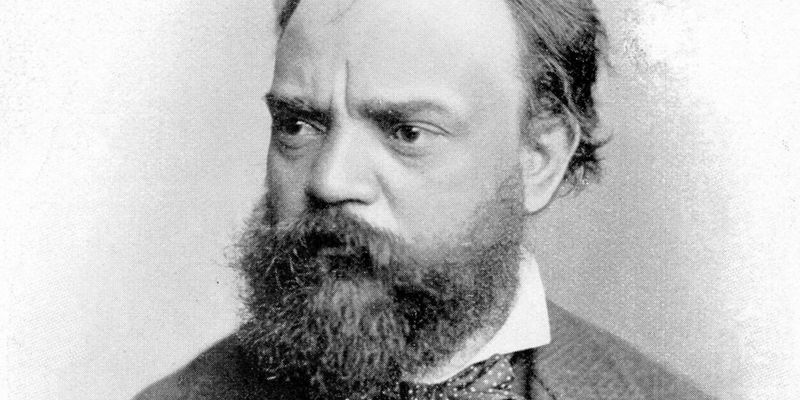
One of the most important composers of the Romantic era, Dvořák drew on Czech folk traditions to create richly expressive symphonies, chamber works and operas. His music, including the Symphony No. 9 “From the New World” and the Slavonic Dances, helped bring national identity into classical composition and contributed to the international recognition of Czech music. - Franz Kafka (1883–1924)
Kafka, one of the most influential literary figures of the 20th century, explored themes of alienation, existential struggle and transformation in works such as The Metamorphosis, The Castle and The Trial. The term “Kafkaesque” was coined to describe nightmarish scenarios similar to those depicted in his tales, which teem with hapless characters, inescapable situations and absurdist bureaucracies. - Alphonse Mucha (1860–1939)
A defining figure of the art nouveau movement, Mucha was renowned for his decorative style, flowing lines and idealized female forms. Best known for his posters and illustrations in Paris and for the monumental, 20-canvas cycle The Slav Epic, he fused fine art and design while expressing a strong sense of Slavic cultural identity. - Václav Havel (1936–2011)
In a nation that reveres the theater, it is no surprise that, after the fall of communism, a playwright should be elected as the president of Czechoslovakia (1989–92) and of the Czech Republic (1993–2003). Havel assumed this mantle after establishing his literary credentials with such plays as The Garden Party and The Memorandum. But he is most revered as a dissident and statesman. When the Soviets invaded Prague in the spring of 1968, he was a vocal critic and spent years in and out of prison. In 1989, he emerged as the leader of the Velvet Revolution, which ended decades of communist rule.
- Charles IV (1316–1378)
-
Sauerkraut and Zelňačka
Pickled and preserved foods such as sauerkraut have long been an integral part of the Czech Republic’s culinary landscape. Historically, food access in the country was not always stable, so these methods prevented spoilage and ensured that nothing went to waste. Such conservation practices allow Czechs to eat locally year-round, even when certain foods are not in season.
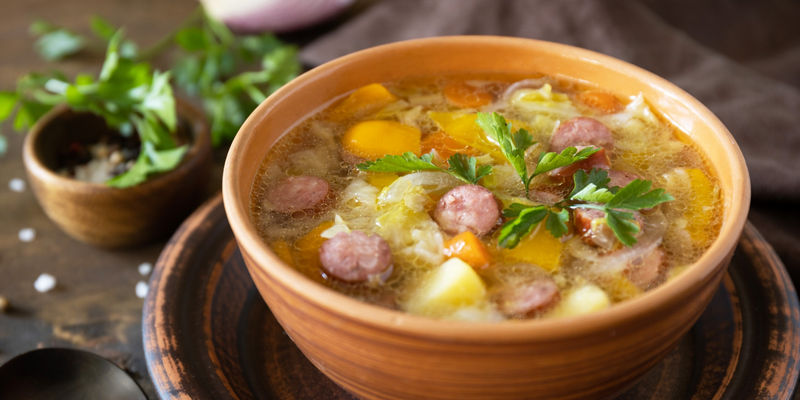
In the Czech Republic, sauerkraut is made from either white or purple cabbage and is often combined with other ingredients such as sugar, apples or onions. Czech sauerkraut’s flavor profile is considered mellower and less acidic than that of its German counterpart, allowing it to feature prominently in beloved local dishes such as zelňačka—a hearty Czech sauerkraut soup—without overpowering the flavors of the other ingredients.
The base of this beloved soup is almost always made up of sauerkraut, potatoes, smoked meat and either sour or heavy cream. Other interpretations may call for mushrooms, onions or bacon, and common seasonings include caraway seeds and smoked paprika. You will often find some homemade bread or rohlíky (small dinner rolls) next to your bowl of zelňačka, allowing you to sop up every delicious bite.
Zelňačka originated as a practical, rural cabbage soup rooted in the agricultural realities of the countryside, where cabbage, onions and potatoes were among the most reliable crops. These ingredients stored well and were accessible even to poorer households, making them foundational to everyday cooking. Zelňačka was also an excellent winter survival dish. Its caloric density and nutritional value made it ideal during periods when fresh produce was unavailable.
Today, zelňačka is a familiar sight on the menus of traditional Czech pubs throughout the country. During your time in Prague, be sure to pause for a bowlful of this national treasure.
Prague Highlights
A voyage to Prague offers the opportunity to see historic architecture, visit renowned museums and experience the modern cosmopolitan culture that permeates the city's cafés, restaurants and shops. Here are some highlights you may experience during your journey:
- Explore the cobbled lanes of the UNESCO-listed Old Town
- See the Astronomical Clock’s famed “Walk of the Apostles”
- Take in striking views of the city from Letna Hill
- Enjoy a Privileged Access concert at stately Lobkowicz Palace
- View iconic landmarks during a nighttime walking tour
- Attend a traditional Czech music and dance performance
- Cross the historic, pedestrian-only Charles Bridge
- Discover the wonders of the Prague Castle complex
- Browse local crafts at a charming Christmas market
- Sample regional beers in a traditional Czech pub
- Wander past colorful cottages on Golden Lane
- Visit the historic synagogues of the Jewish Quarter
Destination Insight Videos

Explore: Prague (1:48)
Prague, the “City of a Thousand Spires,” offers endless discoveries. See some of Karine’s top recommendations, including Lobkowicz Palace, the Old New Synagogue, the Astronomical Clock, Charles Bridge and more.

Prague Synagogue (2:11)
When in Prague, be sure to visit the Old New Synagogue in Josefov, the Jewish Quarter. This is the oldest synagogue in Europe, where generations have been worshipping since 1270.


Prague Travel FAQ
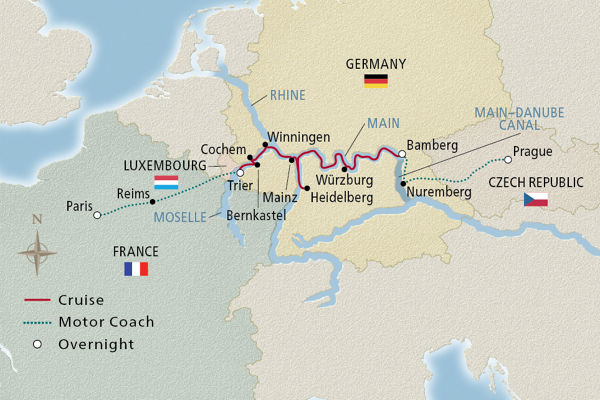
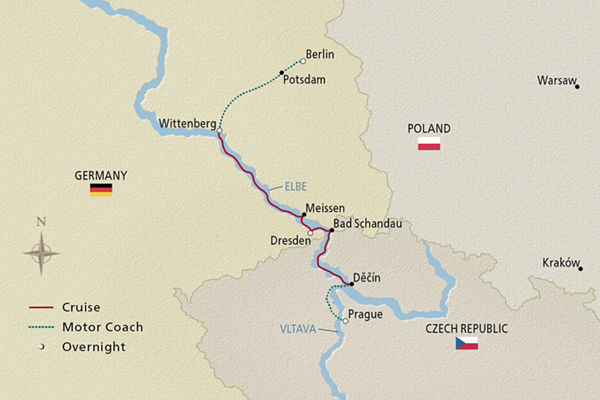
All-Inclusive Itineraries—Prague
Choose one of our enriching, all-inclusive voyages and discover the many benefits of exploring in Viking comfort.