

Experience the delights of Paris
Over the centuries, Paris has charmed visitors with its elegant architecture, timeless artistic masterpieces and exquisite cuisine. Read on to learn how to order the perfect beverage in a Parisian café, uncover the captivating history of a fashion icon and delve into the lives of some of the city’s most notable historic figures.
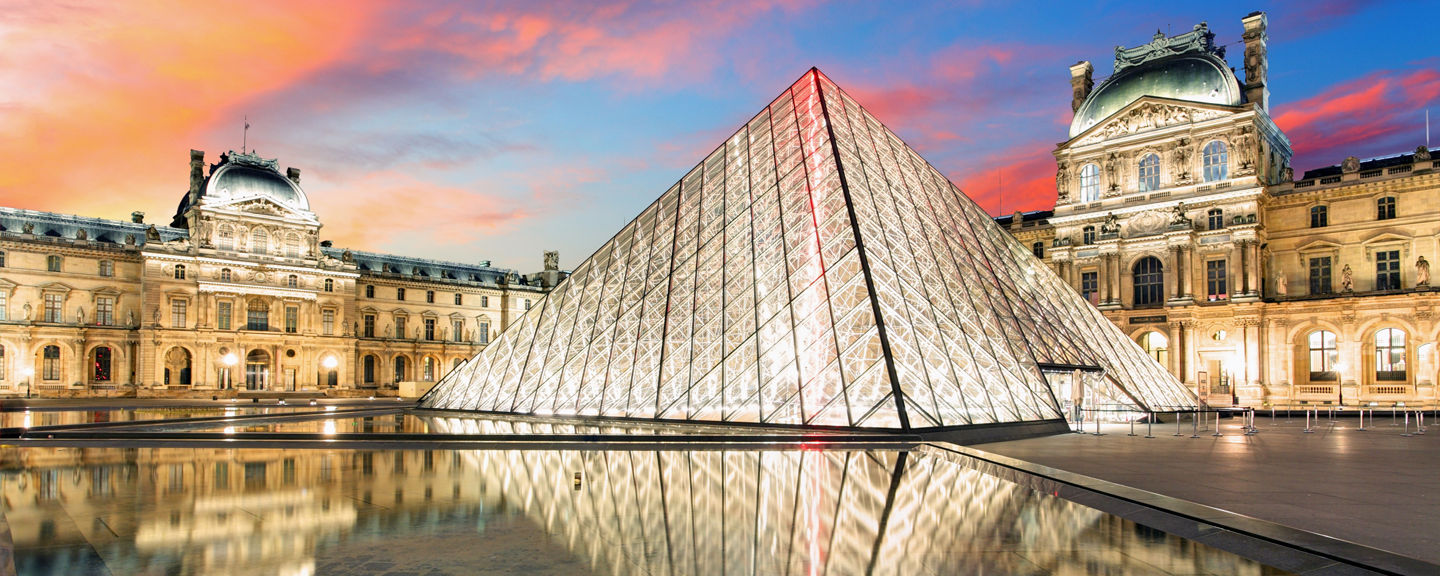
Paris
Paris, the capital of France, is located along the winding Seine River in north-central France. The three main sections of the city—the Île de la Cité, the Left Bank (Rive Gauche) and the Right Bank (Rive Droite) are defined by their relation to the river. Situated at the heart of the city, the Île de la Cité forms the ancient core of Paris. Over time, the city expanded outward, forming a dense urban landscape that blends historic neighborhoods with grand boulevards and modern districts.
Today, Paris is encircled by an expressway known as the boulevard périphérique. The land within the “périph” is divided into 20 arrondissements (municipal districts), whose numbering begins in the heart of Paris and extends outward in a spiral, ending with the outermost, eastern section of the city.
Paris has a temperate climate, with an annual average temperature in the lower 50s °F (around 12 °C). The weather can be changeable though, especially in winter and spring, and the temperature drops below freezing several times each year.
The recorded history of Paris dates back more than 2,000 years. Originally settled by a Celtic tribe known as the Parisii, the city flourished under the Romans during the 1st century AD. Over the course of the following centuries, rule over the city changed hands several times. In 987, Hugh Capet, a Parisian count, was elected to the throne, marking the beginning of one of the oldest and largest royal houses in Europe. The male-line descendants of Hugh Capet ruled until 1792 and came to power again between 1814 and 1848.
By the Middle Ages, Paris had emerged as a major intellectual and political center. During the 12th and 13th centuries, it became the de facto capital of the Kingdom of France and home to the University of Paris, one of Europe’s earliest centers of higher learning. In 1682, Louis XIV (1638–1715), the “Sun King,” relocated the royal court to Versailles. Nevertheless, Paris continued to thrive as an artistic and intellectual center.
During the 18th century, under Louis XV, Paris became a hub for philosophy and science, bringing together thinkers from across Europe. Famous writers who formed part of this intellectual moment—known as the “Enlightenment”—included Voltaire, Denis Diderot, Jean-Jacques Rousseau and the Baron de Montesquieu.
The French Revolution (1789-1799) reshaped Paris politically and physically, leaving an enduring legacy visible in its public spaces and monuments. The same is true of the 19th century, when Baron Georges-Eugène Haussmann oversaw a dramatic redesign of Paris. Between 1853 and 1870, his plan replaced narrow medieval streets with wide boulevards, uniform stone buildings and landscaped parks.
Despite periods of upheaval, Paris retains an extraordinary concentration of historic architecture. While parts of the city suffered damage during World War II, Paris was largely spared large-scale destruction. Its elegant center preserves layers of history, from Roman ruins and medieval streets to French Renaissance palaces and 19th-century avenues designed by Haussmann, all of which shape the city’s recognizable appearance today. Below are some of the key landmarks and cultural destinations you can experience during your time in Paris:
- Louvre Museum—This internationally renowned art museum, housed in a former royal palace, counts Leonardo da Vinci’s Mona Lisa and the Venus de Milo among its many famous treasures.
- Musée d’Orsay—Set in a grand former railway station, this museum boasts many 19th- and 20th-century masterpieces, primarily by French artists, and holds one of the largest collections of Impressionist and post-Impressionist art in the world.
- Musée de l’Orangerie—Located in the Tuileries Garden near the Place de la Concorde, the Musée de l’Orangerie is best known for housing Claude Monet’s monumental Water Lilies series.
- Notre-Dame Cathedral—This stunning French Gothic structure, located on the Île de la Cité, was built between the 12th and 15th centuries. Known for its flying buttresses, rose windows and sculpted façade, the cathedral has been central to French religious and civic life for centuries.
- Sainte-Chapelle—Situated on the Île de la Cité, Sainte-Chapelle is a masterpiece of Gothic architecture, constructed in the mid-13th century by order of King Louis IX. The chapel was built to house royal religious relics and is renowned for its extraordinary stained-glass windows.
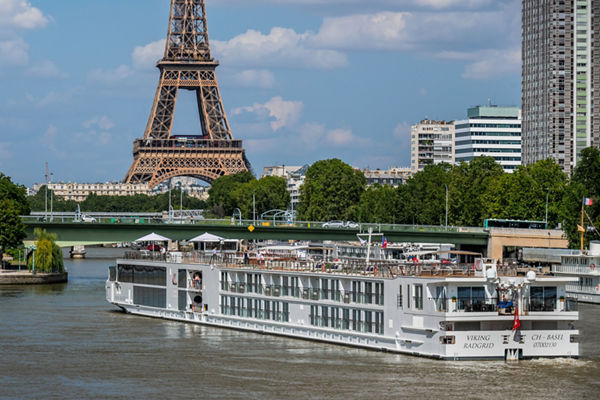
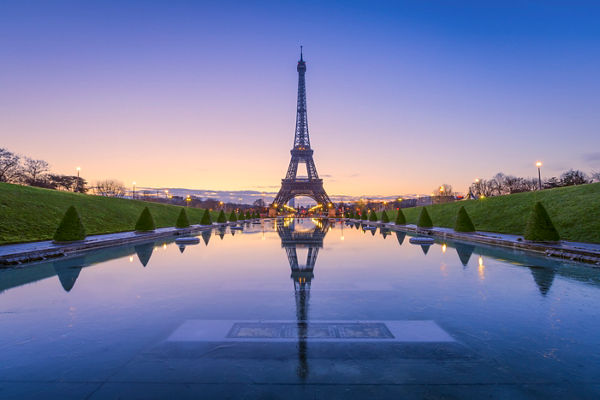
- The Eiffel Tower (La Tour Eiffel)—Constructed for the 1889 World’s Fair by the engineer Gustave Eiffel, the Eiffel Tower was initially controversial but has since become the most recognizable symbol of Paris. Standing 1,083 ft (330 m) tall, it offers stunning panoramic views of the city.
- The Arc de Triomphe & Champs-Élysées—The Champs-Élysées is one of the world’s most famous avenues, stretching from Place de la Concorde to the Arc de Triomphe. The Arc, commissioned by Napoleon Bonaparte, honors those who fought for France and houses the Tomb of the Unknown Soldier.
- Luxembourg Garden (Le Jardin du Luxembourg)—This beloved 17th-century park is known for its grand fountains, elegant statuary and quintessential Parisian atmosphere.
- Sacré-Coeur Basilica—Built between 1875 and 1914 in the Romanesque-Byzantine style, this magnificent sanctuary was the result of a “National Vow” to build a Roman Catholic church, visible from across Paris, if the city emerged unscathed from France’s 19th-century war with Germany.
- Montmartre—Once a hub for artists and bohemian life in the late 19th and early 20th centuries, this Parisian neighborhood was home to painters such as Pablo Picasso, Amedeo Modigliani, and Henri de Toulouse-Lautrec. Today, Montmartre is known for its winding streets, lively artists’ square at Place du Tertre, and the prominent Basilica of Sacré-Cœur.

-
5 influential French figures
France has produced many remarkable individuals who shaped art, politics, literature and music on a global scale. The following five figures represent different eras and fields, yet each left a lasting mark on French identity and world history.
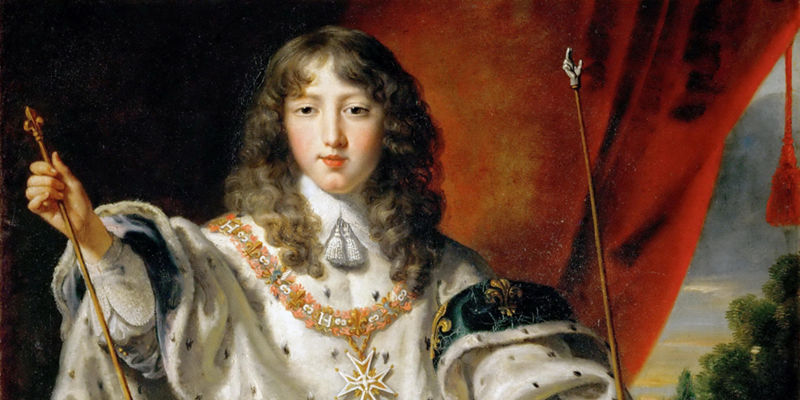
- Louis XIV (1638–1715)
Known as the “Sun King,” Louis XIV ruled for over 70 years and became the embodiment of absolute monarchy in Europe. He transformed a former royal hunting lodge into the opulent Palace of Versailles, symbolizing his authority and the grandeur of his reign. His rule brought cultural flourishing and strengthened France’s position in Europe, but it also involved costly wars and heavy taxation that strained the country’s finances, laying challenges that affected France long after Louis XIV’s death. - Napoleon Bonaparte (1769–1821)
Napoleon rose from modest beginnings in Corsica to become one of the most powerful figures in European history. As a brilliant military strategist, he led France to dominance across much of the continent during the Napoleonic Wars of the early nineteenth century—but he did so by plunging the nation into a state of near-constant warfare. Napoleon also left a lasting legacy through 1804's Napoleonic Code, which reformed legal systems by promoting equality before the law. - Victor Hugo (1802–1885)
Hugo was a literary giant whose works left an enduring imprint on French and world literature. Best known for Les Misérables and The Hunchback of Notre-Dame, Hugo explored themes of justice, poverty, love and redemption. He believed strongly in social reform and used his writing to criticize inequality and advocate for human rights. You can learn more about his legacy at the Maison de Victor Hugo, a museum in his former home in the 4th arrondissement. - Claude Monet (1840–1926)
Monet was a central figure in the Impressionist movement, challenging traditional artistic rules by prioritizing light, color and fleeting impressions over precise detail. His 1872 painting Impression, Sunrise gave the movement its name and marked a turning point in art history. In his later years, he devoted himself to painting his garden at Giverny, producing the renowned Water Lilies series, which you can see at Paris’s Musée de l’Orangerie. - Édith Piaf (1915-1963)
"The Little Sparrow" is remembered as the voice of French emotion and one of the country’s most beloved singers. Her life began in poverty, yet her extraordinary talent carried her to international fame. Through songs such as “La vie en rose” and “Non, je ne regrette rien,” Piaf helped popularize French chanson globally, and her personal story of hardship and passion has become legendary.
- Louis XIV (1638–1715)
-
Coco Chanel
It is hard to talk about Paris and fashion without mentioning the grande dame of style, Coco Chanel. From her bobbed hair and bright red lips to her signature cardigan and enduring “little black dress,” Coco Chanel has epitomized French chic for generations. Chanel also gave us the iconic, quilted Chanel 2.55 bag and the classic Chanel suit, with its boxy tweed jacket cut for comfort. She even helped popularize the suntan, making the golden, outdoorsy glow a sign of aristocratic leisure. In 1999, Coco Chanel was named one of Time’s 100 Most Influential People of the 20th Century.
Born as Gabrielle Bonheur Chanel in 1883, Coco, as she later became known, was the daughter of a laundrywoman and a street vendor. After her mother's death in 1895, the 11-year-old girl was sent to a convent-run orphanage in central France, where she learned to sew.
As a young woman, Coco worked as a seamstress, but she earned extra money as a café singer. While the origin of her nickname remains a mystery, it may have been a reference to some of the songs she frequently performed: “Ko Ko Ri Ko” (“Cock-a-doodle-doo”) and “Qui qu’a vu Coco?” (“Has anyone seen Coco?”).
Chanel dreamed of becoming a stage actress but soon realized that her talents lay elsewhere. With the financial assistance of business partner Arthur (“Boy”) Capel, she opened Chanel Modes, a small hat shop located at 21 rue Cambon, in 1910. Two years later, she established a second shop in Deauville, a popular resort town in Normandy, and from 1913, she began to sell the first loose jersey clothes for women. Fashioned from material traditionally used for men’s underwear, this new clothing line liberated a post-WWI generation from the confines of corsetry. Chanel was convinced that “luxury must be comfortable, otherwise it is not luxury.”
By 1915, Chanel had opened her first Couture House in Biarritz and designed her first haute couture collection. Riding a wave of success, she purchased 31 rue Cambon in the first arrondissement of Paris in 1918 and established Maison Chanel. The boutique, salons and workshops that Chanel set up at that address are still in operation today.
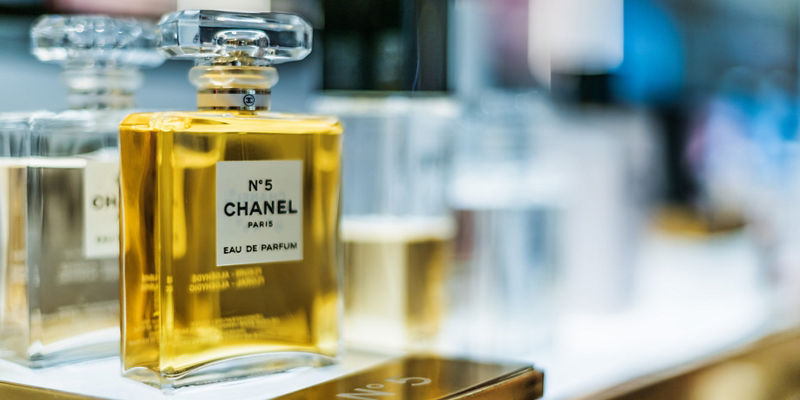
Chanel’s youthful, sportive style and unique vision resulted in a series of innovations that revolutionized the fashion industry. In 1921, she launched Chanel No. 5, which is still among the best-selling fragrances in the world, and in 1926, she introduced the “little black dress.” Previously, black had been reserved for formal wear or mourning clothes, but with Chanel’s help, the color became a versatile fashion staple.
Coco Chanel worked until her death in 1971 at the age of 87. She spent the last 30 years of her life in an opulent private apartment at the Hotel Ritz, which is where she passed away. In her wake, the Chanel brand has been guided by a series of talented designers. Most notably, Karl Lagerfeld served as creative director between 1983 and 2019, and under his direction—and that of his successors—Chanel has remained an influential and iconic fashion label.
-
Coffee in Paris
The French adore coffee, and this passion is reflected in the wide variety of preparations available. When visiting a café, you will need to use the proper terminology to order the precise style of brew you prefer.
The most popular type is espresso, and when locals order one they will ask for “un café.” This is strong plain coffee, served in a tiny cup, with nothing added. It might also be called un café simple, un café noir, un petit noir, un café express or un express. Café noisette is espresso with a dash of cream in it.
If you like the taste of espresso but not the strength, ask for un café allongé. Known in English as an “Americano” or a “long black,” this beverage consists of espresso diluted with hot water. Similarly, you can order un café léger, which is espresso with twice the water. These options are far more common than filter coffee (café filtré), and they offer an excellent alternative for those seeking American-style drip coffee. If you are looking for a hefty dose of caffeine, un café serré is prepared with half the water of a regular espresso, resulting in a more concentrated drink. It is similar to an Italian ristretto.
For those who enjoy coffee with milk in the morning, try a café au lait—equal parts brewed coffee and steamed milk. But visitors should note that in France, café au lait locals tend to consider it a breakfast beverage. Café crème is a similar beverage composed of espresso topped with steamed milk and a little foam. It is akin to a small latte or a flat white. It is an excellent choice for those who prefer drinking coffee with milk throughout the day. Un cappuccino resembles a cappuccino in the US: a cup of espresso with foamed milk.
Café décafféiné—or “déca” for short—is decaffeinated coffee. Add the word “déca” after the type of coffee you want, such as un café noisette déca, un cafe crème déca, etc.
Iced coffee is not as popular in France as in the US, but if you want it, you can ask for un café glacé. You may also see café liégeois on some menus, which is more of a dessert than a beverage. Similar to a coffee ice cream sundae, it consists of lightly sweetened coffee, coffee-flavored ice cream and whipped cream.
Although some coffee chains offer to-go beverages, you typically will not see French people walking around the street with a cup of coffee. If you are in a hurry, you can order coffee at the bar and drink it quickly standing up. It is also uncommon to see many French people drinking coffee with food, except at breakfast. Coffee is usually enjoyed separately. For example, it arrives at the end of a meal, after the dessert has been consumed.
Paris Highlights
Traveling to Paris provides the opportunity to discover captivating art and architecture, sample regional delicacies and uncover fascinating history. Here are some highlights you may experience during your time in this vibrant city:
- Embark on a nighttime walking tour of the “City of Light”
- Slip into a sidecar for a picturesque motorcycle ride
- Sample local specialties during a guided culinary tour
- Stroll the cobblestone streets of Montmartre
- Visit the monumental tomb of Napoleon Bonaparte
- Attend a lively cabaret performance in the Latin Quarter
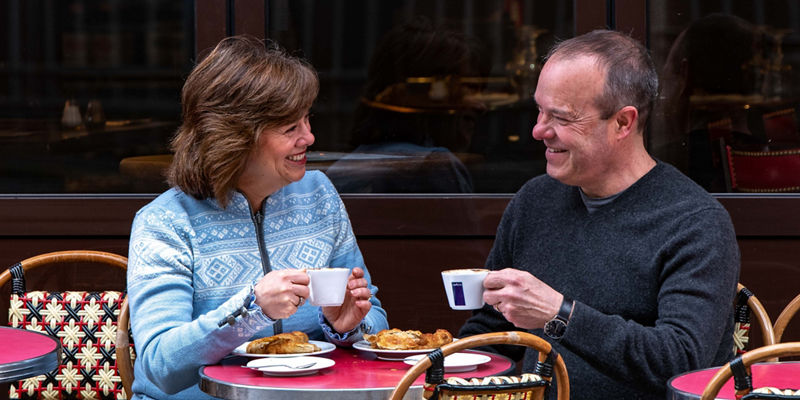
- Sip an espresso or kir cocktail at a traditional café
- Peruse masterpieces at the celebrated Louvre Museum
- Take a day trip to the opulent Palace of Versailles
- Discover military history at the Musée de l’Armée
- Explore a lively Christmas market in the Tuileries Garden
- See the Conciergerie, a prison that once housed Marie-Antoinette
- View the stunning stained glass of Sainte-Chapelle
- Ascend the Eiffel Tower for panoramic views of the city
Paris Travel FAQ
All-Inclusive Itineraries—Paris
Choose one of our enriching, all-inclusive voyages and discover the many benefits of exploring in Viking comfort.