

Embark on a journey through Budapest
Experience the rich culture, captivating history and local traditions of Budapest, the "Queen of the Danube." Read on to learn about Hungarian paprika, discover why there are no skyscrapers in the city and uncover the life and legacy of the musical composer Franz Liszt.
Budapest
Budapest, Hungary’s enchanting capital city, spans both sides of the Danube River—historic, hilly Buda on the west bank and cosmopolitan, flat Pest (pronounced “Pesht”) on the east. “Buda-Pest” was created in 1872 when Pest, Buda and the nearby village of Óbuda were united into a single capital city. Within a year, the hyphen disappeared from the name.
Once known as the “Queen of the Danube,” Budapest has long been a vital cultural, financial and political center. The city’s origins date to the Roman era, but Budapest truly blossomed during the 19th-century, under the Hapsburg empire of Austria-Hungary.
Budapest has a temperate climate with warm summers and cold winters. The average temperature ranges from around 30 °F (-1 °C) in January to 72 °F (22 °C) in July. During winter, snowfall is frequent but typically not abundant.
Present-day Buda served as the heart of the city during the Middle Ages, and many features of the castle town, such as the cobblestone streets and Gothic houses, have been preserved. Castle Hill lies at the center, rising 551 ft (168 m) above sea level. Gellért Hill, which offers stunning panoramic views of the entire city, lies to the south of Castle Hill, while Rózsa Hill, home to many of Hungary’s elite families, lies to the north.
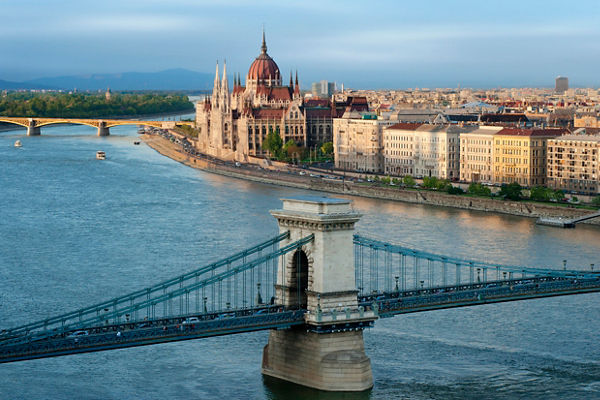
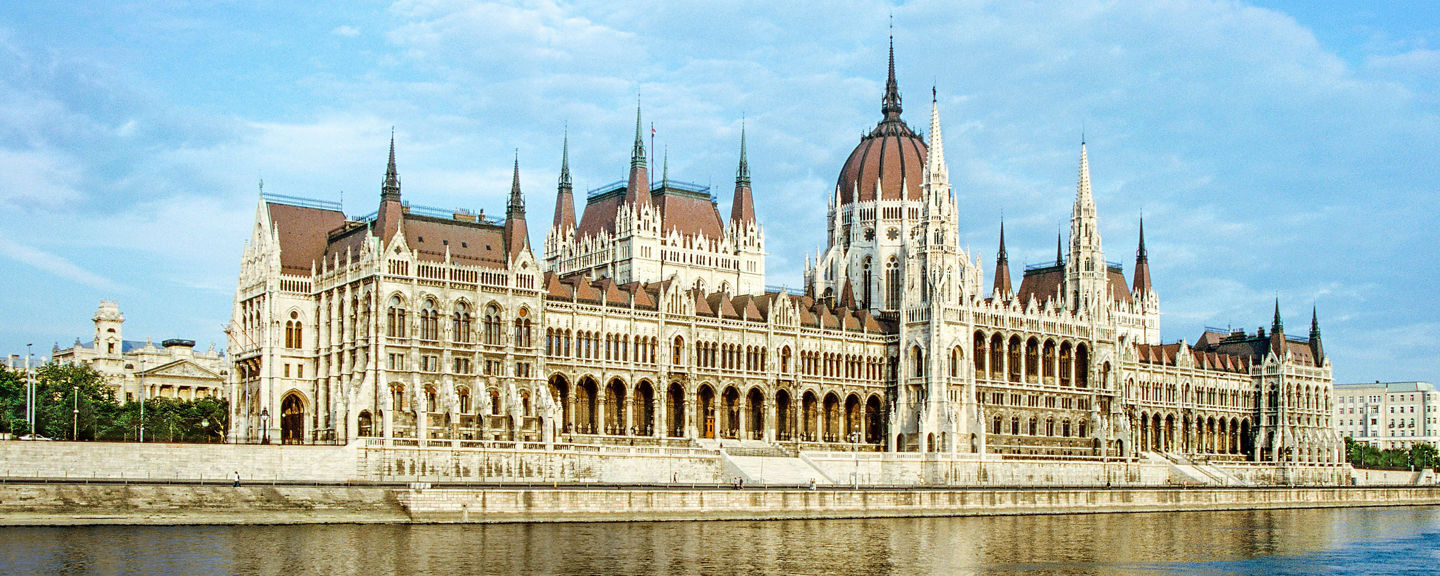
On the Pest side of the Danube, facing Castle Hill, you will find the ornate Hungarian Parliament Building. The heart of Pest is known as Belváros (Inner Town). This area is home to the Váci utca, a narrow pedestrian street that has become one of the most fashionable shopping districts of Budapest. The most famous street in the city, Andrássy Avenue, runs from the center of Pest to Városliget (City Park). Today, Budapest boasts a lively arts scene and is also home to many notable landmarks. Here are some of the key cultural destinations you may see during your visit:
- Castle District (Vánegyed)—You can reach this charming, medieval neighborhood either by foot or by the Budavári Sikló, a funicular dating back to 1870. Full of cobblestone streets, quaint cafés and colorful architecture, it is a wonderful area to explore. It is also home to some of Budapest’s most famous sites, including Buda Castle, Matthias Church and Fisherman’s Bastion. (You can read more on each of these below.)
- Buda Castle—With its distinctive dome, Buda Castle is one of the most iconic Hungarian landmarks. The palace has been rebuilt several times since the 13th century and has served not only as a royal residence but also as the site of many significant historical events. Today, it also houses the Budapest History Museum, the magnificently restored 19th-century St. Stephen’s Hall, the National Széchényi Library and the Hungarian National Gallery—which boasts an extensive Hungarian art collection.
- Matthias Church—This medieval Gothic church, more formally known as the Church of Our Blessed Lady, has played an important role in Hungarian history. The last two Kings of Hungary were crowned within its walls, and it also temporarily served as a mosque during the years of Ottoman rule.
- Fisherman’s Bastion—This striking monument’s unusual name can be traced to the Middle Ages, when the fishermen’s guild was entrusted with protecting this part of the Buda city walls. Today, Fisherman’s Bastion offers the best panoramic viewpoint over the Danube and the Pest skyline.
- Gellért Hill & Citadella—Towering 771 ft (235 m) above the Danube, Gellért Hill offers some of the best views of the city. The Citadella, a vast fortress built by the Hapsburgs in 1854, perches on top of the hill.
- Széchenyi Chain Bridge—Of Budapest’s eight bridges, the Széchenyi Chain Bridge is the oldest and best-known. Built in the 1840s, it was named for the 19th-century Hungarian reformer István Széchenyi. Walking the illuminated bridge at night is an unforgettable experience.
- St. Stephen’s Basilica—Located in Central Pest, this magnificent basilica is named in honor of Stephen, the first King of Hungary (c. 975–1038), whose right hand is housed in the reliquary. A bustling Christmas market takes place in St. Stephen's Square during the winter.
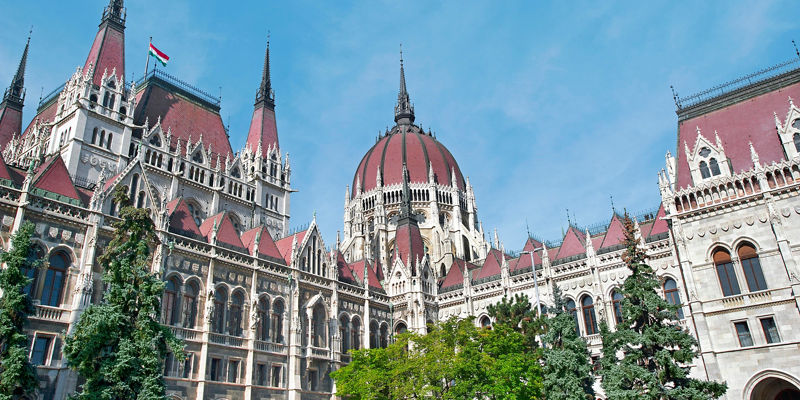
- Hungarian Parliament Building—The impressive Parliament building is, arguably, Budapest’s signature landmark. Completed in 1902, it was designed by architect Imre Steindl in a grand neo-Gothic style, inspired by London’s Palace of Westminster. It is especially striking when seen from the Danube at night.

-
A city without skyscrapers
From Gothic and baroque to neoclassical and modern, old and new architecture come together to form Budapest’s striking skyline. Yet, notably, none of these buildings exceeded 315 ft (96 m, approx. 30 stories) in height prior to 2021. Indeed, for more than a century, only two structures reached that altitude—the Parliament building and St. Stephen’s Basilica, whose identical heights represented the country’s equal respect for state and religion.
In an era where vertical expansion is used to symbolize a city’s economic growth and power, it may be difficult to understand why a major city such as Budapest would not have any skyscrapers. This was not simply a design fluke or the result of limited resources. It was an intentional decision, made to help retain Budapest’s historic urban landscape. To further ensure this goal, new high-rise restrictions were announced in 2018.
Now, all future proposals surpassing 213 ft (65 m) must gain special approval, and nothing above 295 ft. (90 m) will be accepted. The only exception is the office building in District 11, given that it received planning permission a year before the legislation was enacted. And, at 394 ft (120 m), the tower became the tallest structure in both Budapest and Hungary upon its completion.
Despite this new structure’s height, the Hungarian Parliament Building is arguably still Budapest’s most impressive symbol. Dominating the Danube River’s left bank, this neo-Gothic masterpiece was designed by Hungarian architect Imre Steindl. Built by a thousand workers between 1885 and 1902, the building’s exterior is lined with 90 statues of Hungarian heroes. Inside, there are 691 rooms, 10 courtyards and 29 staircases.
-
Franz Liszt and his music academy
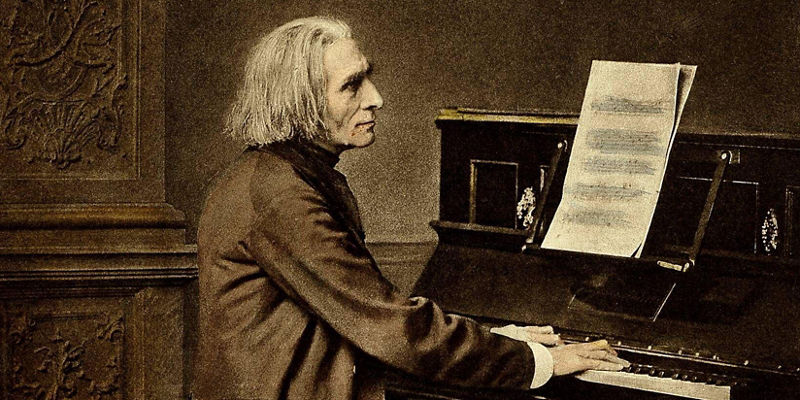
Born in Hungary in 1811, Franz Liszt is regarded by some as the greatest piano virtuoso of all time. His father taught him to play the instrument when he was only six. By age seven, he was writing music; by nine, he was performing in concert halls before Austrian society. This earned Liszt a stipend that enabled his father to hire a pupil of Ludwig van Beethoven’s to mentor the young prodigy. Later, Beethoven attended one of Liszt’s concerts and bestowed his blessings on the young man. By age 10, Liszt’s reputation had spread, so his father moved the entire family to Paris to further his son’s career.
By age 16, Liszt was exhausted and ill from the constant travel and demands of the concert circuit. He began teaching piano to the children of the rich and influential, falling deeply in love with the 16-year-old daughter of a cabinet minister. Though his feelings were reciprocated, the girl’s father objected and married her to someone more socially acceptable. Liszt never recovered and, as an elderly man, made provisions for her in his will. Later, at 22, Liszt was romantically involved and had children with Countess Marie d’Agoult, a married woman of 28. In his thirties, he lived with Princess Carolyne zu Sayn-Wittgenstein, an immensely wealthy and married Polish aristocrat.
While Liszt was never lucky in love, his career was spectacular. He was a prolific composer, and many of his works presaged the innovations of the 20th century. He invented the symphonic poem form and developed the concept of thematic transformation. Liszt was not only a virtuoso performer and brilliant composer, but also a shrewd music promoter and benefactor to artists like Frédéric Chopin, Hector Berlioz, Edvard Grieg, Ole Bull and others. By his death in 1886, at age 75, he had written more than 700 compositions.
In 1867, Liszt was commissioned to write a piece for the coronation ceremony of Franz Joseph and Elisabeth of Bavaria. The Hungarian Coronation Mass was performed on June 8 of that year at the Matthias Church. This piece renewed his links with his native land, and for the remainder of his life, Liszt regularly traveled between Rome, Weimar and Budapest, living what he called a “tripartite life.”
In 1875, he founded the Franz Liszt Academy of Music, often called the “Music Academy,” in Budapest. It moved to Andrássy Avenue around 1878, where it now houses his original musical instruments, furniture, several valuable books and manuscripts. The interior of the historic, neo-Renaissance building is decorated with frescoes and several statues, including one of another great Hungarian composer, Béla Bartók, who was an alumnus of the academy. You can also see three restored rooms where Liszt lived at the end of his life, between 1881 and 1886.
-
Hungarian paprika
Today, Hungary’s favorite spice, paprika, is considered a national treasure. It features prominently in some of the country’s most well-known dishes, such as gulyás (goulash) and paprikás csirke (chicken paprikash).
Paprika is a ground spice made from the dried and crushed red fruits of the Capsicum annuum plant, better known as the bell or red pepper. Its flavor ranges from mild to hot, and its reddish-orange color comes from carotenoids. In addition to its flavor, paprika is known for its health benefits. Hungarian scientist Dr. Albert Szent-Györgi discovered that paprika contains seven times as much vitamin C as oranges—research that led him to win the Nobel Prize in 1937.
Despite its strong association to Hungary, this “red gold” is not a native plant. It was likely exported from central Mexico to Spain during the 16th century. There, it was called pimentón and was frequently used to season the cuisine of Extremadura. It made its way to the Ottoman Empire via North Africa, then to the fields of the Hungarian Puszta. It grew there for a few centuries before becoming popular in the 19th century. The legendary French chef Auguste Escoffier supposedly purchased some paprika from Szeged in 1879, introduced it to the rest of Europe, and demand for the spice soared.
The word paprika simply means “pepper” in Hungarian, but the simplicity ends there. There are eight basic grades of Hungarian paprika, arranged below in order from hottest to mildest:
- Erős, or strong, is the hottest paprika. It tends to have a light brown color and is used sparingly in dishes like spicy halászlé (fisherman’s soup) or fiery sausages.
- Félédes is semi-sweet with medium heat and a balanced flavor. It is ideal for dishes that need a gentle kick, such as töltött paprika (stuffed peppers).
- Édesnemes, or noble sweet, is the most commonly exported Hungarian paprika. It has a bright red color, rich aroma and peppery warmth. It is frequently used in iconic dishes like gulyás (goulash).
- Csípős csemege, or pungent delicate, is one of the most popular varieties in Hungary. It brings noticeable heat to pörkölt (Hungarian stew) or spiced meat rubs, without overpowering the dishes.
- Csemegepaprika is delicate, with a light aroma and a generally mild and refined flavor. It is used in classic paprikás csirke (chicken paprikash).
- Csípősmentes csemege, or mild delicate, is extremely mild in heat but rich in flavor, making it versatile for everyday cooking, including soups, sauces and vegetable dishes.
- Rózsa, or rose, has a fragrant aroma and only a gentle hint of heat. It is pinkish in color and is suitable for lighter dishes, including egg recipes or creamy sauces.
- Különleges, or special quality, is the mildest paprika. It is very sweet and has a deep, bright red color. It is perfect as a garnish or for adding color and subtle flavor to dishes like potato salads or deviled eggs.
Paprika is delicious as a garnish but its full flavor truly emerges only when it is heated. You may sample different types of paprika, various paprika-flavored dishes or paprika-spiced sausages during a visit to Budapest’s Grand Market Hall.

Budapest Highlights
With its distinctive architecture, vibrant cultural traditions and rich history, Budapest offers visitors ample opportunities for discovery. Here are some highlights you may experience during your time in this historic capital:
- Stroll the cobblestone streets of historic Castle Hill
- Take in panoramic views from Fisherman’s Bastion
- Cross the Danube River on the elegant Chain Bridge
- Tour the Zwack factory, home of Unicum, a premium digestif
- Indulge in a traditional thermal bath
- Purchase authentic Hungarian paprika at Grand Market Hall
- Explore the Jewish Quarter and visit Dohány Street Synagogue
- Decorate a chocolate bar at the Szamos Chocolate Museum
- See the Changing of the Guard at the Royal Palace
- Take in the illuminated Parliament building at night
Destination Insight Videos

Gifts Along the Danube (1:28)
The Danube’s banks overflow with shopping opportunities. Join Karine at her favorite spots in Passau, Vienna and Budapest as she shares perfect gift ideas for yourself or your loved ones.

At Home in Budapest with Kinga & Eszter (21:44)
Discover the best of Budapest with two expert Viking guides, Eszter Pozsár and Kinga Tittel, as they each highlight a different side of the Danube River with a focus on hilly Buda and majestic Pest. As someone who naturally loves to share her knowledge of the city with guests and family, Kinga has been a tour guide in and around Budapest for more than a decade, while Eszter has been working as a local guide for 30 years and has been conducting tours for Viking since we began sailing in Hungary. From Buda to Pest, learn insightful tips on how to explore this delightful city from a local perspective as Kinga and Eszter take you on a tour while answering viewers’ questions during this livestream.

Budapest Travel FAQ
All-Inclusive Itineraries—Budapest
Choose one of our enriching, all-inclusive voyages and discover the many benefits of exploring in Viking comfort.