Destinations | Austria

Austria
Map of Austria

Country Overview

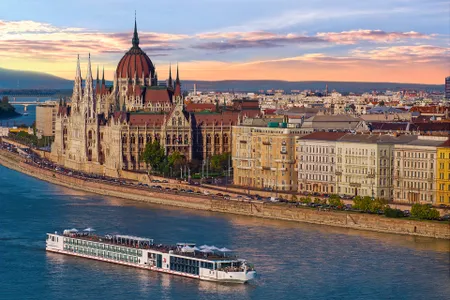
With Alpine winter sports, some of the most impressive architecture in Europe and an unrivaled musical tradition, Austria is an extremely popular destination year-round. Travelers enjoy visiting the capital, Vienna, with its beautiful buildings and public squares; and Salzburg, where music, art, architecture and the natural setting approach perfection.

Save $1,000 per couple on your 2009 river cruise. Limited availability!

|Expires July 31, 2008View All Specials and Promotions

About Austria

Austria is a mountainous central European country whose name, Österreich, means “eastern realm.” Its capital, Vienna, lies on the Danube River. With an area of 32,378 square miles, Austria consists of nine independent federal states, each with its own provincial government. Ninety-eight percent of Austria’s approximately 8 million inhabitants speak German; about 74% are Roman Catholic, 5% are Protestant and the rest belongs to other faiths. Austria is a mountainous central European country whose name, Österreich, means “eastern realm.” Its capital, Vienna, lies on the Danube River. With an area of 32,378 square miles, Austria consists of nine independent federal states, each with its own provincial government. Ninety-eight percent of Austria’s approximately 8 million inhabitants speak German; about 74% are Roman Catholic, 5% are Protestant and the rest belongs to other faiths.

Originally settled by ancient Celtic tribes, Austria later became part of the Roman Empire. After the fall of the Roman Empire the area was invaded by Bavarians, Slavs and Avars (Eurasian nomads), then Charlemagne conquered it in 788. In 976 the territory was given to the house of Babenberg; when that line died out in 1246 the Bohemians took over and from the 13th century until the early 20th century it was ruled by the Habsburg dynasty. Emperor Franz Joseph I ruled until his death in November of 1916, then World War I led to the end of the Austro-Hungarian Empire. Between the world wars the two major political parties in Austria—the Social Democrats and the Conservatives—actually fought a civil war with one another in the early 1930s. In 1938, however, German troops occupied Austria and proclaimed the Anschluss, the annexation of Austria into the Third Reich. In 1945, just before the Third Reich collapsed, Austria declared its independence and set up a provisional government in Vienna, which helped Austria retain some independence under subsequent Allied occupation. In 1955 Austria regained full independence and declared itself “permanently neutral.” It remains neutral to this day, and became a member of the European Union in 1995 retaining its constitutional neutrality.

Austria’s cultural contributions are legion. It was the birthplace of Mozart, Haydn, Schubert, Bruckner, both Strausses, Mahler, Schoenberg, to name a few, and Beethoven spent a large part of his life in Vienna. The list of Austrian artists, sculptors, type designers and other craftsman is long and includes important 20th-century architects who emigrated to the United States such as Richard Neutra and Rudolf Schindler. Austria experienced a sort of golden age in the late 19th and early 20th centuries, which produced scientists and thinkers like Doppler, Schrödinger, Wittgenstein, Gödel, Freud, Adler, Asperger—not to mention engineers like Ferdinand Porsche.


View Cruises in Austria

Explore Cruises that Include
Regions
Rivers

Request a BrochureRequest a Brochure

Click here to request our full-color, detailed brochure featuring cruise schedules, itineraries, pricing and more.

Email Sign UpEmail Sign Up

Click here to sign-up for Viking mail and receive more information on our specials and promotions.